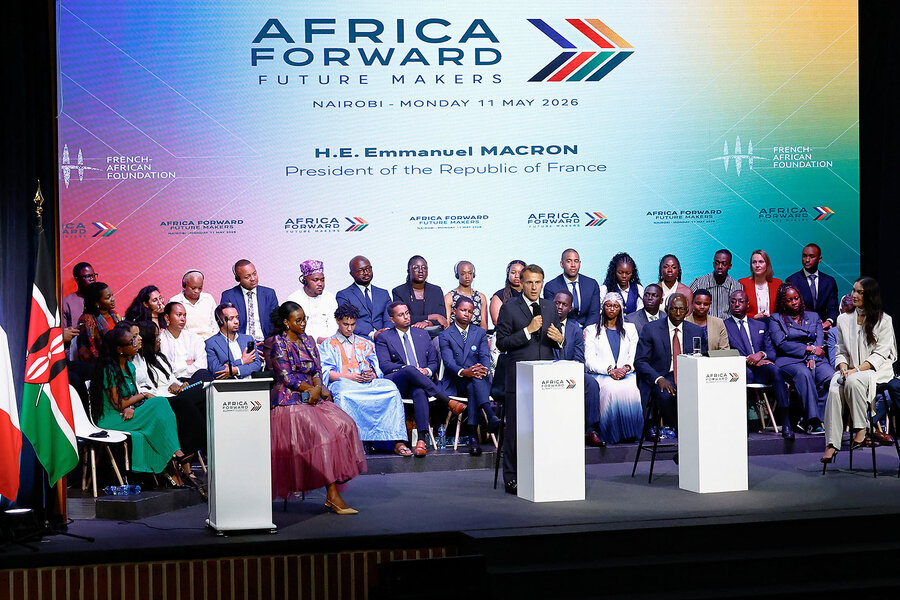
France announced $27 billion in pledged French and African investment at a summit in Kenya, aimed at rebuilding ties across Africa and expanding beyond former French colonies. But the article emphasizes persistent backlash over France’s colonial legacy, waning influence, and Macron’s damage-control posture after a viral public scolding incident. The broader takeaway is that France’s bid for a refreshed partnership faces structural headwinds as China and Russia continue to displace it economically and politically.
France’s Africa strategy is not a “growth” story so much as a relative-influence decline story: the binding constraint is geopolitical relevance, not capital deployment. That matters because Chinese and Russian penetration is increasingly a substitute for French political access, while French commercial wins are likely to be selective, partnership-based, and less defensible than legacy relationships. In practical terms, this reduces the odds that French corporates get privileged access to sovereign projects, concessions, or security-linked procurement across Francophone Africa. The near-term market impact is mostly second-order and cumulative rather than headline-driven. Over the next 6-18 months, firms with Africa exposure that rely on French diplomatic cover, French security ties, or legacy procurement channels face more bid competition and more localization pressure. The bigger winners are likely non-French infrastructure, telecom, defense, and digital players that can operate without colonial baggage and can package financing with execution capacity; Chinese and Gulf capital providers also benefit if governments keep diversifying away from Paris. For France, the bigger risk is reputational: performative “reset” attempts can backfire and accelerate the erosion of trust, making every misstep a signal of persistence of the old order. That creates a path-dependent downside where even modest symbolic failures have outsized commercial consequences, especially with younger urban elites and online opinion leaders shaping procurement politics and consumer sentiment. The contrarian read is that the investment announcement flow may be more durable than the diplomatic narrative — if real projects close, capital can outlive bad optics, but only if local partners retain the lead and French brands stop being associated with paternalism. The cleanest tactical expression is not a broad macro short on France, but a relative-value long on non-French EM infrastructure/industrial execution versus French multinationals with Africa dependence. The thesis should play out over quarters, not days, and would be invalidated if Paris successfully converts summit pledges into bankable, locally controlled deals with visible financing and no security strings attached.
AI-powered research, real-time alerts, and portfolio analytics for institutional investors.
Request DemoOverall Sentiment
mildly negative
Sentiment Score
-0.15
