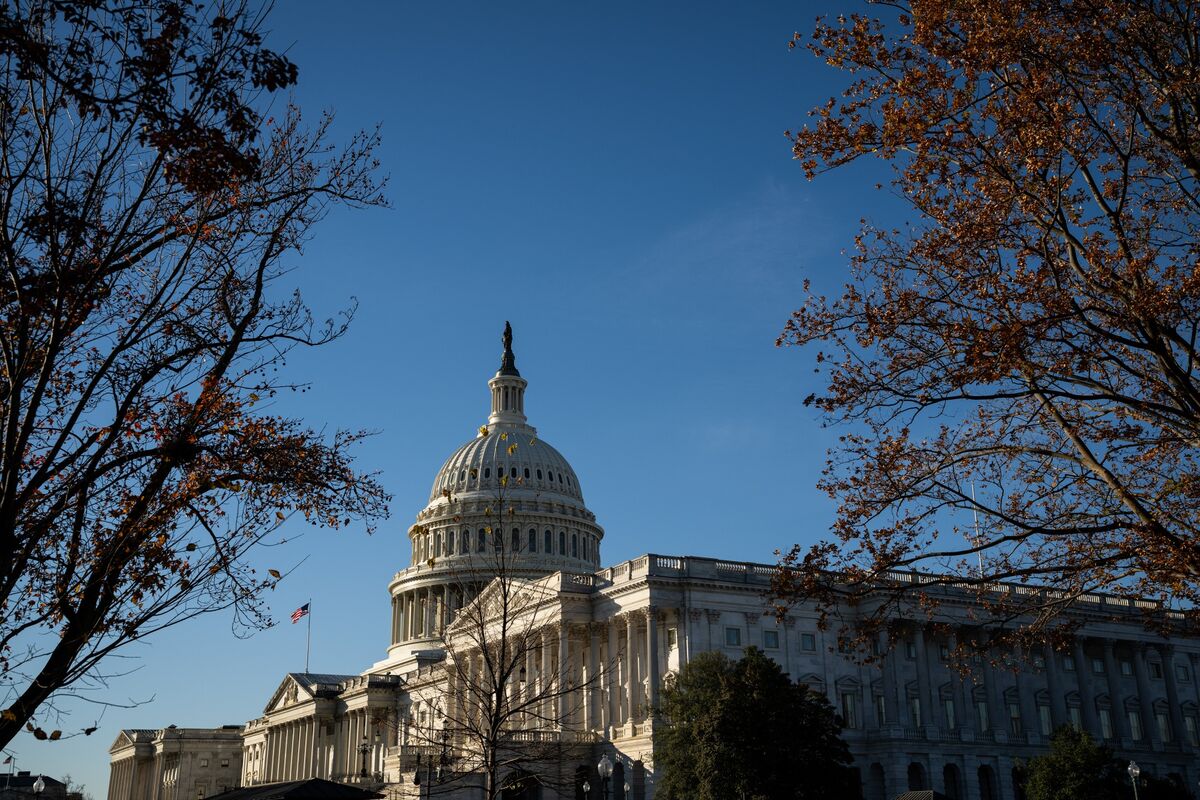
A bipartisan group of moderate House Republicans joined Democrats to back a compromise to renew expiring Obamacare premium tax credits set to lapse on Dec. 31, amid fears that insurance premiums for more than 20 million Americans could on average more than double. The proposal faces resistance from House Republican leaders, raising policy uncertainty and the potential for a political backlash in swing districts; the outcome could materially affect health insurers, consumer spending and related fiscal exposure if credits are allowed to expire.
Market structure: The immediate winners if subsidies are renewed are large diversified health insurers (e.g., UNH, ELV) and hospital systems because steady exchange enrollment preserves premium flows for ~20M people whose premiums could otherwise “more than double” after Dec 31. Losers in the expiration scenario are pure-play ACA exchange carriers and small-cap insurers (Oscar OSCR, Bright/others) and lower-income consumer discretionary names as disposable income is squeezed; premium shock risks a >20% hit to discretionary spending among affected cohorts within 3–6 months.
Risk assessment: Tail risks include a legislative failure (low-probability, high-impact) that triggers immediate enrollment drop and insurer exits — model a 30–50% reduction in exchange membership for weaker carriers within 6–12 months. Near-term (days–weeks) volatility will hinge on House votes and public statements; medium-term (1–3 months) rate filings and insurer Q4 guidance will reprice exposure, while long-term (1–3 years) political layering could reset ACA subsidy permanence and insurers’ pricing power.
Trade implications: Favored trades are concentrated, event-driven: long large-cap diversified insurers (UNH, ELV) and hospital REITs (HTA/healthcare REITs) as a hedge for subsidy renewal; hedge small positions with puts on exchange-focused OSCR or KFF names to protect against expiration. Fixed-income posture: shorten duration by ~10–15% within 2 weeks to guard vs. deficit-driven rate uptick if subsidies are extended; alternatively size tactical long Treasuries if legislative failure becomes likely.
Contrarian angles: Consensus assumes binary pass/fail by Dec 31; miss is probability and magnitude — moderates increase pass probability (estimate 60–70%) so small-cap insurer sell-off may be overdone. Historical parallels (2017 ACA uncertainty) show market overprices short-term policy risk then rotates back to large-cap insurers and providers; unintended consequence: activist money could target exchange-focused carriers facing temporary selling pressure, creating acquisition/credit-distress opportunities in 3–9 months.
AI-powered research, real-time alerts, and portfolio analytics for institutional investors.
Request DemoOverall Sentiment
moderately negative
Sentiment Score
-0.40
