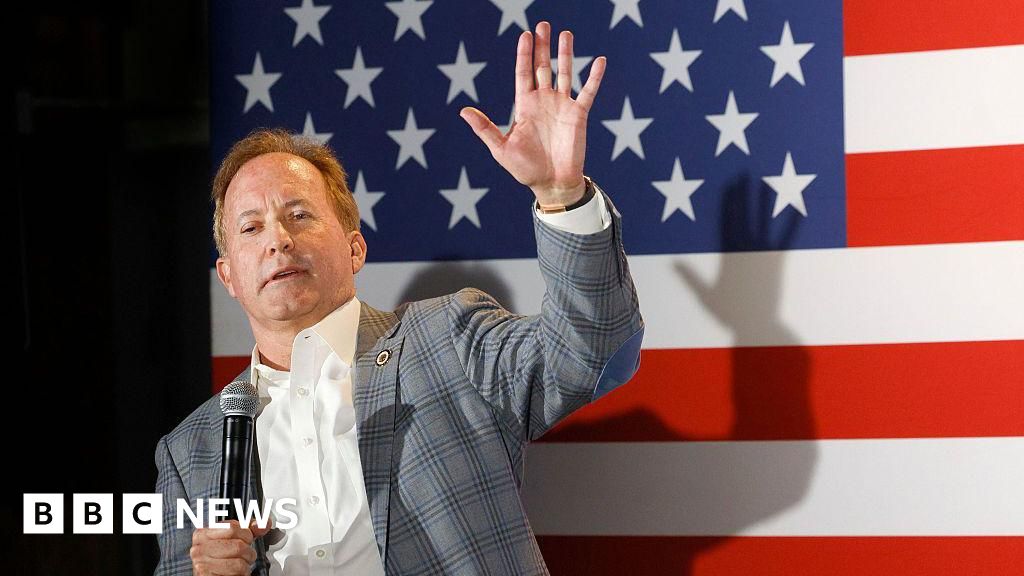
Trump endorsed Texas Attorney General Ken Paxton in the Republican runoff for the U.S. Senate seat held by John Cornyn, a move that could reshape the primary but has limited direct market relevance. Paxton enters the race with significant legal and political baggage, including a settled federal corruption indictment, a 2023 impeachment over fraud and obstruction allegations, and personal scandal. The winner will face Democrat James Talarico in November; polls suggest a close general-election contest despite Texas' long Republican tilt.
The immediate market read is not about the Texas seat itself, but about the signal that party loyalty is now being priced more explicitly than electability. That tilts the GOP nomination process toward higher-variance candidates who are more likely to create down-ballot drag, especially in suburbs where split-ticket tolerance has already been eroding; the second-order effect is a modest but real improvement in Democratic odds in otherwise red-leaning legislative and federal races if the nominee enters November with elevated unfavorability. The larger dynamic is that Trump is prioritizing personal alignment over incumbent stability, which increases policy discontinuity risk at the state level and raises the probability of intra-party retaliation in future primaries. For investors, that matters most in sectors exposed to Texas regulatory discretion—energy, insurance, telecom, and health care—because a weakened or polarizing statewide Republican ticket can alter the tone of enforcement, rate regulation, and litigation posture even without changing control of state government. Near term, the catalyst path is binary and fast: the runoff outcome can create a short-lived volatility event in Texas-linked names, but the more important window is the November general election, where the nominee’s favorability will be tested against a potentially stronger Democratic message. The tail risk is that a weak nominee becomes a national fundraising magnet, compressing GOP margins enough to matter in a cycle that is otherwise expected to favor Republicans in Texas; the reversal trigger would be if Paxton underperforms polling or if Cornyn consolidates establishment and business support late. Consensus is probably underestimating how much this is a governance story, not a personality story. The market usually treats state politics as background noise, but Texas policy has outsized influence on capital formation and operating costs; an embattled attorney general or a more polarizing Senate nominee can widen the spread between headline-friendly GOP policy rhetoric and actual institutional trust, which is negative for long-duration investment sentiment even if the seat stays Republican.
AI-powered research, real-time alerts, and portfolio analytics for institutional investors.
Request DemoOverall Sentiment
neutral
Sentiment Score
-0.05
