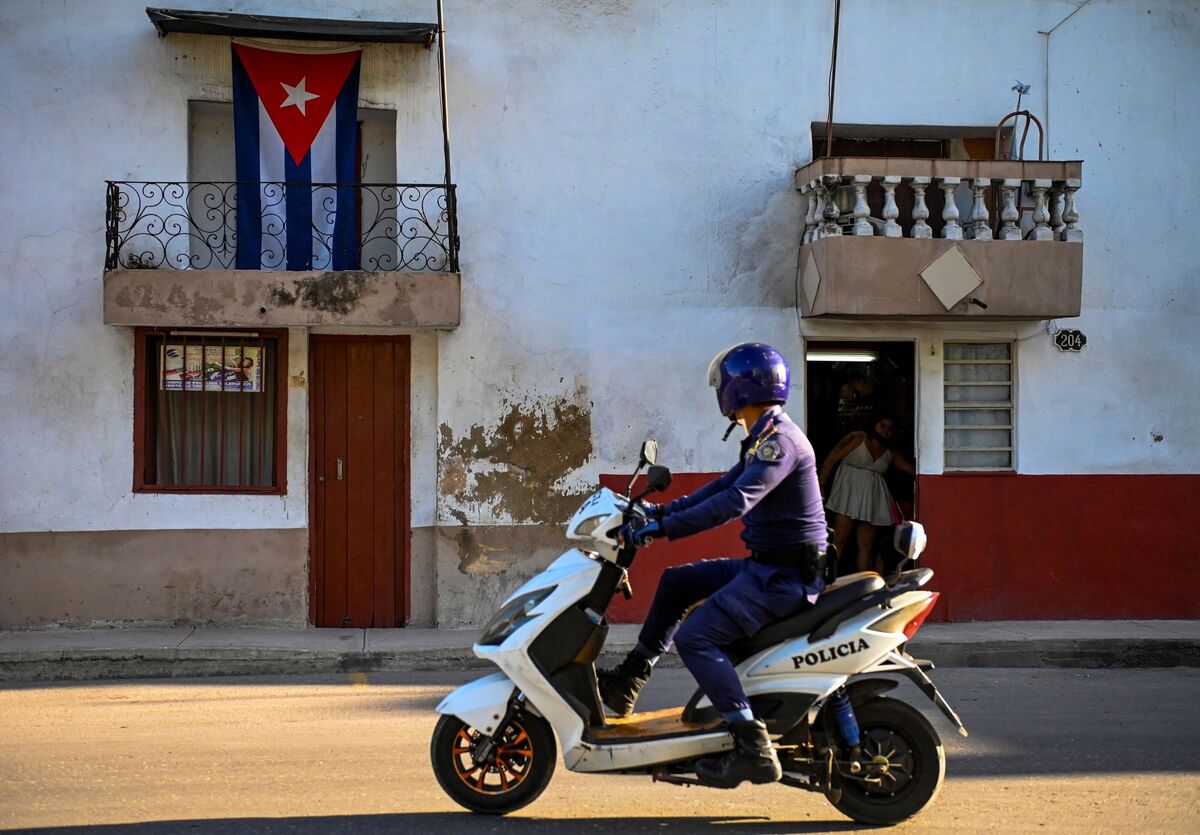
The US imposed sanctions on several top Cuban officials, including Justice Minister Rosabel Gamon Verde, Energy Minister Vicente de la Levy, Communications Minister Mayra Arevich Marín and national assembly president Esteban Lazo, along with Cuba’s Intelligence Directorate and senior military figures. The move escalates Washington’s pressure campaign against Havana nearly seven decades into communist rule. The direct market impact is likely limited, though it reinforces geopolitical and sanctions risk around Cuba.
This is less about immediate economic pressure on Havana and more about tightening the regime’s external coordination costs. Targeting the security and communications apparatus raises the odds of operational friction, internal distrust, and slower decision-making, but the bigger second-order effect is on anyone trying to move goods, payments, or technology through Cuban-linked intermediaries. Expect more cautious behavior from regional banks, shipping insurers, telecom vendors, and any EU/LatAm counterparties with latent US exposure, even if they are not directly named.
The near-term market implication is not Cuba-specific cash flow, but a modestly higher geopolitical risk premium around Caribbean logistics and any asset class that is sensitive to secondary-sanctions creep. The most relevant horizon is months, not days: sanctions rarely bite immediately, but over 1-3 quarters they can force counterparties to de-risk, reroute, or demand higher spreads. That tends to favor large, compliance-heavy firms with diversified routing and punish smaller operators that rely on opacity and local relationships.
The contrarian angle is that headline sanctions may be overread as policy escalation when the marginal economic impact is likely limited absent broader measures on remittances, tourism, fuel, or banking access. If the administration stops at elite targeting, the regime can absorb it with minimal macro stress, so the move may be more signaling than regime-breaking. The real catalyst for meaningful repricing would be any expansion to financial intermediaries or third-country enablers, which would widen the blast radius across regional trade finance and shipping over 30-90 days.
There is also a tactical angle in sovereign risk perception: a more aggressive US posture toward Cuba can spill into broader EM political-risk baskets, especially countries with strained US relations or heavy sanctions overhangs. That argues for being selective rather than directional on the whole LatAm complex, because the trade is more about compliance and funding channels than Cuban growth itself.
AI-powered research, real-time alerts, and portfolio analytics for institutional investors.
Request DemoOverall Sentiment
moderately negative
Sentiment Score
-0.20
