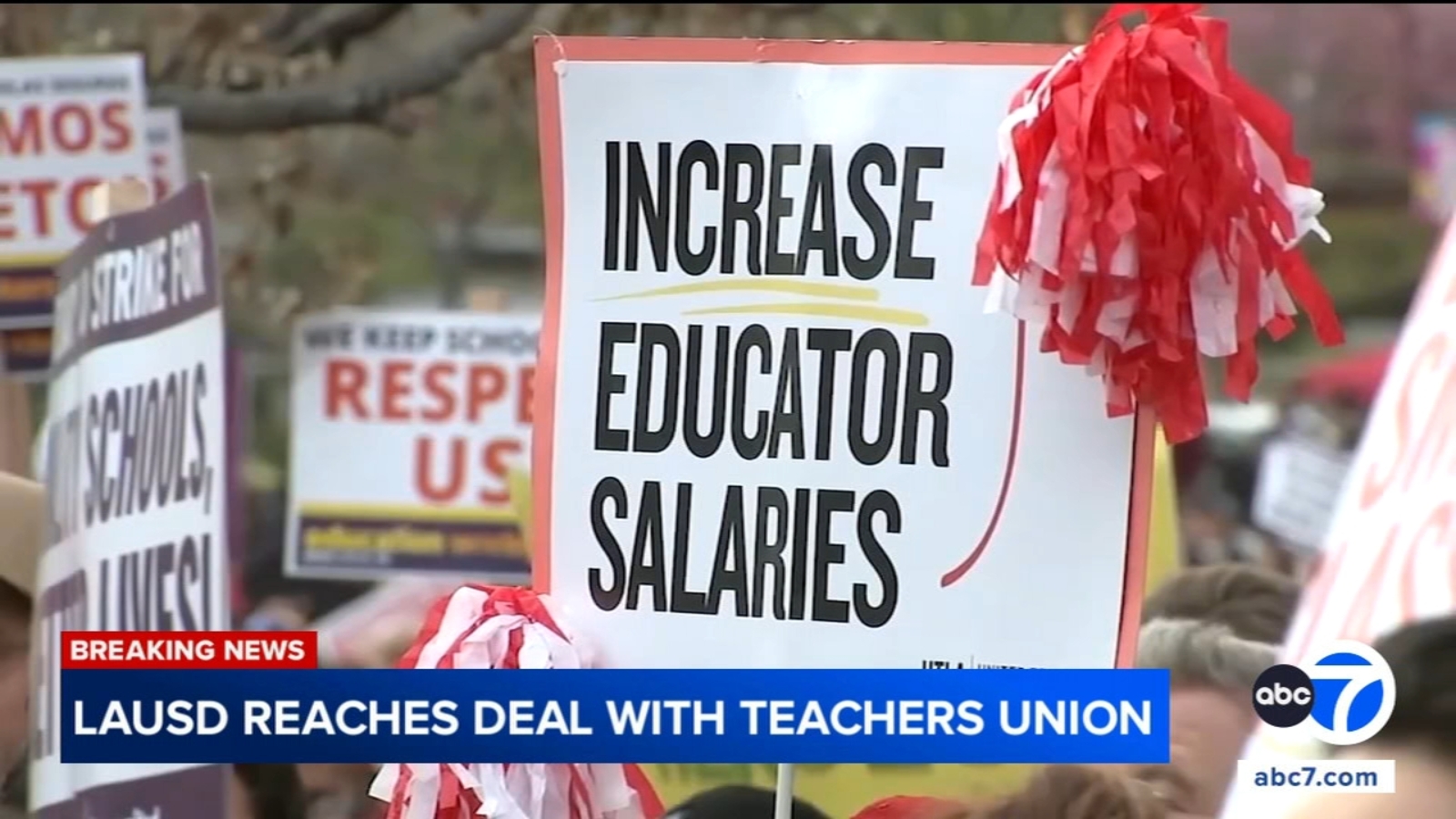
LAUSD reached a tentative two-year agreement with United Teachers Los Angeles that raises union member salary scales by 11.65% and lifts starting teacher pay to $77,000 a year. The deal reduces the immediate strike risk for teachers, but negotiations continue with SEIU Local 99, which represents about 30,000 school workers, and with administrators. Schools are still facing a Tuesday, April 14 deadline to avoid broader labor disruption.
The key market read-through is not the settlement itself, but the sequencing: a teacher labor resolution lowers the probability of a full district shutdown, yet it shifts bargaining leverage to the remaining groups whose work is operationally more critical to keeping schools open. That raises the odds of a shorter, more disruptive work stoppage concentrated in transportation, custodial services, and admin functions — the kind of partial outage that creates outsized reputational pressure while costing less to sustain than a districtwide strike. In other words, the tail risk has moved from a binary closure event to a rolling service degradation scenario.
Second-order, this is a fiscal precedent for other large urban districts. Once one bargaining unit wins above-inflation wage gains, the next sets of negotiations tend to anchor off the same comp, compressing the city’s budget flexibility and increasing the probability of delayed maintenance, larger class sizes, or cuts elsewhere. Over a 6-18 month horizon, that matters for vendors tied to non-discretionary district spending because wage pressure tends to crowd out contract renewal, facilities capex, and outsourced services before it forces headline tax or bond stress.
The contrarian view is that the market may be overpricing the visible labor noise and underpricing the benefit of removing the largest strike overhang first. If the remaining talks drag but do not fully shut schools, the economic damage is likely modest and episodic rather than systemic. The bigger risk is political contagion: once a public-sector settlement becomes a benchmark, similar demands can surface in other California municipalities and school systems, turning this into a regional wage-reset story rather than a one-off LA event.
AI-powered research, real-time alerts, and portfolio analytics for institutional investors.
Request DemoOverall Sentiment
neutral
Sentiment Score
0.05
