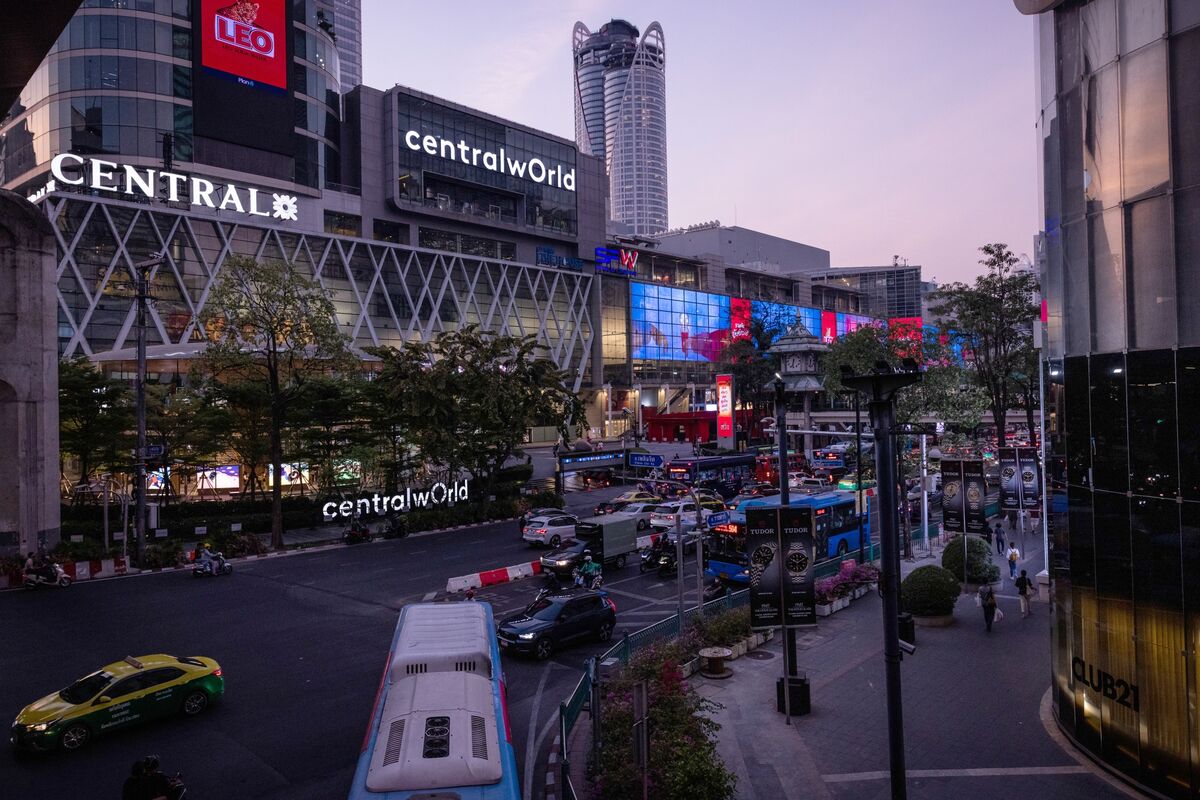
Central Pattana will invest more than 110 billion baht ($3.4 billion) over the next five years to expand its portfolio and increase mixed-use projects to 33 by end-2030 from 27 currently. The capital will fund new retail plazas, office buildings and integrated projects focused on major cities and key tourist destinations (Bangkok, Phuket, Chiang Mai), reflecting a strategic bet on urban growth and a tourism rebound.
A large, multi-year mall and mixed-use buildout in Thailand shifts the return drivers away from pure retail footfall toward construction and leasing execution risk; contractors, engineering procurement chains and local material suppliers will see concentrated demand over defined delivery windows, creating mid-cycle margin opportunities for well-positioned suppliers and pricing power for smaller contractors with capacity. Expect construction lead times (12–36 months) to push material orders into the next two construction seasons, so any input-cost inflation or shipping disruptions will compress project-level IRRs before occupancy income ramps.
Valuation sensitivity to interest rates and discount rates is the principal financial risk: for stabilized mixed-use assets the NAV is more levered to a 100bp move in the yield curve than to near-term retail sales misses. If funding mixes toward leverage or equity raises, dilution risk and short-term EPS pressure can outpace rent roll improvements — a 1–2 year window where cash flows are negative but NAV is falling is plausible.
Second-order competitive dynamics favor owners who can offer integrated hospitality/office/residential stacks: branded hotel operators, third-party asset managers and logistics landlords that can absorb first-loss leasing risk will win. Conversely, smaller strip-mall players and non-prime shopping centers face longer vacancy tails and are likely to see rent concessions, which will bifurcate occupier performance across prime vs non-prime geographies.
The consensus upside case under-weights execution and cyclical financing risk: market goodwill can re-rate based on project announcements, but realized returns hinge on timely leasing and tourist-origin geographies recovering in the right sequence. A meaningful reversal catalyst would be a sustained slowdown in regional inbound travel or a 150–200bp sustained increase in local borrowing costs, either of which could push breakeven yields materially higher and compress expected returns over 24–36 months.
AI-powered research, real-time alerts, and portfolio analytics for institutional investors.
Request DemoOverall Sentiment
moderately positive
Sentiment Score
0.35
