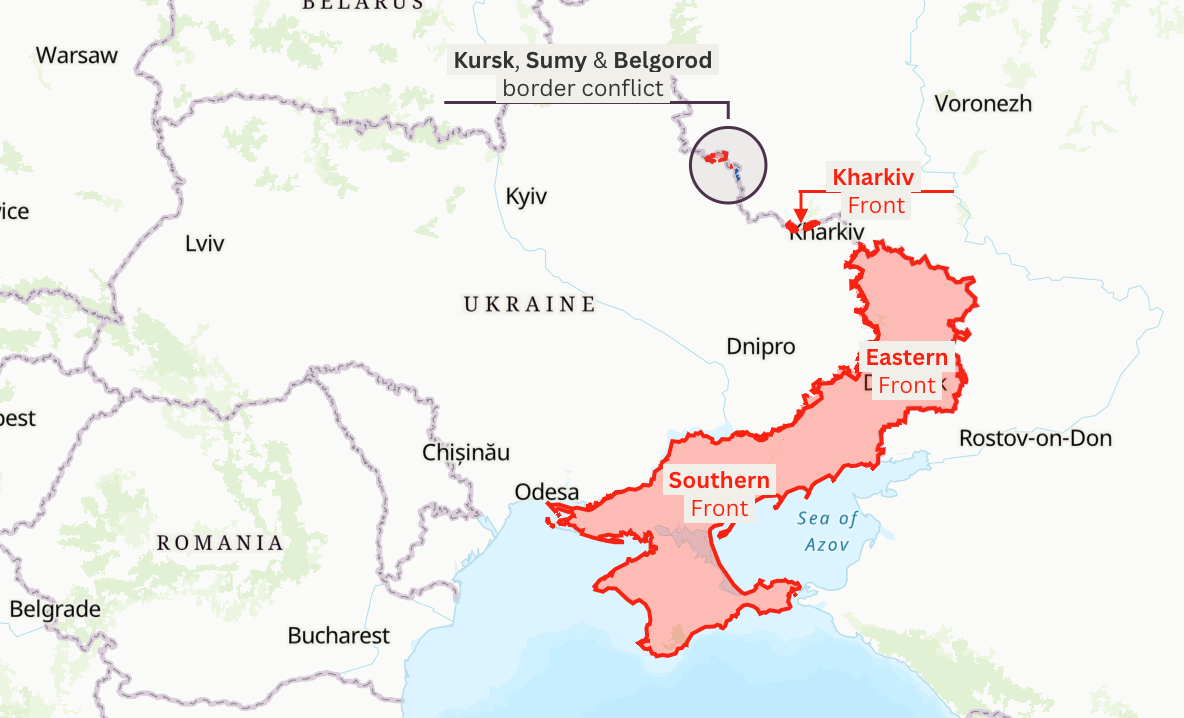
Russia is escalating its offensive in Ukraine, achieving incremental territorial gains, notably in June, amidst the U.S.'s strategic focus on the Middle East. This timing is seen as a strategic play by Putin to secure additional territorial 'bargaining chips' for potential future peace negotiations, reinforcing control over annexed provinces. Despite varying assessments of its pace and cost, Russia's 'mass' strategy of persistent advances aims to exhaust Ukrainian defenses and Western support, with the conflict's trajectory further complicated by its intertwining with Middle Eastern geopolitics, marked by resource diversions and Russia's deepening alliance with Iran.
Russia is intensifying its military offensive in Ukraine, capitalizing on the diversion of U.S. strategic attention to the Middle East. According to analysis from Agence France-Presse and the Institute for the Study of War, Russian forces achieved their most significant territorial gains in June since November of last year. This advance is framed by some analysts as a strategic effort to accumulate 'bargaining chips' by seizing additional territory ahead of potential negotiations, strengthening Moscow's position over its already-held provinces. Assessments of Russia's military effectiveness are divided; some experts point to a successful 'persistent mass' strategy that leverages a manpower advantage to achieve incremental gains, while others, like the American Enterprise Institute's Frederick Kagan, argue the advance is exceptionally slow and limited by armor shortages, with Russia's ultimate goal being total victory through a war of attrition. The conflict is directly intertwined with Middle Eastern geopolitics, evidenced by the U.S. diverting anti-drone systems from Ukraine to Israel and Russia deepening its strategic partnership with Iran, a key supplier of drone technology. This dynamic creates a tangible resource strain on Ukraine while strengthening Russia's military capabilities.
AI-powered research, real-time alerts, and portfolio analytics for institutional investors.
Request DemoOverall Sentiment
moderately negative
Sentiment Score
-0.45
