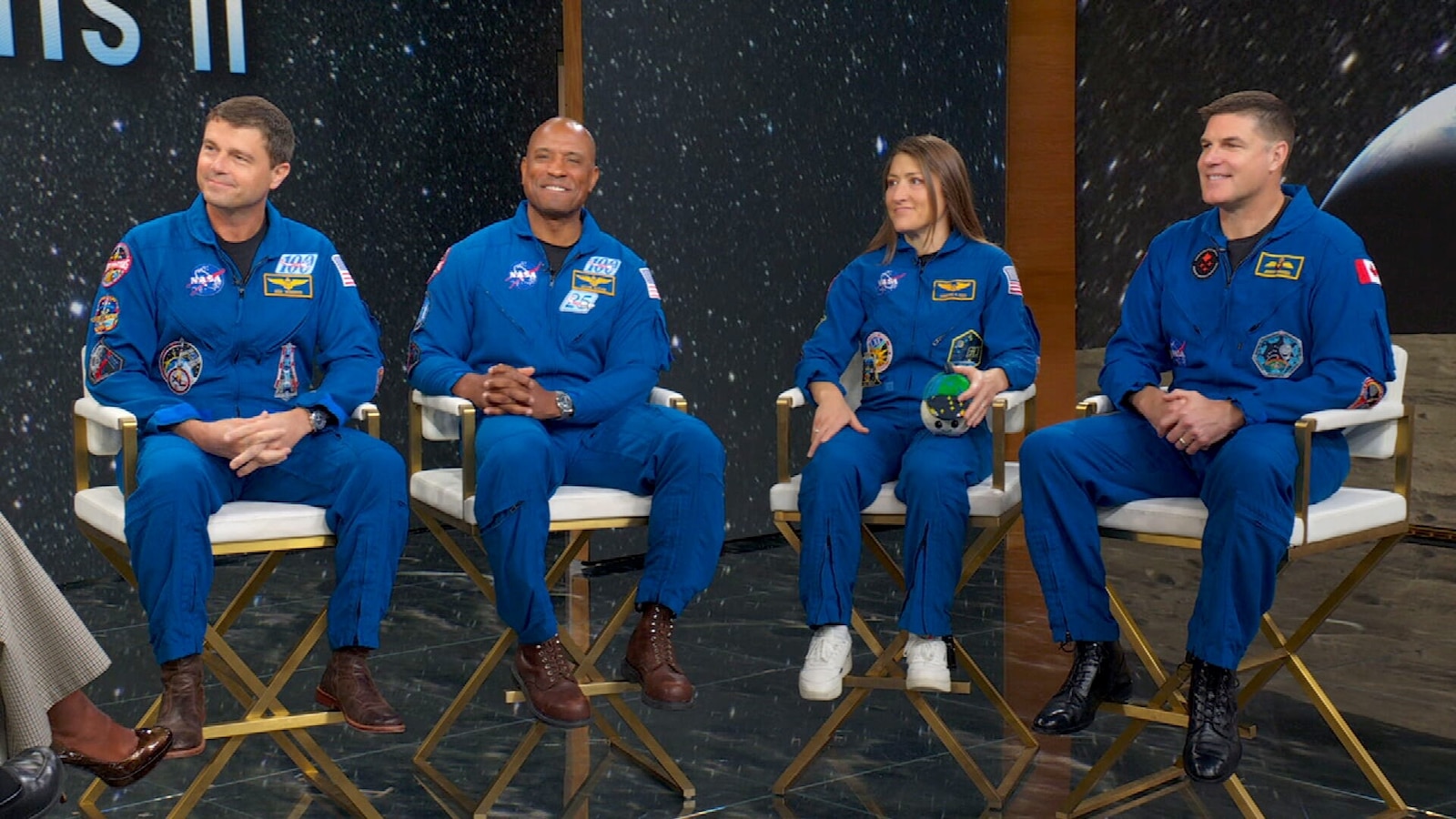
Artemis II astronauts returned to Earth after a 10-day, 690,000-mile mission around the moon that served as a systems test ahead of future Artemis flights, including a planned lunar landing attempt in 2028. The crew emphasized the mission's broad public resonance and reflected positively on the experience, but the article contains no financial, corporate, or market-moving developments. Overall impact is minimal.
The commercial signal here is not the mission itself but the social proof that deep-space exploration still commands broad public attention. That matters because sustained political salience is the gating factor for multi-year federal funding, and the beneficiaries are the industrial primes and subsystem suppliers that sit behind the Artemis stack rather than any single headline name. In practice, enthusiasm today improves the odds of smoother appropriations, higher mission cadence, and less procurement volatility over the next 12-24 months. Second-order, the story reinforces a broader space-industrialization narrative: mission success lowers perceived execution risk for adjacent programs in launch, avionics, radiation-hard components, robotics, and life-support. The underappreciated winners are the “picks-and-shovels” names whose revenue is tied to recurring government integration and testing spend, not just moonshot milestones. That spending tends to arrive in waves, so the near-term trade is on backlog visibility and margin leverage rather than terminal market size. The main risk is that sentiment is a weak catalyst if it does not convert into budget line items. Space programs are highly vulnerable to continuing resolutions, election-cycle noise, and cost-overrun scrutiny; any schedule slip on later Artemis phases would quickly re-rate the theme. Over a 6-18 month horizon, the better setup is to own the supply chain with real backlog and avoid overpaying for pure narrative exposure. Contrarian read: the market may already be assigning too much optionality to the lunar/space theme while underpricing execution drag. If Artemis becomes another long-dated prestige project, the real monetization could accrue to diversified defense/tech contractors with aerospace exposure rather than the obvious space pure-plays. That argues for expressing the theme as a quality/visibility trade, not a speculative space-beta trade.
AI-powered research, real-time alerts, and portfolio analytics for institutional investors.
Request DemoOverall Sentiment
neutral
Sentiment Score
0.10
