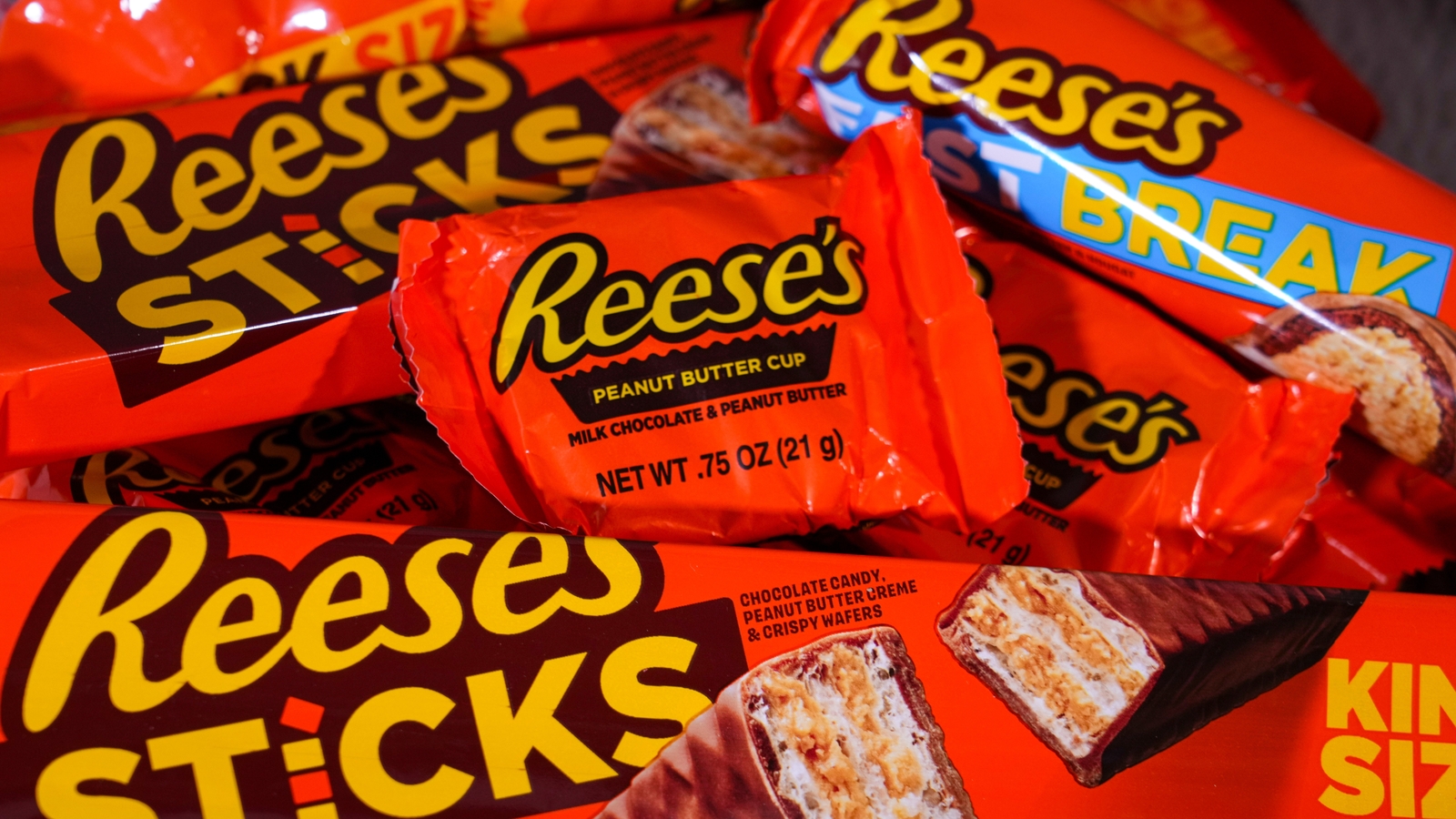
A grandson of Reese's inventor publicly accused The Hershey Co. of degrading the Reese's brand by replacing milk chocolate and peanut butter with lower-cost compound coatings and peanut crème across multiple products, citing a recent Valentine's Mini Hearts release as inedible. Hershey acknowledges some recipe adjustments to enable new shapes and innovations and cites high cocoa prices as a driver, while asserting core Reese's Peanut Butter Cups remain made with milk chocolate and peanut butter; the CFO said changes were consumer-tested and preserved taste profiles. The dispute raises reputational risk around product quality and labeling (noting FDA/EU chocolate rules), which could influence consumer sentiment and brand equity but is unlikely to be an immediate material financial shock.
Market structure: Recipe downgrades benefit private-label and lower-cost confectioners (potentially taking 1-3% share from premium incumbents over 12–24 months) and mechanically improve gross margins for makers using compound coatings (likely +50–200bps per SKU). Hershey (HSY) faces near-term pricing power erosion in impulse/convenience channels; competitors that maintain "real chocolate" (MDLZ, K) can win premium positioning. Commodities: reduced chocolate content is a direct response to cocoa cost pressure and signals demand elasticity in formulations — downside pressure on cocoa futures if substitution scales, while HSY option vol and corporate credit spreads should tick up on reputational risk.
Risk assessment: Tail risks include regulatory action for misleading labeling or a consumer boycott driving a 5–10% revenue hit in 12 months, and activist or family litigation that could amplify headlines. Immediate risk window is days–weeks (social media backlash/retailer pullbacks), short-term weeks–months (sales trend and promotional intensity), and long-term quarters–years (brand equity erosion and SKU rationalization). Hidden dependencies: EU labeling rules create regional taste/label divergence that complicates global consistency and invites cross-border PR issues. Catalysts: Q1 sales trends, retailer delistings, cocoa price spikes >20% YoY, or an investor/activist campaign.
Trade implications: Tactical short bias on HSY is warranted but sized conservatively; consider a 1–2% portfolio exposure via 3–6 month put spreads to cap cost while capturing reputational downside if sales miss by >2–3% quarter-over-quarter. Relative-value: pair trade long MDLZ (1–1.5%) and short HSY (1–1.5%) over 3–12 months to play perceived quality rotation. Commodities: small directional short on cocoa options if prices fail to correct within 30–90 days, but size <0.25% portfolio due to supply volatility. Rebalance after next earnings or if HSY share moves >8%.
Contrarian angles: The market may underappreciate margin tailwinds from deliberate formula choices — HSY could convert SKU-driven cost saves into reinvestment in premium lines, limiting long-term revenue erosion. Historical parallels (Kraft/Mondelez reformulations) show taste complaints often peak then normalize within 6–12 months, suggesting downside may be transitory unless compounded by measurable sales declines >5%. Unintended consequence: stronger premium SKUs or clearer labeling could recover ARPU; position sizing should reflect this binary outcome.
AI-powered research, real-time alerts, and portfolio analytics for institutional investors.
Request DemoOverall Sentiment
moderately negative
Sentiment Score
-0.35
Ticker Sentiment
