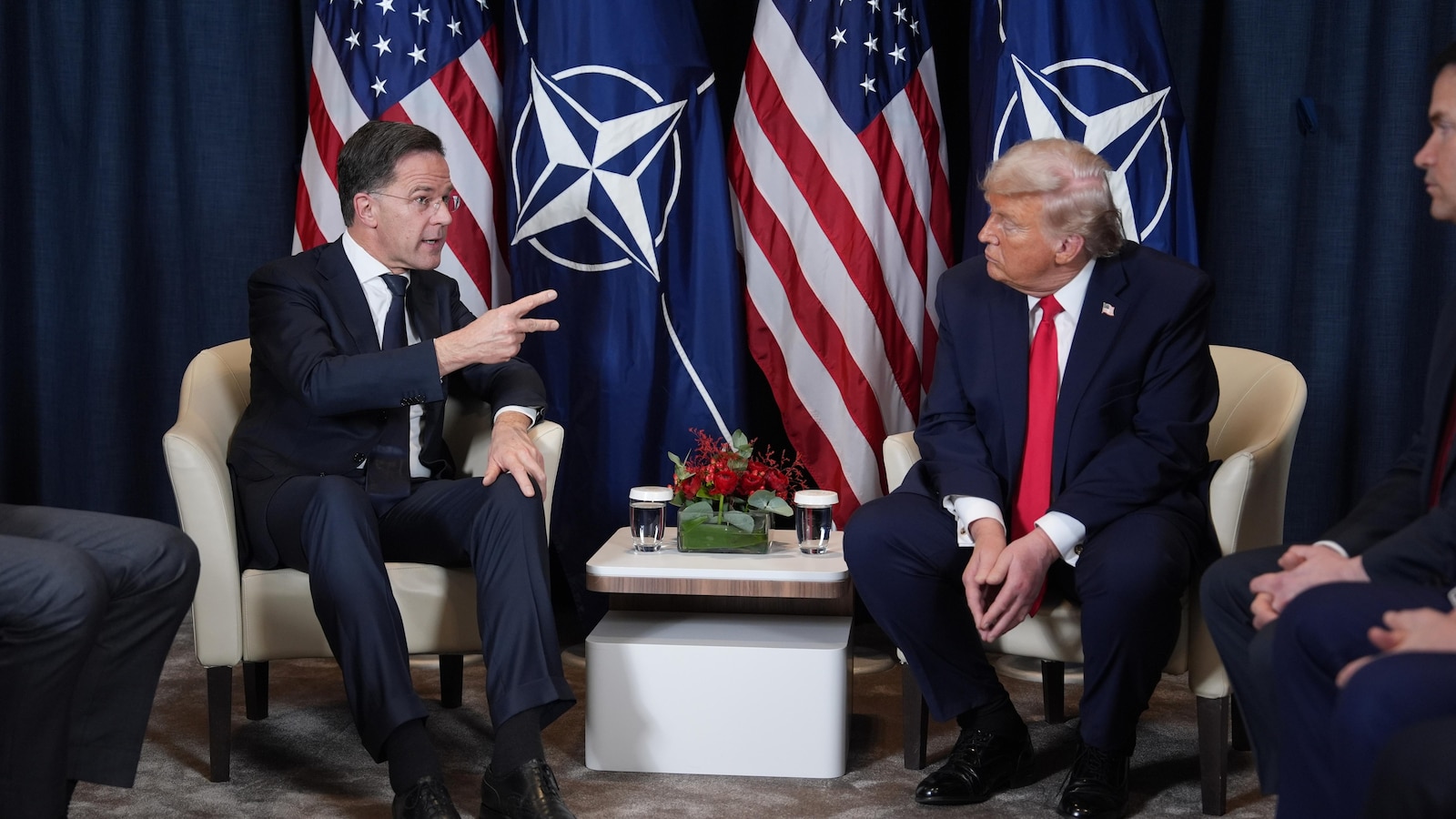
NATO cohesion has weakened after trans-Atlantic infighting — notably U.S. President Trump's public threats over Greenland and comments about allies — undermining collective deterrence against Russia and prompting heated responses from Moscow. European allies and Canada have pledged to sharply boost defense-related spending (a headline aim of 5% of GDP, with core defense around 3.5% by 2035 plus 1.5% for security projects), but uncertainty over U.S. troop levels (including reports of a withdrawal of up to 1,500 troops near Ukraine) and credibility gaps raise the prospect of higher European defense budgets, greater market exposure for defense suppliers, and elevated geopolitical risk premia for investors.
Market structure: A sustained NATO credibility shock re-risks Europe’s security premium and benefits defense contractors, cybersecurity vendors and infrastructure integrators while pressuring tourism, commercial aerospace and some EM assets exposed to Russia. Expect a multi-year re-rating if European capitals deliver on the headline “5% of GDP by 2035” rhetoric — even a 1ppt shift in defense spending across EU-27 implies +€100–200bn annual market opportunities for equipment and construction over the next decade. Commodities (Brent, natural gas) trade higher on tail-risk of disruption; safe-haven flows lift USD and gold; peripheral European yields may widen vs. Bunds in episodic stress.
Risk assessment: Tail risks include a kinetic escalation into NATO territory (low probability, catastrophic) or a U.S. troop drawdown announcement that materially lowers forward deterrence. Near-term (days–weeks) volatility spikes in FX, oil and defense equities; medium-term (6–24 months) is reallocation into defense capex and supply-chain bottlenecks; long-term (3–10 years) is structurally higher European defense budgets. Hidden dependencies: procurement lead-times, export controls, semiconductor supply, and domestic elections that can cancel pledges. Key catalysts: formal U.S. troop redeployment, EU budget approvals, or a major cyber/energy infrastructure attack.
Trade implications: Direct plays — overweight U.S. aerospace & defense (LMT, NOC, RTX; ITA ETF) and cybersecurity (CRWD, PANW) for 6–24 months; underweight airlines (JETS, AAL) and European regional banks with Russia exposure. Use 9–12 month call spreads to express upside in LMT/RTX to limit premium; pair trades like long ITA / short JETS capture safe reallocation. Hedge macro tail risk with 1–2% positions in GLD and long USD (UUP) as crisis insurance.
Contrarian angles: Markets may over-discount the speed of full U.S. withdrawal — durable European procurement and NATO interoperability needs will lock in multi-year order flow benefiting primes and Tier-2 suppliers; that suggests buy-on-pullback opportunities rather than panic buying. Conversely, the promise of “5% GDP by 2035” is front-loaded politically but will face fiscal constraints — focus on companies with near-term order backlog growth (next 12–36 months) not just headline exposure. Unintended consequences: faster defense capex could crowd out green infrastructure, favoring industrials tied to heavy manufacturing rather than software-only vendors.
AI-powered research, real-time alerts, and portfolio analytics for institutional investors.
Request DemoOverall Sentiment
moderately negative
Sentiment Score
-0.55
Ticker Sentiment
