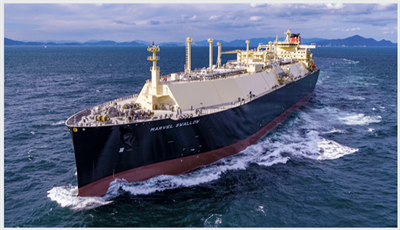
Wärtsilä has signed a 10-year Lifecycle Agreement with MOL Global Ship Management covering operational support and maintenance for 12 new LNG carriers delivered in 2024–2025, with three vessels booked in Q3 2025 and the remainder booked in H1 2025. The contract includes Wärtsilä’s Dynamic Maintenance Planning, 24/7 remote support, predictive maintenance (Expert Insight) and field services for vessels powered by two 6-cylinder and two 8-cylinder Wärtsilä 34DF dual-fuel engines plus four gas valve units and catalytic emission control. The deal strengthens a strategic customer relationship and secures multi-year service revenue and emissions-reduction capabilities, though it is likely modest relative to Wärtsilä’s FY2024 net sales of EUR 6.4 billion.
Market structure: Wärtsilä (Nasdaq Helsinki: WRT1V) and specialist marine service providers are direct winners — 10-year lifecycle contracts for 12 LNGCs lock in recurring high-margin service revenue and raise switching costs for owners (12 vessels delivered 2024–25). Shipowners with in-house maintenance or non-exclusive suppliers face lost aftermarket revenue; shipyards and one-off OEMs could see lower follow-on spare-parts demand. Expect incremental pricing power for service providers over 12–36 months as more owners seek uptime and emissions compliance.
Risk assessment: Tail risks include a regulatory pivot (e.g., sudden IMO/EU rule banning certain retrofit solutions) or operational failures in Wärtsilä-supplied fleets leading to warranty claims — assign a 5–10% chance over 2 years. Near-term (days–months) impact is limited to sentiment; short-term (3–12 months) depends on Q1/Q2 2026 service backlog and spare-parts supply; long-term (2–5 years) benefits accrue via recurring revenue and digital product adoption. Hidden dependency: concentration risk from multi-vessel, single-vendor agreements that could amplify reputational contagion.
Trade implications: Primary trade — establish a 2–3% long position in WRT1V targeting +15–25% in 12 months with a 10–12% stop-loss, funded from reduced shipbuilder exposure. Pair trade — long WRT1V (WRT1V) vs short shipyard/newbuild cyclical exposure (e.g., HY or staging-name exposure) to capture margin expansion in services. Options: buy a 6–12 month call spread on WRT1V (25–35 delta bought, 45–55 delta sold) sized to mimic the 2–3% equity exposure and/or sell 6-month OTM puts at 8–12% downside to collect premium if comfortable with assignment.
Contrarian angles: Markets may underprice durability of lifecycle contracts — recurring revenue could contribute low-double-digit percentage points to Wärtsilä’s organic EBIT margin over 2–3 years, but this is not guaranteed. Conversely, the market may already price in services growth; downside exists if MOL or other large clients renegotiate terms or insource maintenance. Historical parallel: defence/platform OEMs who shifted to services (e.g., Rolls-Royce aero) saw initial multiple expansion then mean reversion; watch contract renewal cadence and penalty clauses as catalysts for re-rating.
AI-powered research, real-time alerts, and portfolio analytics for institutional investors.
Request DemoOverall Sentiment
moderately positive
Sentiment Score
0.45
