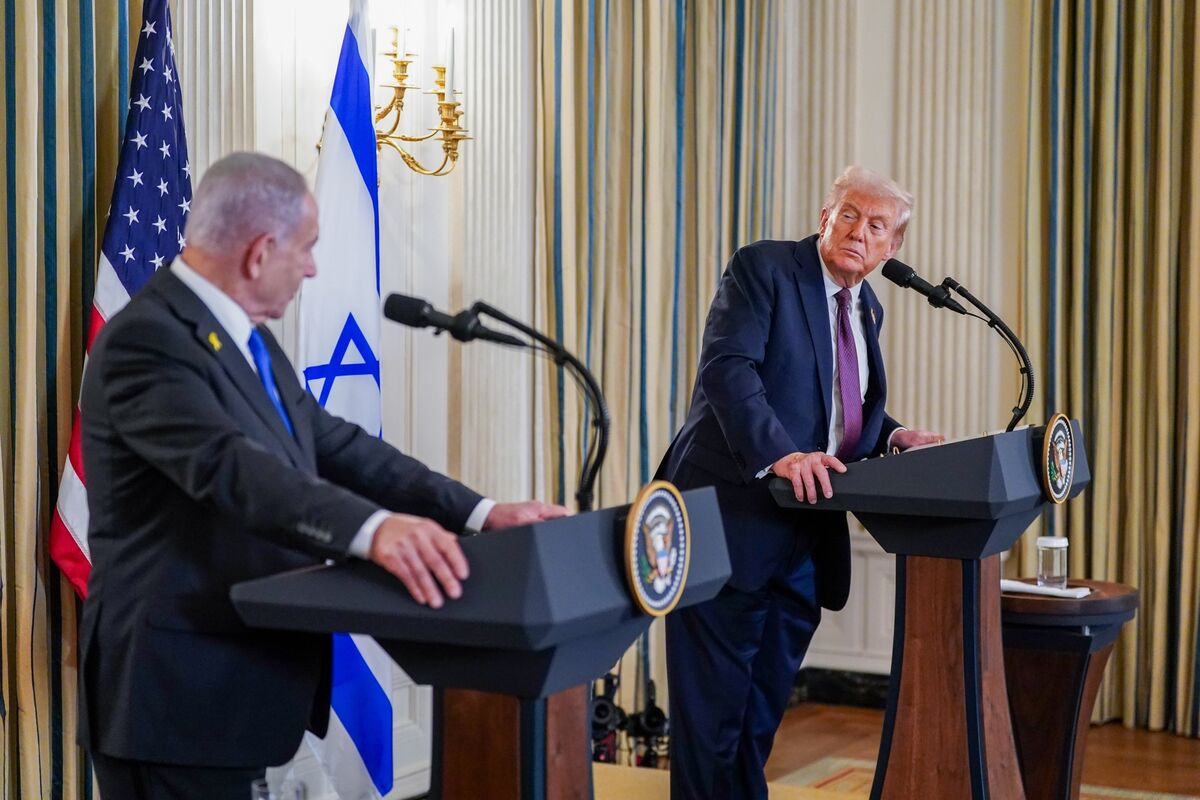
Former President Trump has outlined a new plan for the Gaza conflict, presenting Hamas with an ultimatum to release hostages, disarm, and surrender, or face intensified Israeli military action with explicit U.S. backing. This proposal signals a potential escalation of the conflict, as Israeli forces are already positioned in Gaza City, and could have significant implications for geopolitical stability in the Middle East and related market sectors.
A new proposal by former President Donald Trump frames the Gaza conflict as a direct ultimatum to Hamas, demanding the release of hostages, disarmament, and surrender. The alternative presented is intensified Israeli military action with explicit and 'full' U.S. backing. This binary framework, which the article's headline suggests is unlikely to be accepted by Hamas, signals a significant potential for conflict escalation rather than a move toward de-escalation. The presence of Israeli troops and tanks already in Gaza City, coupled with the displacement of 800,000 Palestinians, provides the immediate context for this potential intensification. The proposal's 'pro-Israel' stance and its link to U.S. domestic politics introduce a new variable into the geopolitical landscape of the Middle East. The strongly negative sentiment score (-0.65) and significant market impact score (0.65) underscore investor perception of heightened risk and regional instability stemming from this development.
AI-powered research, real-time alerts, and portfolio analytics for institutional investors.
Request DemoOverall Sentiment
strongly negative
Sentiment Score
-0.65
