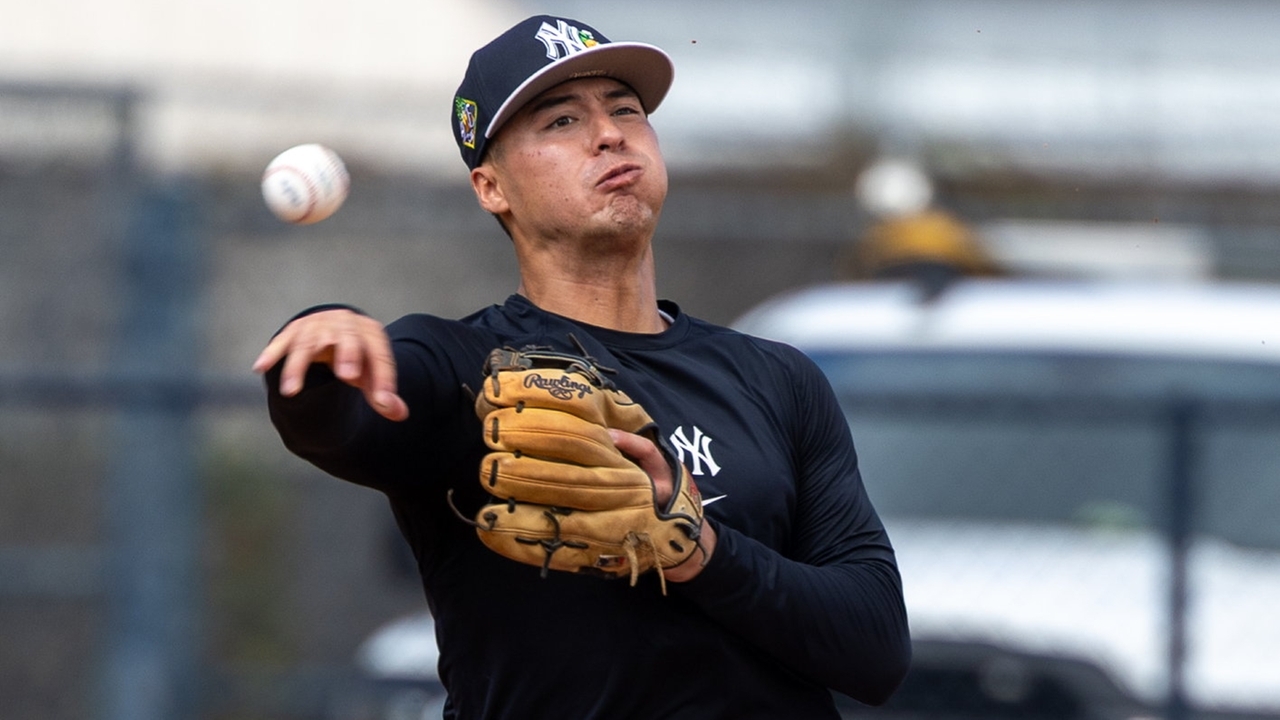
The Yankees optioned Anthony Volpe to Triple-A Scranton/Wilkes-Barre, signaling Jose Caballero has won the short-term starting role while the team continues to win at a 23-11 pace. New York has won 15 of its last 19 games and five straight series, with Caballero, Jasson Dominguez and Ben Rice helping drive the offense. The move also delays Volpe's free-agency timeline, but the article frames it primarily as a roster decision rather than a market-moving event.
This is less a baseball personnel note than a clean read-through on how the Yankees are monetizing optionality: the club is prioritizing near-term win probability over pedigree, and that usually persists until performance mean-reverts or injuries force a reset. The second-order effect is that the roster now has a lower tolerance for “project” bats with strikeout risk and defensive volatility; that raises the bar for any future promotion and makes the organization more likely to keep squeezing value out of low-cost, high-contact role players. If this persists for a few more weeks, the market should begin to discount Volpe’s near-term MLB role and price in a delayed development curve rather than an immediate rebound.
The more important setup is injury fragility around the current production core. The team’s run environment is being carried by a small number of bats overperforming their preseason baselines, so a short injury chain at first base or among the top-middle order could quickly expose how thin the margin is. That creates asymmetry: the downside to the Yankees’ recent hot stretch is not gradual regression, but a step-function decline if one or two everyday contributors miss even 7-14 days.
From a sentiment perspective, this is a classic overconfidence trap: a strong April/early-May record can harden roster decisions before enough plate-appearance data exists to distinguish sustainable gains from a hot streak. The contrarian view is that Volpe’s demotion may be the wrong conclusion from the right process; if he is still a league-average or better defender and simply needs fewer offensive expectations, the club could end up giving away future value by over-weighting a 6-week sample. The key catalyst is any regression in replacement performance or a defensive lapse cluster, which would reopen the door within 2-4 weeks.
For investors, the relevant angle is not a direct equity trade but a probability shift around game-level outcomes and media sentiment. The market often overreacts to “meritocracy” narratives in hot teams, then quickly reverses when the replacement-level skill shows up. That creates a short-window trading opportunity in event-driven sports-adjacent markets if available, but the better institutional read is to fade complacency rather than chase the streak.
AI-powered research, real-time alerts, and portfolio analytics for institutional investors.
Request DemoOverall Sentiment
neutral
Sentiment Score
0.05
