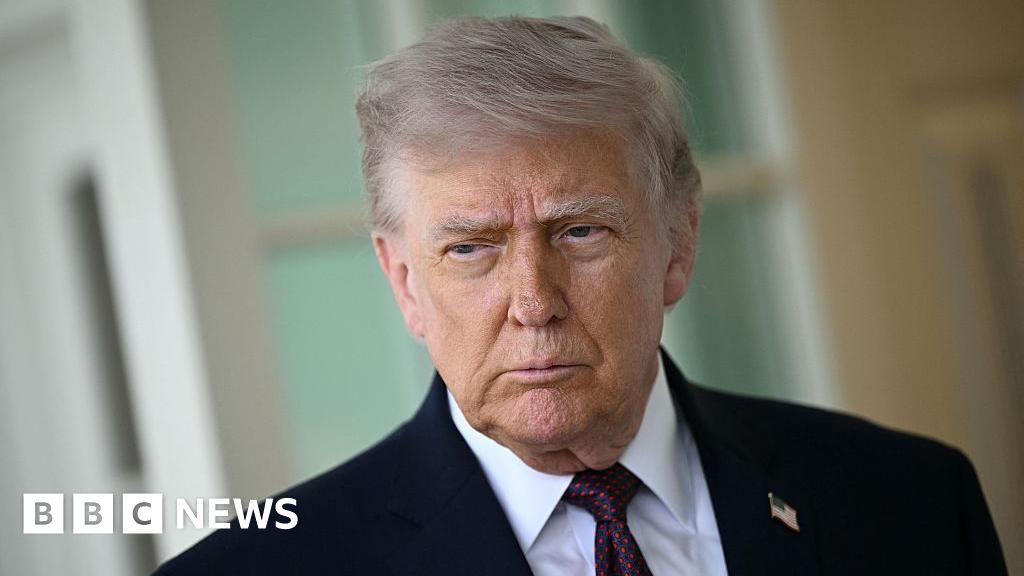
India's foreign ministry called remarks shared by President Trump 'uninformed, inappropriate and in poor taste,' after Trump posted a transcript referring to India as a 'hellhole.' The incident adds strain to already rocky US-India ties amid disputes over Russian oil purchases, 50% US tariffs on Indian goods last year, and ongoing trade negotiations. While primarily diplomatic, the rhetoric increases geopolitical friction and could complicate trade and policy talks.
The market implication is less about headline offense and more about the widening policy risk premium around India’s external growth model. If Washington starts treating Indian capital, students, engineers, and trade concessions as bargaining chips in a single narrative, the second-order effect is higher dispersion across Indian asset classes: export-heavy IT services and global-facing manufacturing are most exposed, while domestically insulated sectors should outperform on a relative basis. The key near-term risk is not immediate sanctions, but a slower, more unpredictable negotiation environment that can freeze procurement decisions and delay deal closures for 1-2 quarters.
This is also a labor-market and visa-price story in disguise. Any renewed pushback on skilled immigration raises optionality value for US firms to onshore, nearshore, or diversify hiring away from India-dominant pipelines, which is modestly negative for Indian IT services multiples and potentially positive for Mexico/LatAm delivery hubs and US domestic staffing. If rhetoric escalates into actual H-1B tightening, the earnings revision risk would show up first in FY26 guidance rather than current-quarter prints, because project pipelines usually roll with a lag.
On trade, the larger issue is that a tariff détente can be reversed quickly if diplomatic signaling deteriorates. That makes recent compression in India-linked risk premia look fragile: any setback in the Rubio visit or Russian-oil negotiations could widen credit spreads, weaken the rupee, and pressure foreign inflows over days to weeks. The contrarian angle is that the selloff may be overdone if this remains rhetorical; India’s strategic value to the US still argues for a pragmatic reset, so the event is best treated as a volatility trigger rather than a structural regime shift unless it is followed by concrete policy action.
AI-powered research, real-time alerts, and portfolio analytics for institutional investors.
Request TrialOverall Sentiment
moderately negative
Sentiment Score
-0.45
