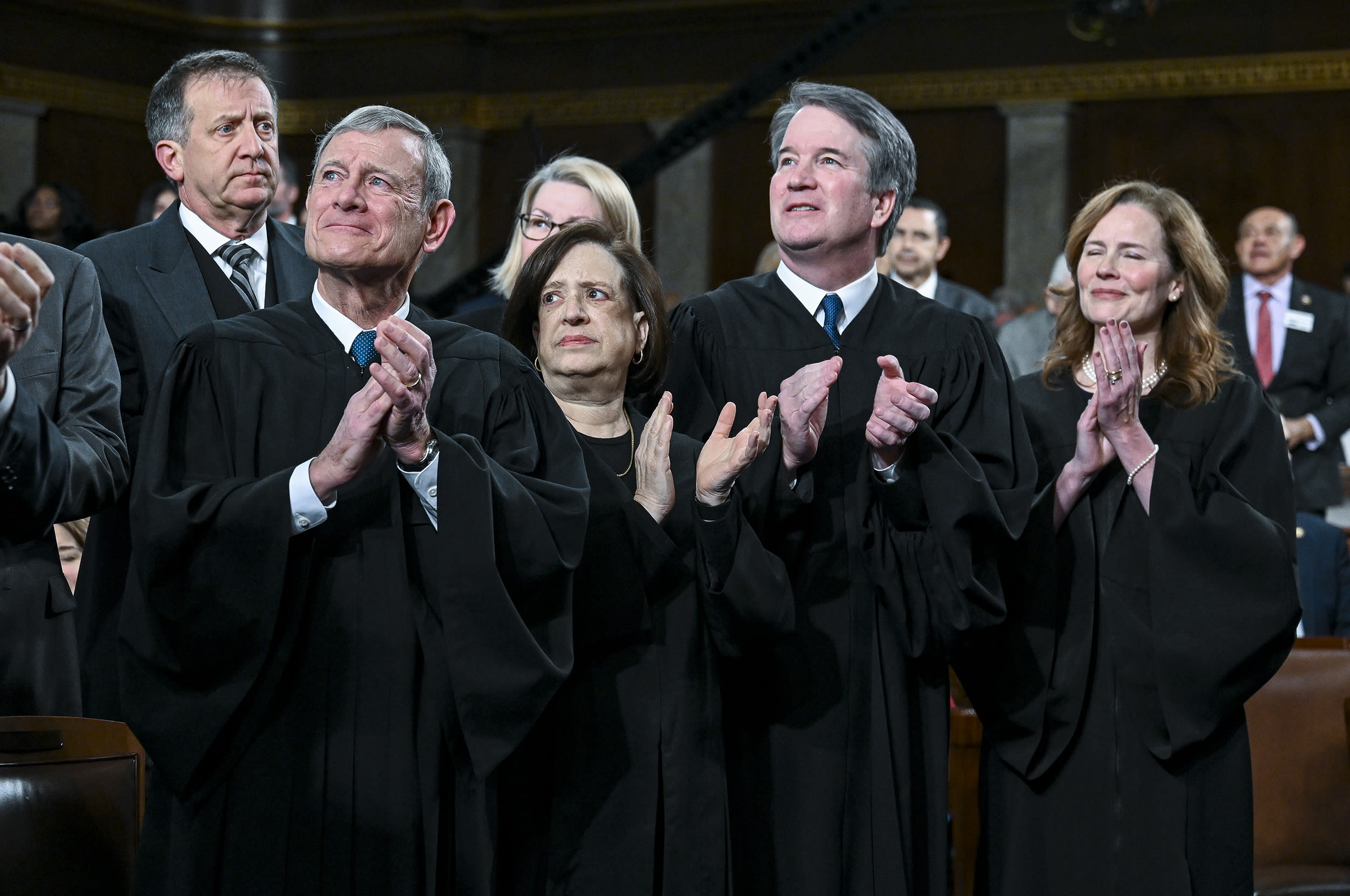
The Supreme Court this week agreed to review a climate-related appeal brought by oil companies backed by the Trump administration, and heard and decided four cases including a 5-4 decision insulating the government from damages when the Postal Service fails to deliver mail, a ruling that split the bench largely along appointing-party lines. Justice Sotomayor pressed for greater transparency around Florida executions amid concerns about expired drugs and recordkeeping, and the court scheduled a Second Amendment hearing in the Hemani case to decide whether the federal ban on firearm possession by an “unlawful user” of controlled substances applies to habitual marijuana use.
Market structure: A Supreme Court review that tilts away from municipal climate liability is a positive shock to integrated oil majors (XOM, CVX) and reinsurers by reducing a non-market, high-volatility liability overhang; conversely ESG funds, green capex names and cannabis operators (MJ) face increased regulatory and political risk. Competitive dynamics: a favorable legal precedent would restore pricing power to legacy hydrocarbons (potential +5–15% EBITDA tailwind consensus over 12–24 months if capex plans accelerate) while compressing near-term fundraising and M&A valuations for green incumbents. Cross-asset: expect a modest risk-premium rise in IG/BB spreads (5–20bps), a 1–3% knee-jerk move in WTI on policy signaling, and +20–50% implied-volatility jumps in energy and cannabis options around court rulings.
Risk assessment: Tail risk includes a plaintiff-friendly ruling that imposes multi-billion damages (analogue: tobacco settlements) which would knock 5–20% off market caps of exposed majors in a single-day reprice. Time horizons: immediate (days around oral arguments) = volatility spikes; short (weeks–months) = sector rotation; long (years) = precedent shaping capex and valuation multiples. Hidden dependencies: DOJ/administration defense posture, state budgets, and insurance contract wording can shift loss socialization fast. Catalysts: SCOTUS decisions (next 3–18 months), DOJ briefs, major municipal filings, and midterm election outcomes.
Trade implications: Direct: establish a 2–3% portfolio long split XOM (1.5%) and CVX (1.5%) 6–12 month horizon; add 6–9 month XOM 5% ITM calls to lever upside; stop-loss if combined position falls 12%. Relative value: pair long XOM / short TAN (solar ETF) in 1:0.6 dollar-neutral ratio for 3–9 months to capture rotation. Options: buy 3-month MJ puts 15% OTM (size 0.5–1% premium) as asymmetric downside hedge; take profits on 30–40% premium gain or cut at 100% loss. Entry: execute within next 2–6 weeks ahead of docket/calendar risk; exit or re-evaluate after SCOTUS order or DOJ briefings.
Contrarian angles: The market underestimates the probability of a mixed ruling—oil relief could be partial and procedural, leaving substantive liabilities intact, so overweighting pure energy is risky; cannabis sell-side panic may be overdone—federal enforcement historically lags legal changes, so short-dated puts could decay worthless. Historical parallel: 1990s tobacco litigation produced both outsized settlements and multi-year arbitrage opportunities in related suppliers—expect multi-quarter dispersion. Unintended consequence: a pro-oil decision could trigger accelerated ESG divest flows that temporarily bid energy equities higher but create political backlash and regulatory countermeasures within 12–24 months.
AI-powered research, real-time alerts, and portfolio analytics for institutional investors.
Request TrialOverall Sentiment
neutral
Sentiment Score
0.00
