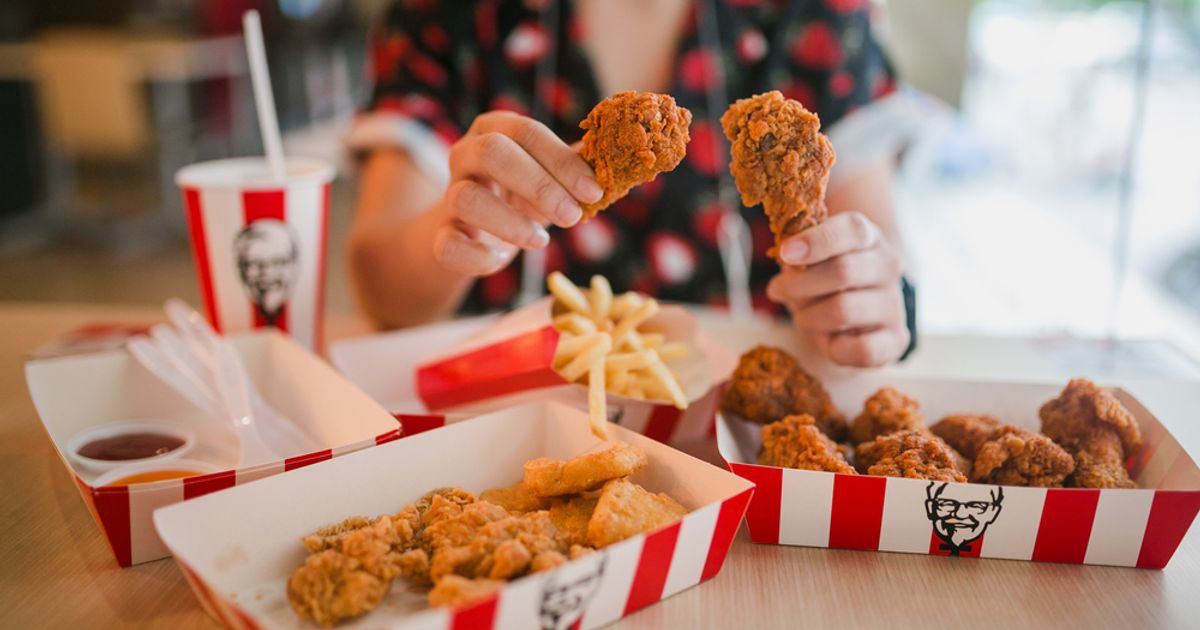
Yum! Brands modestly beat expectations in Q4 2025 with revenue of $2.51 billion (up 6% YoY) versus a $2.45 billion consensus and adjusted EPS of $1.61 versus $1.60 expected. Brand strength was driven by Taco Bell same-store sales growth of 7% for the quarter and year, and a record KFC expansion (over 1,100 openings in Q4 and nearly 3,000 for the year); worldwide system sales rose 5% on a comparable basis. The company added 1,814 gross units in Q4, digital system sales exceeded $11 billion with a digital mix near 60%, and full-year adjusted EPS was $6.05 (up 10%); shares were little changed, up ~0.4% post-release.
Market structure: Yum! (YUM) is winning share via aggressive unit growth (≈+3% YoY, ~3,000 new KFC stores in 2025) and a near-60% digital mix ($11B qtrly system digital sales), which increases throughput and margin capture versus dine-in peers. Direct beneficiaries: franchised landlords, POS & delivery partners, chicken/poultry suppliers; losers: slower-adopting casual-dining chains and domestic competitors with weaker international franchises (e.g., smaller QSRs). Cross-asset: stronger fundamentals should modestly tighten YUM credit spreads (positive for IG bonds), keep equity IV subdued (good for directional option spreads), and lift protein commodity demand (upward pressure on chicken feed/corn).
Risk assessment: Key tail risks include a franchisee financing squeeze or pushback from rapid openings, a poultry supply shock/avian flu increasing input costs >10% YoY, or adverse FX shifts in key emerging markets that could erase unit economics. Immediate market impact is likely muted (days); over 1–4 quarters unit rollout and international same-store sales will test sustainability; long-term (2–5 years) profitability hinges on royalty mix and digital margin retention. Hidden dependency: growth assumes continued franchisor-franchisee capex and stable royalty rates—any change compresses returns. Catalysts: FY26 guidance updates, quarterly comp prints, and commodity cost inflection points.
Trade implications: Favor a measured overweight in YUM given 6–10% organic system sales and 10% EPS growth in 2025; use options to define risk. Consider bond allocation if spread >100bp to Treasuries (5–7yr). Relative trades: long YUM vs shorter-duration/less-digital peers to capture secular share shift. Entry windows: add on pullbacks to $150 and trim into 6–12 month outperformance or if same-store sales slow to <3% YoY.
Contrarian angles: Consensus underestimates saturation risk—3,000 net new stores in one year risks unit dilution in mature markets and potential franchisee margin pressure. The market’s tepid reaction (stock flat on beat) suggests underpriced optionality in international rollouts; options are cheap for defined-risk bull spreads. Historical parallel: Domino’s rapid scale then margin reversion—monitor franchisee cash flow metrics and royalty resets as early warning signals.
AI-powered research, real-time alerts, and portfolio analytics for institutional investors.
Request DemoOverall Sentiment
mildly positive
Sentiment Score
0.25
Ticker Sentiment
