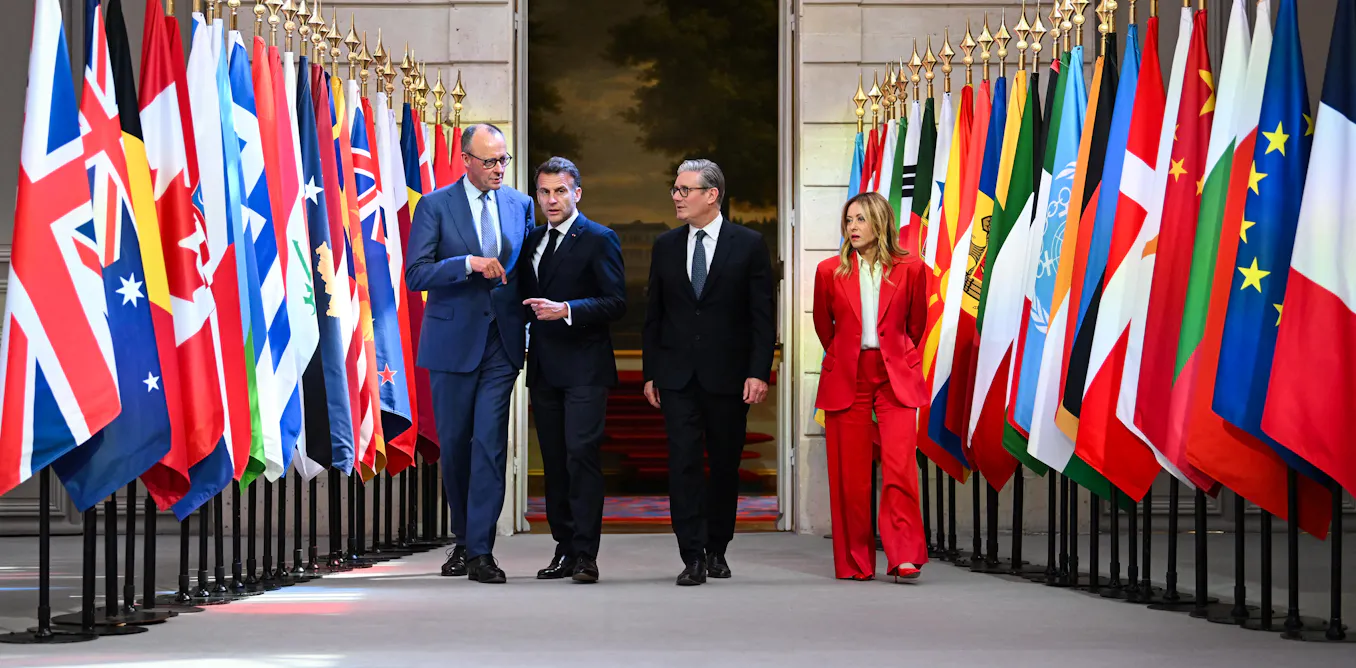
The article argues the Iran war has triggered a major rupture in trans-Atlantic relations, with Spain and Italy denying U.S. military access and Washington threatening a trade embargo on Spain and withdrawing 5,000 troops from Germany. It frames this as a broader collapse of U.S. alliance credibility, with Europe accelerating steps toward strategic autonomy, including the EU’s €90 billion joint-debt loan to Ukraine and possible anti-coercion measures against U.S. tariffs. The fallout could affect defense, trade, energy security, and FX markets across Europe and the U.S.
The market implication is not just “Europe is upset”; it is that U.S. alliance credibility is becoming a tradable macro variable. If allied basing, refueling, ISR, and overflight permissions become discretionary rather than automatic, the U.S. has to price in higher execution friction for future Middle East and Eastern Europe operations, while Europe is forced to spend into autonomy faster than fiscal consensus would normally allow. That shifts demand toward sovereign-capacity beneficiaries in Europe—missiles, air defense, munitions, satellite/secure comms, C4ISR—and away from legacy trans-Atlantic integrators exposed to political vetoes.
The second-order effect is on financing and currencies. A more fragmented security architecture raises the probability of larger European issuance for defense and industrial policy, which is supportive for core sovereign spreads relative to semi-core, but negative for countries seen as soft on NATO burden-sharing or exposed to U.S. trade coercion. A U.S.-Europe policy rupture also reinforces a weaker dollar in risk-off periods only if global reserve managers conclude U.S. policy is less predictable; otherwise the dollar can still rally on growth shock, so FX is a two-way hedge rather than a clean short.
The bigger underappreciated catalyst is supply-chain repricing for energy and defense inputs. Europe’s push for autonomy increases medium-term demand for LNG, critical minerals, propulsion systems, and manufacturing capacity outside U.S. control, while any Hormuz disruption would expose how little of the marginal energy security stack is truly sovereign. The setup is most relevant over 3-12 months: headlines can reverse quickly, but procurement, budget allocations, and corporate capex cannot. The consensus may be too focused on diplomatic theater and underestimating how quickly repeated coercive episodes convert political distrust into multi-year spending and sourcing decisions.
AI-powered research, real-time alerts, and portfolio analytics for institutional investors.
Request DemoOverall Sentiment
strongly negative
Sentiment Score
-0.65
