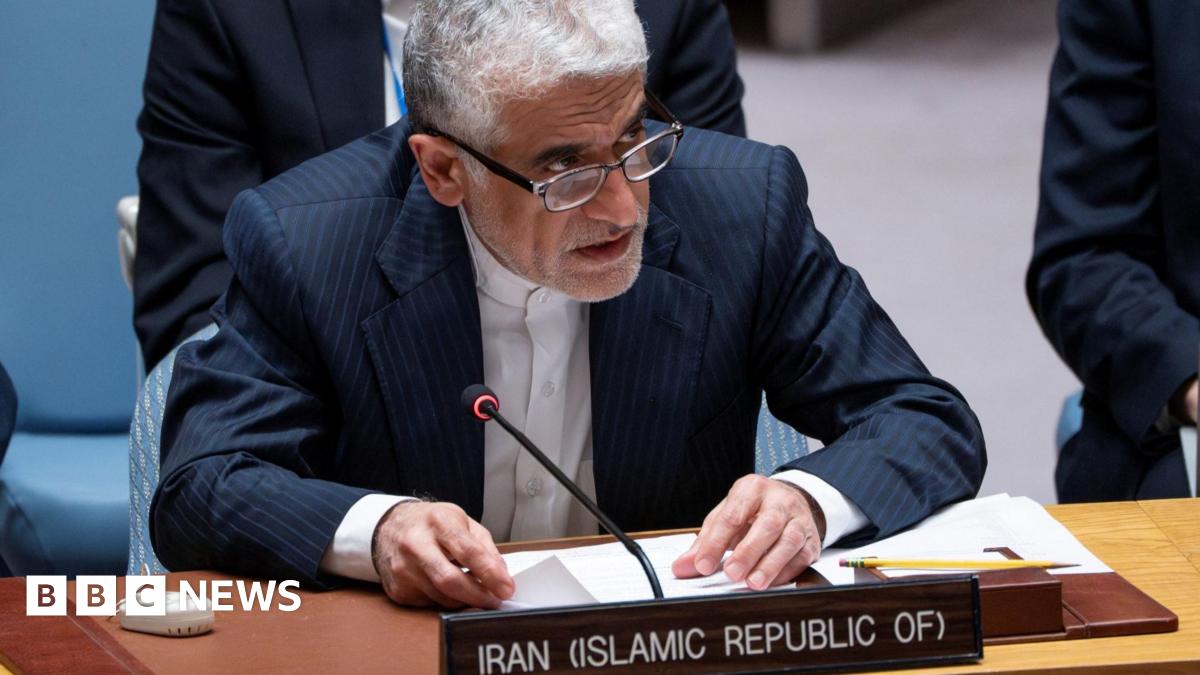
Israel's UN representative Danny Danon lauded former President Donald Trump's decisive action against Iran, asserting the world should be grateful for his intervention when others hesitated. Danon claimed Iran exploited diplomatic negotiations as 'camouflage' to advance its nuclear and missile programs, enriching uranium beyond civilian use and never intending to honor agreements, thus justifying a firm stance against Tehran's perceived duplicity and underscoring geopolitical tensions.
The statement from Israel's UN representative, Danny Danon, reinforces the hawkish geopolitical stance against Iran and serves as a strong endorsement of former President Trump's confrontational policies. The core of the message accuses Iran of using diplomatic processes as a 'camouflage' to advance its nuclear and missile programs, specifically citing uranium enrichment 'far beyond the point of civilian usage'. This rhetoric frames past negotiations as disingenuous and justifies a more aggressive posture, asserting that inaction would have been a 'death sentence'. While the market impact score of 0.1 suggests these specific comments are not a significant new catalyst, they underscore the deep-seated and persistent tensions identified by the 'Geopolitics & War' and 'Sanctions & Export Controls' themes. For investors, this reaffirms the fragility of the geopolitical landscape in the Middle East and the high-risk environment for diplomacy, keeping the potential for renewed sanctions or conflict as a relevant background factor.
AI-powered research, real-time alerts, and portfolio analytics for institutional investors.
Request DemoOverall Sentiment
neutral
Sentiment Score
0.00
