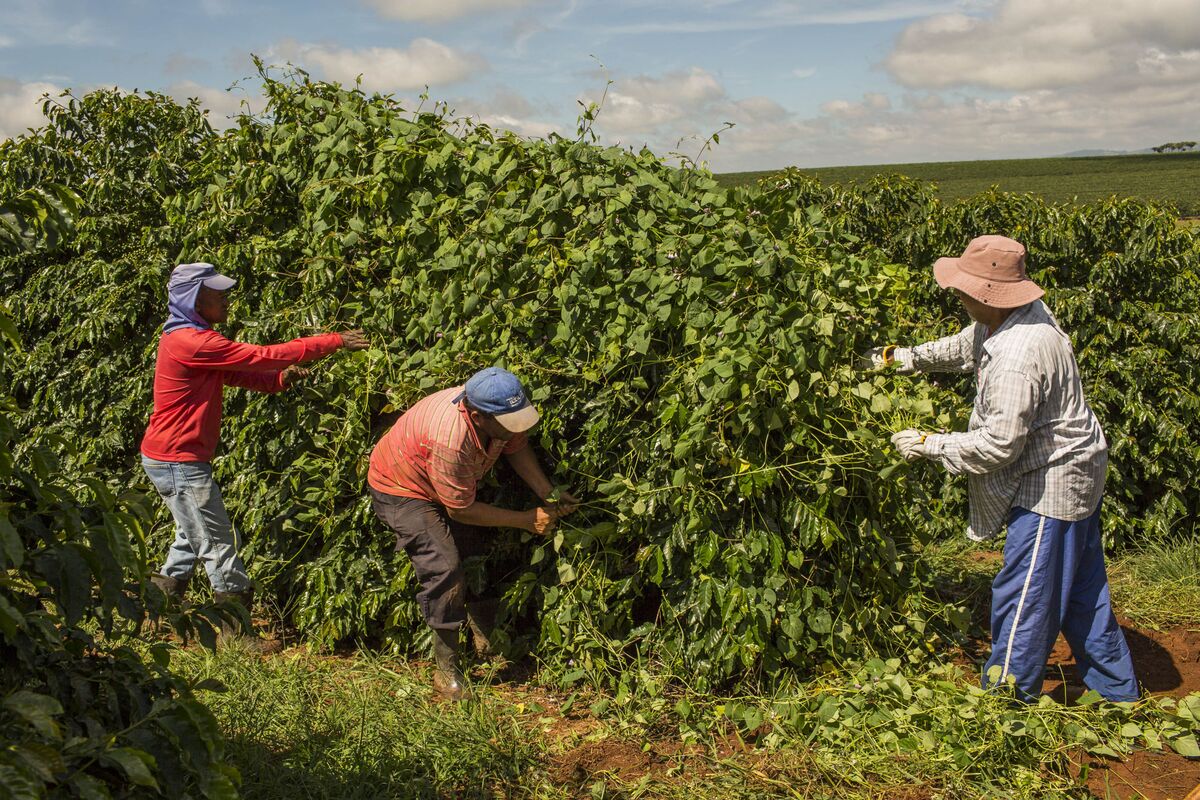
Arabica coffee futures dropped as much as 3.6% to $3.7215 a pound, primarily driven by improved crop prospects in Brazil. Above-normal rainfall in the top growing region of Minas Gerais significantly boosted the outlook for next season's supply, signaling potential downward pressure on global arabica prices.
Arabica coffee futures are experiencing significant bearish pressure, evidenced by a drop of as much as 3.6% in the most-active contract to $3.7215 a pound. The primary driver for this decline is a fundamental shift in the supply outlook from Brazil, the world's top producer. Specifically, weekly rainfall in the critical Minas Gerais growing region has recovered to above-normal levels, according to Somar Meteorologia data, directly improving prospects for the upcoming crop after a period of dryness. This positive weather development signals a potential increase in global supply, which is currently outweighing other market factors such as noted trade tensions with the US that are reportedly stifling trade.
AI-powered research, real-time alerts, and portfolio analytics for institutional investors.
Request DemoOverall Sentiment
moderately negative
Sentiment Score
-0.50
