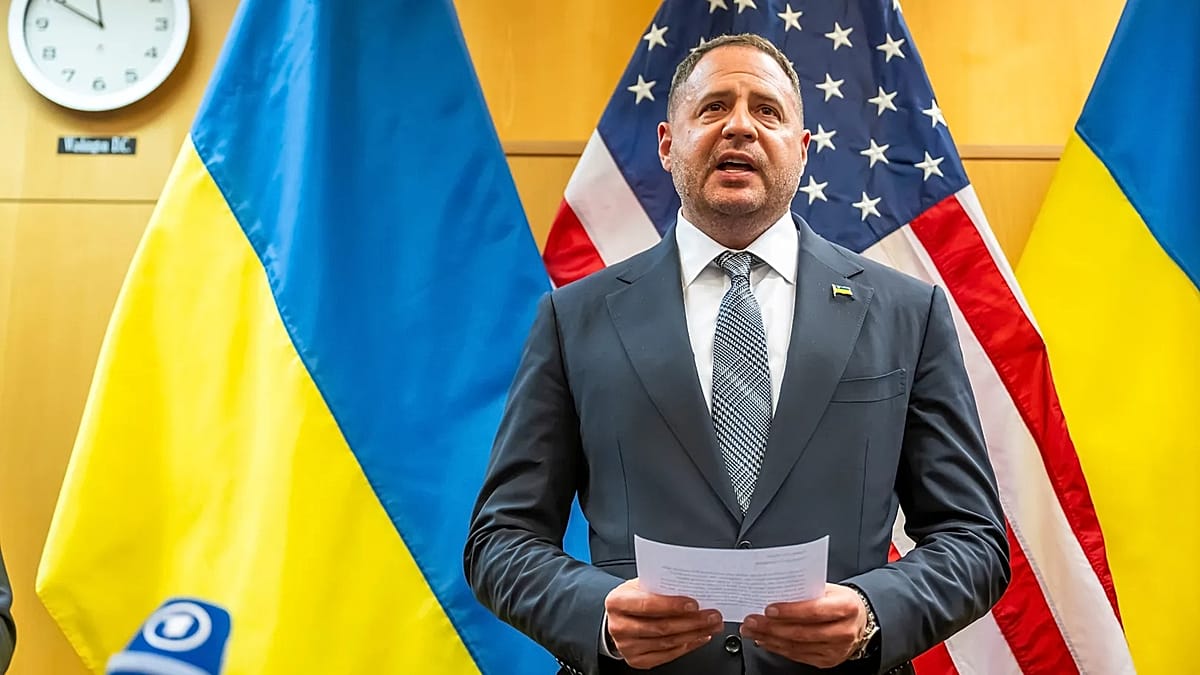
Ukraine's former chief of staff Andriy Yermak was released on €2.7 million bail while remaining a suspect in a money laundering probe tied to a luxury residence project outside Kyiv. Investigators say up to €9 million was laundered between 2021 and 2025 through a scheme linked to Enerhoatom, with one of four planned mansions allegedly intended for Yermak. The case raises governance and corruption concerns, but the direct market impact is likely limited.
This is less about one official and more about the fragility of Ukraine’s reform premium. Markets that have been willing to finance the country on the assumption of accelerating anti-corruption normalization now have a fresh reminder that governance risk is still endogenous to wartime power structures, which can widen sovereign risk premia even without any change on the battlefield. The immediate economic impact is limited, but the reputational damage compounds over months because it hits the exact cohort needed to keep IMF/EU funding, bilateral support, and private capital flowing.
The second-order effect is on transaction economics inside Ukraine: capital allocators will demand higher hurdle rates for real estate, infrastructure, and reconstruction-adjacent projects, especially where public procurement or state-linked counterparties are involved. That raises the cost of capital for domestic developers and contractors while benefiting firms with cleaner governance, international audit trails, and non-Ukraine revenue exposure. It also increases the odds that Western counterparties push harder on escrow, milestone-based disbursements, and political-risk insurance, which can slow project velocity even if funding remains available.
The catalyst path matters. In the next few days, expect headline volatility and more scrutiny of leadership cohesion; over 1-3 months, the key risk is whether donors treat this as isolated corruption or as evidence that governance reforms are losing traction under wartime stress. The tail risk is not asset seizure or immediate default; it is incremental funding friction, delayed tranches, and a higher discount rate applied to any Ukraine-linked cash flows.
Consensus may be underpricing how much domestic political capital is being spent on anti-corruption enforcement itself. If the case broadens, that can be bullish for the credibility of oversight institutions in the medium term, even if it is painful near-term for the executive branch. The better trade is to fade politically exposed Ukraine reconstruction narratives on strength, while selectively buying clean, diversified beneficiaries of eventual rebuilding rather than the most headline-sensitive names.
AI-powered research, real-time alerts, and portfolio analytics for institutional investors.
Request DemoOverall Sentiment
strongly negative
Sentiment Score
-0.55
