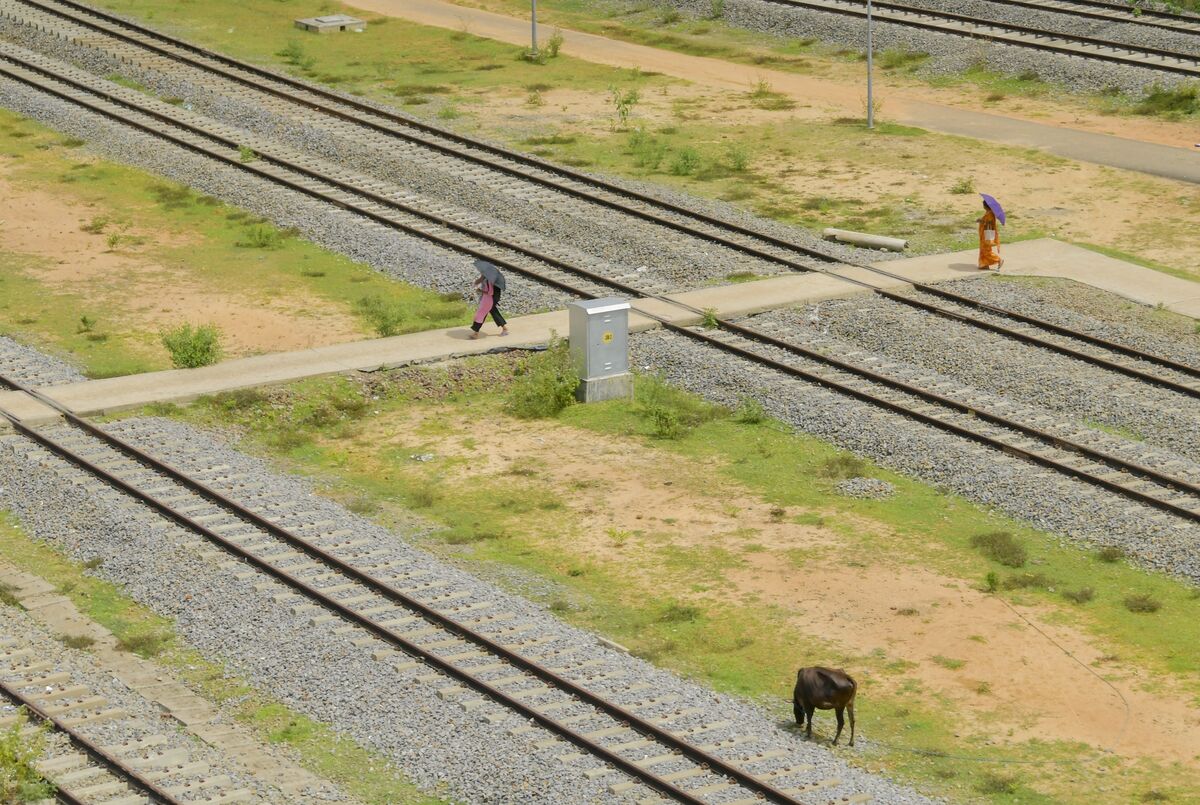
India is reportedly planning a $3.4 billion investment to construct 500 kilometers of new rail lines, including bridges and tunnels, across its northeastern frontier near the China border. This strategic infrastructure development aims to enhance access, accelerate logistics, and bolster military readiness in remote regions bordering China, Bangladesh, Myanmar, and Bhutan, reflecting India's focus on border security and logistical capabilities amidst evolving regional dynamics.
India is reportedly allocating $3.4 billion for a strategic infrastructure project to construct 500 kilometers of new rail lines in its northeastern frontier. This investment, which includes bridges and tunnels, is explicitly aimed at improving logistical capabilities, regional access, and military readiness near its borders with China, Bangladesh, Myanmar, and Bhutan. The plan signals a significant fiscal commitment to the 'Infrastructure & Defense' and 'Transportation & Logistics' themes, reflecting a defensive geopolitical posture, particularly concerning China. While the immediate catalyst is strategic security, the project carries long-term economic implications by enhancing connectivity to remote regions. The 'moderately positive' sentiment and 'moderate' market impact score suggest the market views this as a necessary, stabilizing long-term investment rather than a speculative, high-growth catalyst.
AI-powered research, real-time alerts, and portfolio analytics for institutional investors.
Request DemoOverall Sentiment
moderately positive
Sentiment Score
0.50
