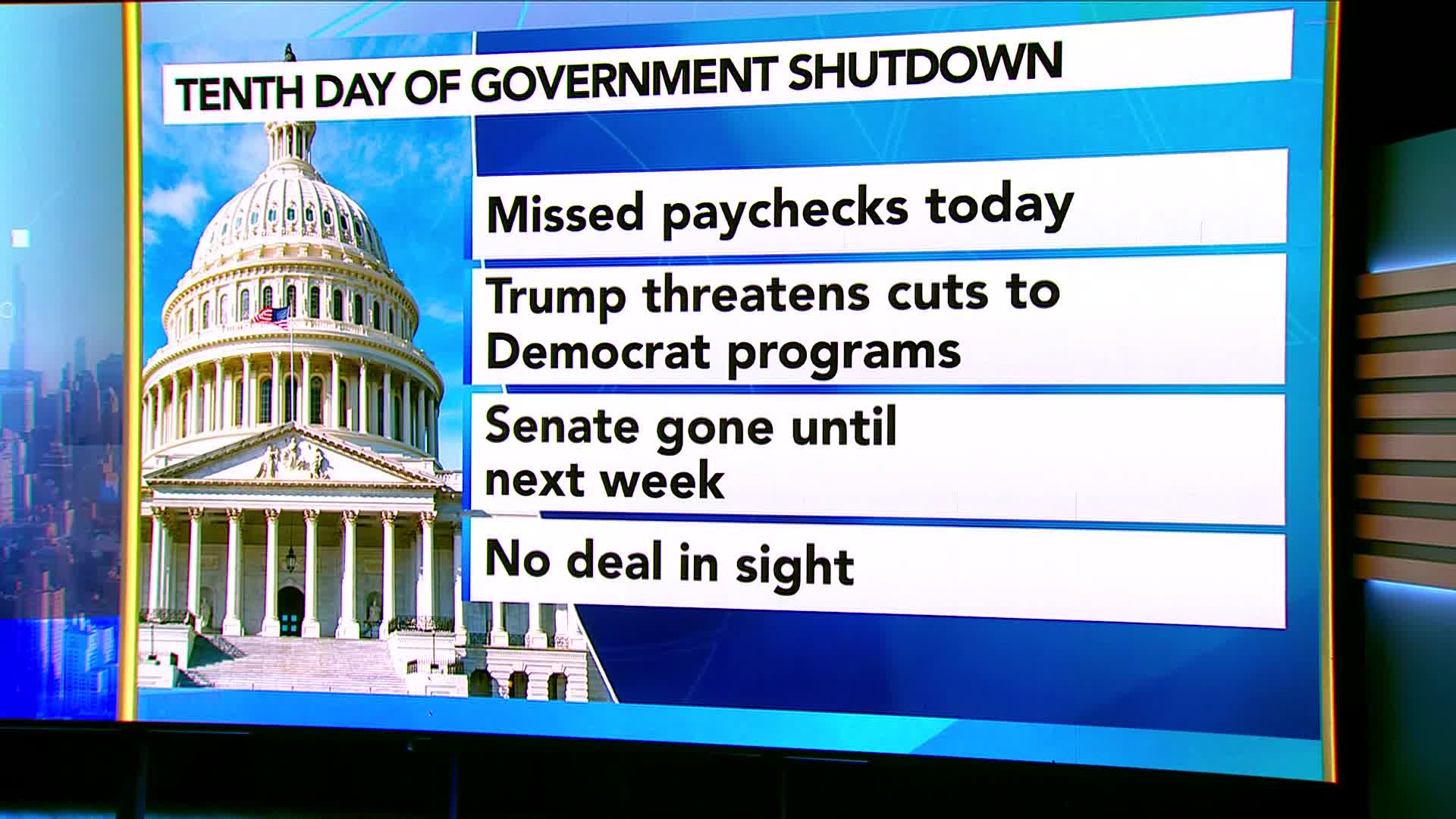
The provided article text contained only the title, 'Watch Shutdown Hits Day Ten as Government Stalemate Continues - Bloomberg', without further content for summarization. Therefore, a detailed summary of the article's financial implications or key points cannot be generated.
The ongoing government shutdown has reached its tenth day, signaling a persistent political stalemate concerning fiscal policy and domestic budgetary matters. This prolonged impasse introduces significant uncertainty into the economic outlook, as indicated by the article's core message.
Market sentiment is strongly negative, evidenced by a sentiment score of -0.65, and the overall tone is characterized by uncertainty. This reflects investor apprehension regarding the potential economic ramifications of extended government inactivity, which typically leads to increased risk aversion.
A prolonged shutdown risks disrupting critical government functions, delaying key economic data releases, and potentially dampening near-term GDP growth. The continued political gridlock, classified under 'Fiscal Policy & Budget' and 'Elections & Domestic Politics' themes, suggests that a swift resolution is not imminent, exacerbating market volatility and creating headwinds for various sectors.
AI-powered research, real-time alerts, and portfolio analytics for institutional investors.
Request DemoOverall Sentiment
strongly negative
Sentiment Score
-0.65
