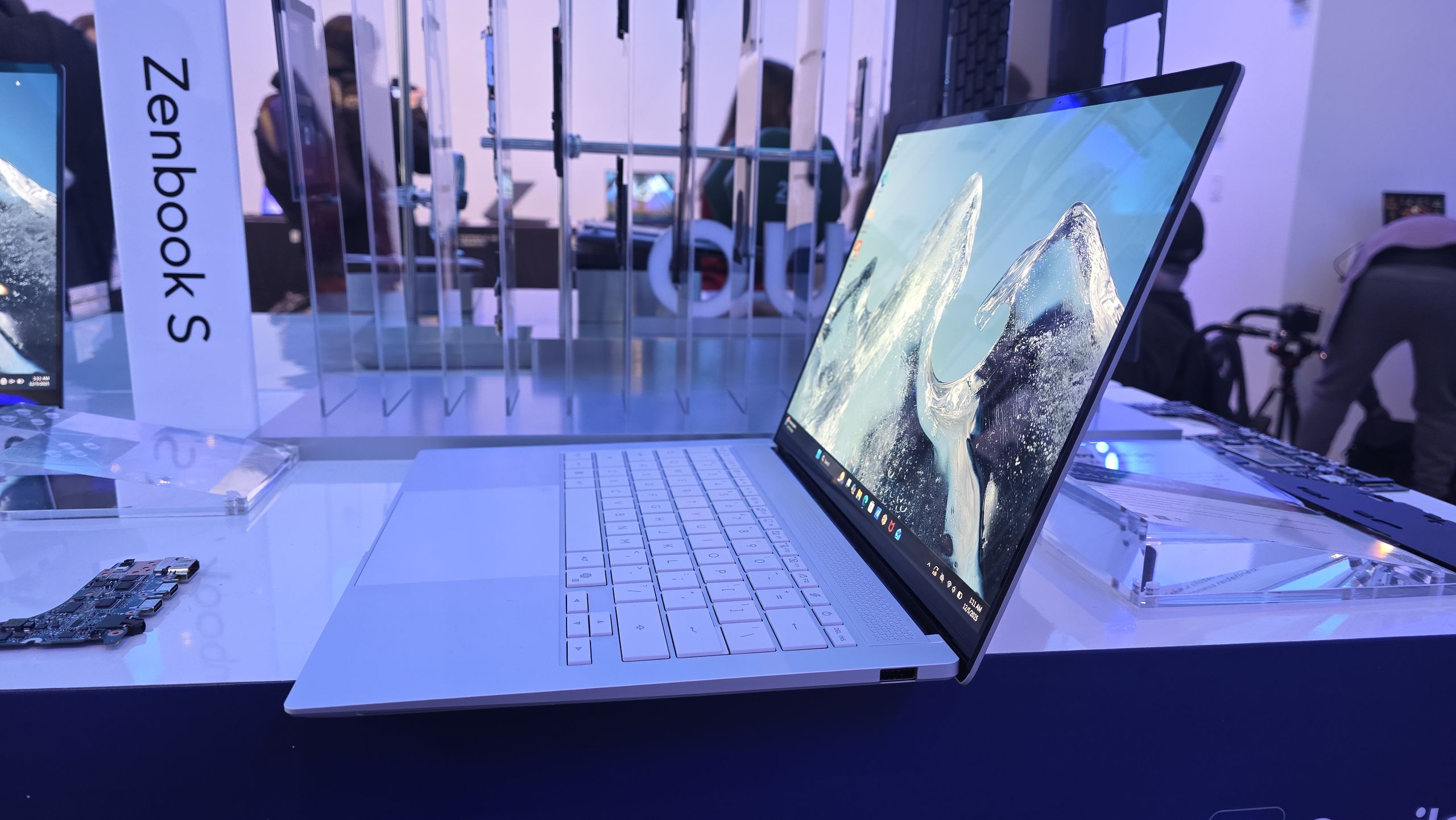
At CES 2026 Asus refreshed its Zenbook family with multiple SKUs spanning Intel Panther Lake Core Ultra (S14 up to Core Ultra X9), AMD AI400 mobile processors (S16), and Qualcomm Snapdragon X2 Elite / X2 Elite Extreme (A14/A16), alongside a dual-screen Zenbook Duo; key specs include up to 48GB LPDDR5X, OLED displays (up to 2880x1800 with 120–144Hz on some models), batteries from 70 WHr to 99 WHr, Wi‑Fi 7, and upgraded port sets. Pricing and availability remain TBD, so near-term market impact on Asus shares should be limited, though the product refresh underscores continued OEM adoption of AI-capable mobile SoCs that could influence component demand for Intel, AMD and Qualcomm.
Market structure: Asus' multi-supplier Zenbook refresh is a win for AMD (Ryzen AI), Qualcomm (Snapdragon X2 Elite), and Intel (Core Ultra) because it validates a multi-architecture OEM approach that supports sustained component demand (LPDDR5X, OLED, Wi‑Fi 7) over the next 12 months. Expect marginal share gains for AMD and QCOM in thin-and-light and AI-capable segments; pricing power for CPUs/GPU makers will be limited as OEMs use product breadth to pressure ASPs and promote competition.
Risk assessment: Tail risks include export controls on advanced AI accelerators, a poor set of independent reviews that slow replacement cycles, or component shortages (OLED/LPDDR5X) that push costs +5–15% within 6–12 months. Immediate risk (days) is headline-driven knee‑jerk moves after CES; medium term (3–9 months) depends on reviews and SKUs hitting retail; structural market-share shifts play out over 12–36 months.
Trade implications: Direct plays favor semiconductor suppliers—AMD (AMD) and Qualcomm (QCOM)—with differentiated upside from local AI positioning; Intel (INTC) is a tactical short/hedge candidate if guidance lags. Use 3–9 month option structures to capture event-driven volatility (earnings, reviews) and overweight displays/memory suppliers if component lead times shorten.
Contrarian angles: Consensus glosses over software and thermal limits for Snapdragon PCs — developers may prefer x86, slowing adoption and pressuring QCOM to cut ASPs. Also, multi‑architecture proliferation increases developer/OS costs, indirectly favoring cloud/offload providers (e.g., NVDA) and raising the risk that headline product launches translate to single-digit percentage revenue impact over the next fiscal year, not material market-share disruption.
AI-powered research, real-time alerts, and portfolio analytics for institutional investors.
Request DemoOverall Sentiment
neutral
Sentiment Score
0.12
Ticker Sentiment
