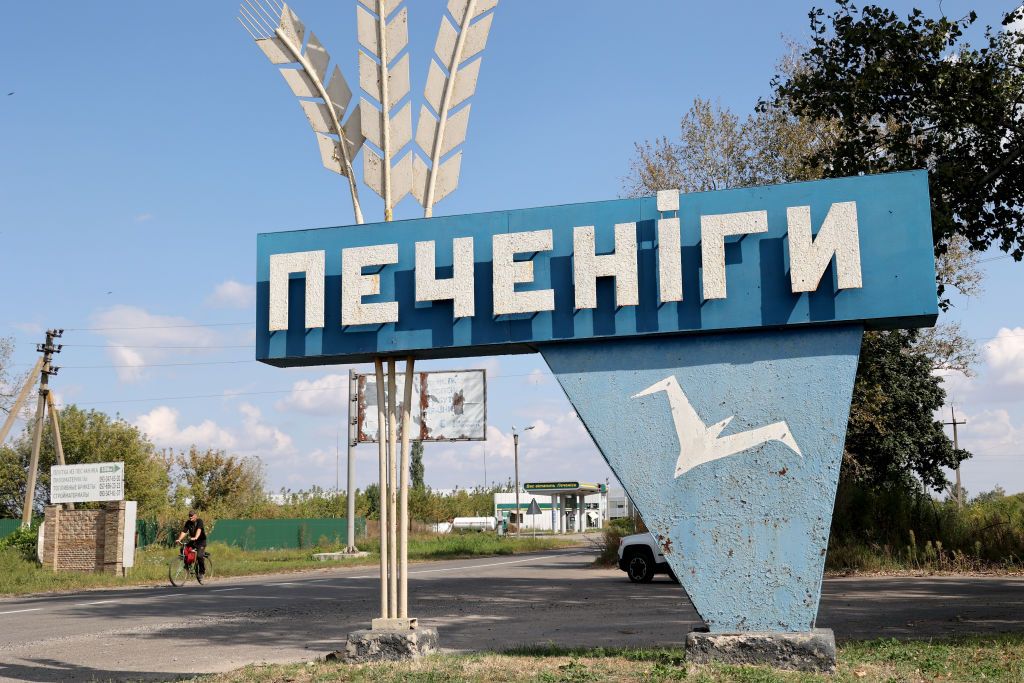
On Dec. 7 Russian forces struck the Pechenihy reservoir dam in Kharkiv Oblast, forcing closure of the dam roadway and threatening the water supply to Kharkiv, Ukraine's second-largest city. Ukrainian authorities reported one civilian death nearby and warned the dam could be 'critically damaged,' with pre-prepared emergency response plans ready to be enacted; the attack was characterized by Ukraine as a war crime and follows a pattern of strikes on critical infrastructure culminating in the Kakhovka dam disaster in June 2023. The incident raises elevated operational, humanitarian and environmental risk in the region and sustains geopolitically driven uncertainty for investors with Ukraine or regional infrastructure exposure.
Market structure: Immediate winners are defense primes and defense ETFs (higher order backlog and margin visibility) and engineering firms positioned for reconstruction (e.g., Jacobs J, AECOM ACM). Direct losers are Ukrainian assets, regional EM Europe risk assets, airlines/tourism (short-demand shock), and insurers with catastrophe exposure; expect 3–8% risk-premium widening in affected European credit sectors over 1–4 weeks. Cross-asset mechanics favor USD, CHF, gold (GLD) and elevated oil/gas prices (short-term +3–8%) while EU gas forwards and power curves may spike into winter.
Risk assessment: Tail risks include escalation to attacks on EU energy transit or NATO-linked assets (low prob <10% near-term but high impact), cyber retaliation, or broad sanctions triggering commodity supply shocks. Time horizons: days—risk-off and vol spikes (VIX +20–40% intraday); weeks–months—re-rating of defense and energy capex; quarters–years—reconstruction-driven capex benefiting industrials and select contractors. Hidden dependencies: sanction trajectories, winter gas demand, and insurance/ESG litigation could reallocate capital fast.
Trade implications: Tactical trades favor long defense/engineering and gold, short travel/EM Europe; use limited-duration options to capture volatility. Entry/exit: take volatility plays within 48–72 hours, build core reconstruction/defense exposure over 1–3 months, harvest or reassess by 9–12 months as aid packages crystallize. Catalysts to watch: EU/US aid votes, winter gas flow metrics, and battlefield developments.
Contrarian angles: Consensus may overprice near-term doom in commodities while underpricing mid-cycle reconstruction demand—small/mid-cap contractors are a potential mispricing versus large primes. The defense rally can be choppy; implied vol may be too high for outright long-dated purchases but useful for structured call spreads. Historical parallel: post-Kakhovka spikes were sharp then partially mean-reverted; expect initial panic then selective winners emerging once aid plans are announced.
AI-powered research, real-time alerts, and portfolio analytics for institutional investors.
Request DemoOverall Sentiment
strongly negative
Sentiment Score
-0.60
