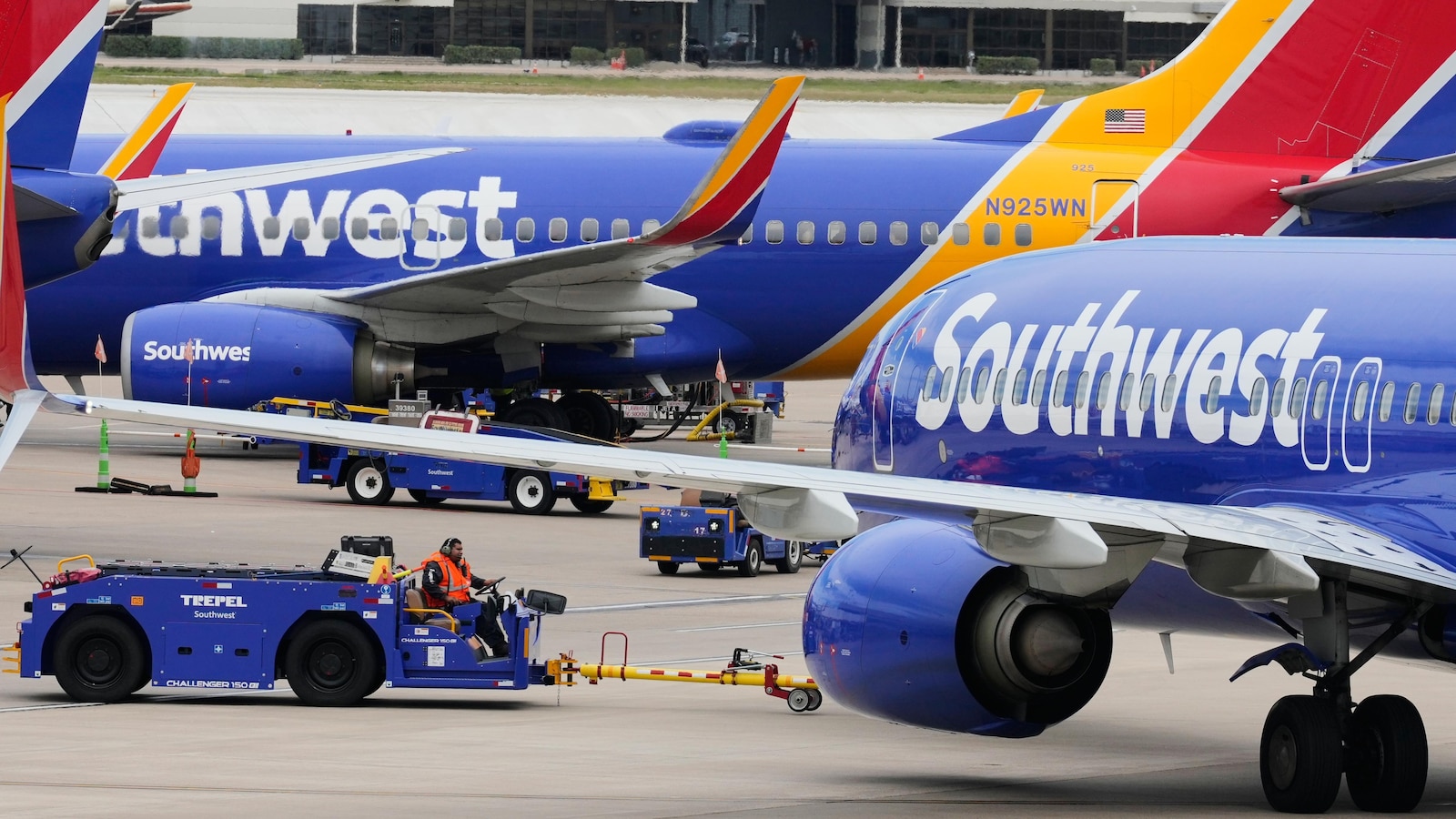
Southwest Airlines will limit passengers to one portable charger per person on flights effective April 20 and forbid stowing chargers in overhead bins or checked luggage. The FAA reported 97 lithium-battery incidents in 2025 and UL recorded a 42% increase in portable-charger incidents in 2025; Southwest plans to equip all planes with in-seat power by mid-next year to ease the policy. The rule is intended to reduce fire risk after high-profile events (e.g., the January 2025 Air Busan fire that forced evacuation of 176 people) and will be communicated to customers rather than aggressively enforced.
A safety-driven policy change by a major US carrier creates a small but concentrated axis of differentiation: the carrier that moves first extracts a marketing/PR premium and a perception of lower tail-risk. That premium will be realized primarily in discretionary leisure bookings and corporate safety-conscious segments over the next 3–12 months, rather than immediate yield changes, because enforcement and passenger behavior will be the gating factors.
The operational second-order effects matter more than headline safety: fleet retrofits to add ubiquitous in-seat power, new crew procedures, and procurement of certified containment/inspection equipment will push capex and MRO scheduling into the next 2–18 months and compress slot windows for overnight checks. Suppliers who can scale certified testing and retrofits quickly will capture outsized project margins; conversely, carriers that defer retrofits will face both reputational drift and potential insurance repricing once underwriters incorporate the higher-frequency small-loss battery incidents into modeling.
Risk-reward is asymmetric and time-limited. If passenger acceptance is high and the rollout is smooth, the first mover should see modest market-share gains and ancillary upsell opportunities into the next peak travel season; if enforcement stays loose or rollouts slip, the benefit evaporates while capex and customer-friction become visible headwinds. Watch three catalysts: (1) carrier-specific retrofit progress reports over the next 6 months, (2) insurer commentary/filings on premium adjustments in 12–24 months, and (3) any regulatory tightening that would force universal, enforceable limits — that’s the scenario that would reprice laggards quickly.
AI-powered research, real-time alerts, and portfolio analytics for institutional investors.
Request DemoOverall Sentiment
neutral
Sentiment Score
0.00
Ticker Sentiment
