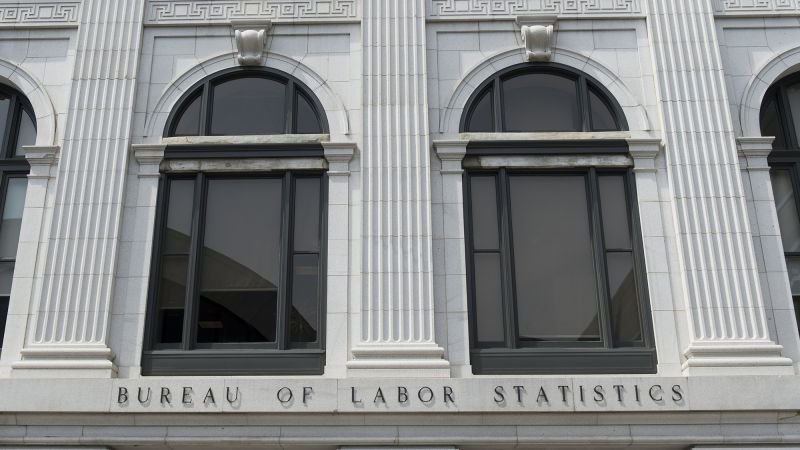
The Bureau of Labor Statistics (BLS) has reduced data collection for the Consumer Price Index (CPI) in several cities and increased statistical imputations due to budget and staffing constraints, raising concerns about the reliability of this key economic indicator. Economists warn that sustained underfunding could degrade the foundational data used for policymaking and market analysis, with one expert noting a significant jump in imputed prices in recent months. While the BLS anticipates minimal impact on the overall CPI, reduced observations could introduce more volatility in monthly data, complicating the scrutiny of price trends, particularly in the context of potential tariff impacts.
The Bureau of Labor Statistics (BLS) has announced a reduction in Consumer Price Index (CPI) data collection in several cities, including Lincoln, Nebraska; Buffalo, New York; and Provo, Utah, coupled with an increased use of statistical imputations. This change is attributed to personnel and funding constraints, with concerns amplified by the Trump administration’s proposed 8% reduction to BLS funding and staffing in the fiscal 2026 budget. Economists such as Gregory Daco of EY-Parthenon have voiced serious concerns, stating that the BLS's need to infer more data due to these constraints raises legitimate questions about the reliability and timeliness of critical economic indicators. Alan Detmeister, a UBS senior economist, highlighted a significant rise in imputed prices, noting a 15% jump in March and a further 29% surge in April, the highest level since April 2020. While the BLS anticipates these collection reductions will have "minimal impact" on the overall CPI, it acknowledges they "may increase the volatility of subnational or item-specific indexes." This potential increase in data noise and reduced precision is occurring at an inopportune moment, as analysts are closely scrutinizing price data for impacts from tariffs, and any degradation in data quality could undermine policymaking, market analysis, and business planning.
AI-powered research, real-time alerts, and portfolio analytics for institutional investors.
Overall Sentiment
moderately negative
Sentiment Score
-0.50
Ticker Sentiment
