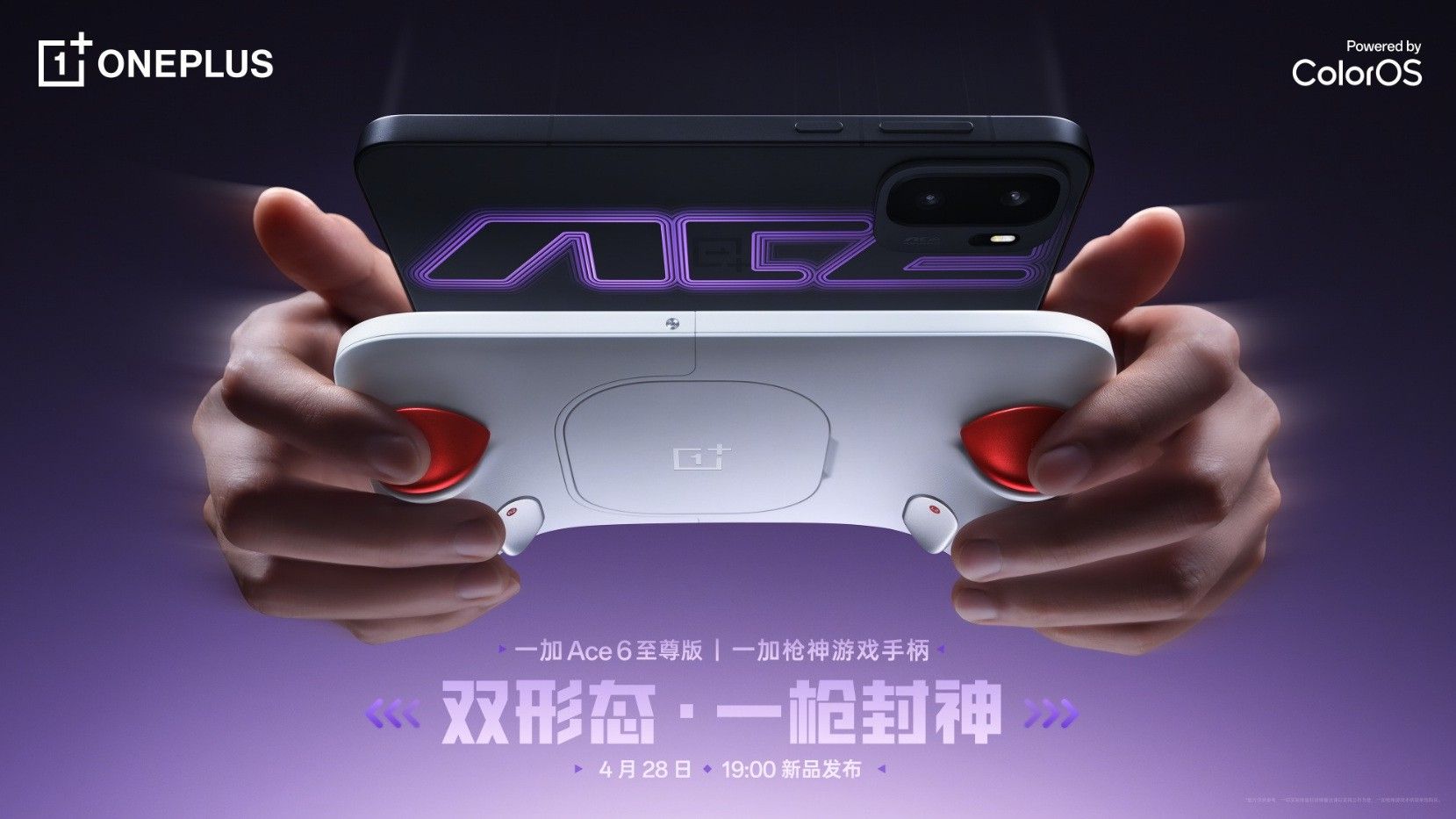
OnePlus is teasing the Ace 6 Ultra with a handheld-console-style gaming case featuring four customizable buttons, aiming to deliver a PC-like FPS experience on mobile. The phone is reportedly set to debut on April 28 with a 6.7-inch 1.5K display, 8,600mAh battery, 165W charging, and a MediaTek Dimensity 9500 chip with 33% faster GPU, 120FPS support, and ray tracing. The launch reinforces OnePlus's ongoing push into gaming-focused hardware, but the broader market impact should be limited.
This is less about handset demand and more about monetizing engagement depth. A gaming-focused accessory can increase time spent per user, which matters because the real economic leverage in mobile hardware is not the initial device sell-through but attach-rate expansion into cases, cooling, chargers, game services, and eventual ecosystem lock-in. If the product resonates, the marginal winner is the premium Android tier broadly: brands that can credibly sell performance, thermal management, and accessories will defend ASPs better than mid-tier OEMs competing only on spec sheets. The second-order effect is competitive pressure on gaming phone adjacencies. If an Android OEM can reframe a mainstream flagship as a quasi-handheld, it weakens the moat of niche gaming brands whose value proposition depends on dedicated controls and thermal differentiation. That said, the addressable market is still a small slice of smartphone buyers; the upside is more about halo effect and brand differentiation than a meaningful unit-volume step-up, so the trade should be sized as an expression on premiumization rather than core handset units. The key risk is novelty decay: these accessories can spike social buzz but fade quickly unless software support, game mapping, and low-latency performance are genuinely seamless. Another risk is regulatory or platform friction if game publishers or operating systems limit custom input mapping, which would blunt the core utility. On a 1-3 month horizon, the catalyst is preorder momentum and review sentiment; on a 6-12 month horizon, the question is whether this becomes a repeatable accessory platform or a one-off marketing gimmick. Contrarian takeaway: the consensus may be overestimating the direct monetization and underestimating the signal it sends about where OEM differentiation is going. The bigger trade is that premium Android ecosystems can defend share by turning phones into modular entertainment devices, which could support accessory and component suppliers even if handset unit growth remains flat.
AI-powered research, real-time alerts, and portfolio analytics for institutional investors.
Request DemoOverall Sentiment
mildly positive
Sentiment Score
0.25
