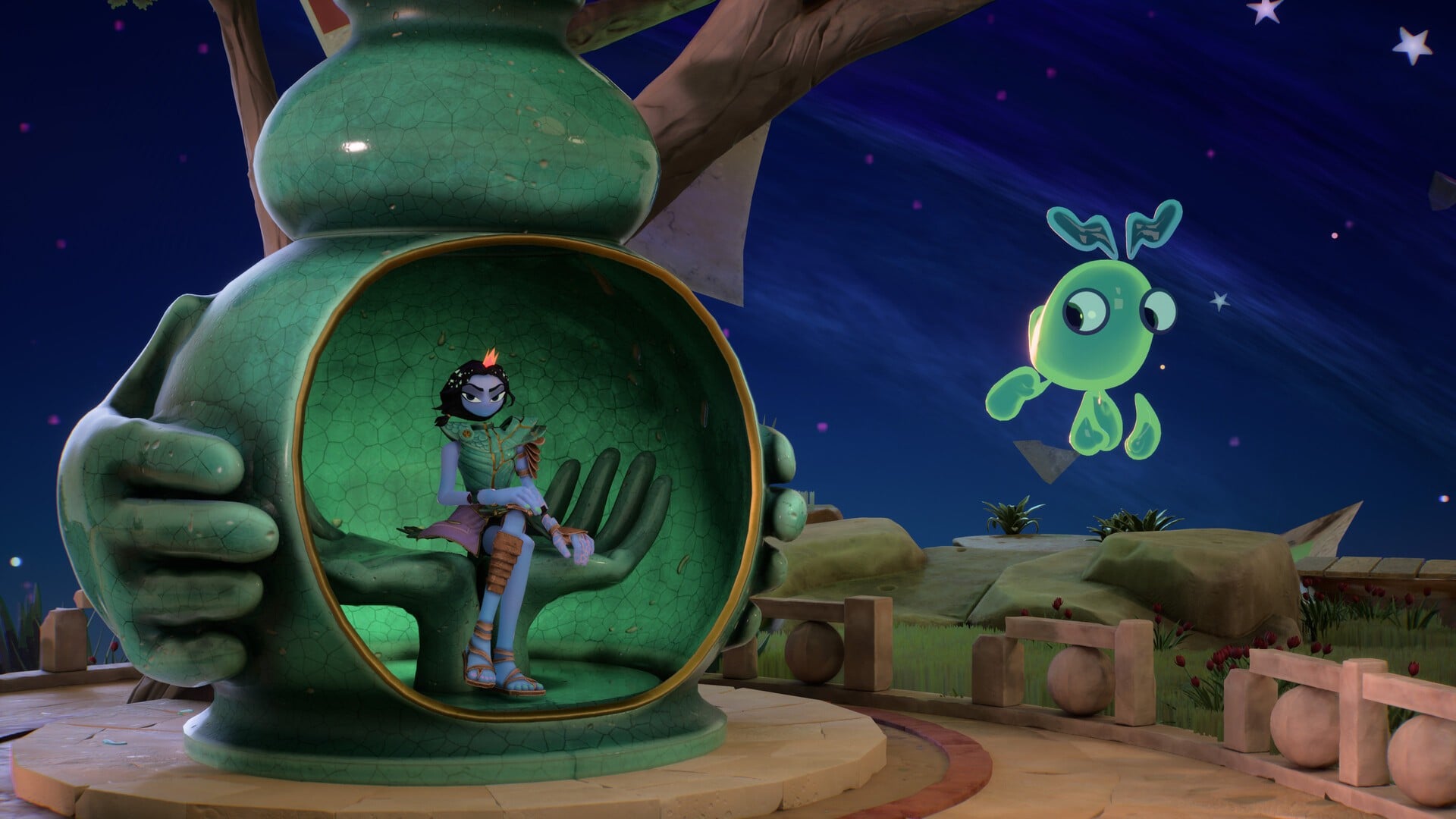
Double Fine's Kiln launches on April 23 as a day-one Xbox Game Pass Ultimate and PC Game Pass title, with the Xbox Store price set at £14.39 / $17.99 for the standard edition and £21.59 / $29.99 for the Fired Up Edition. The game is also an Xbox Play Anywhere release, giving buyers a free native Xbox PC version. The article is largely a product announcement and is unlikely to have meaningful market impact.
This is not a large revenue event for Microsoft; the important signal is engagement efficiency, not direct monetization. A low-cost, highly distinctive first-party release that lands inside Game Pass can improve subscription “stickiness” at the margin by giving lapsed users a reason to re-activate for a single weekend, which is more valuable than raw unit sales in a mature console market. The second-order winner is the ecosystem: Xbox Play Anywhere lowers friction between console and PC, subtly reinforcing the notion that Microsoft’s gaming moat is platform breadth rather than exclusivity. The broader competitive read is that Microsoft is still optimizing for content cadence over tentpole dependence. That matters because it keeps the service feeling fresh without requiring blockbuster spend, which should support content ROI and reduce churn sensitivity around quarter-end. For competitors, especially pure-play console ecosystems, the risk is not one game missing but a continuing narrative that Xbox can keep users inside a unified subscription loop with modest, quirky titles that are cheap to produce relative to AAA launch expectations. Near term, the catalyst window is days to 2-3 weeks: preorder/launch buzz, install data, and social traction will determine whether this becomes a retention nudge or a non-event. The tail risk is that novelty dies quickly and the game underperforms as a live multiplayer product; if matchmaking quality or content depth disappoints, the retention thesis fades fast and the title becomes just another catalog add-on. Longer term, the real variable is whether these smaller releases actually move monthly active users and engagement enough to matter for Game Pass churn, which is the KPI investors should watch rather than review scores. Contrarian take: consensus may overrate the need for every first-party game to be a commercial hit. For Microsoft, a small, differentiated title can be more strategically valuable than a bigger one if it produces outsized time-spent per dollar of development. The market may be underappreciating how many low-budget, high-identity releases it takes to build a subscription habit, especially when the marginal cost of distribution is near zero.
AI-powered research, real-time alerts, and portfolio analytics for institutional investors.
Request DemoOverall Sentiment
mildly positive
Sentiment Score
0.20
