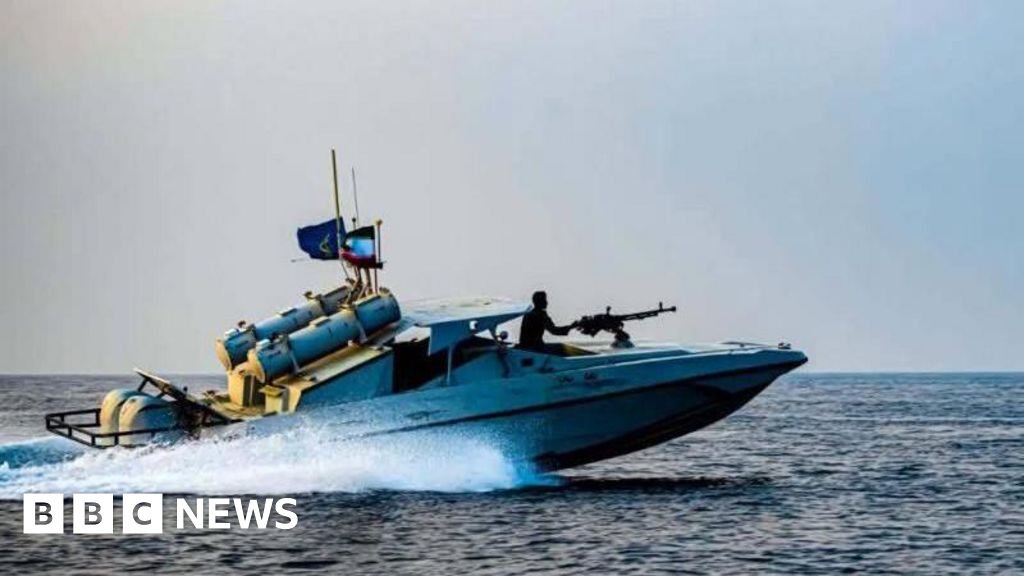
Iran's supreme leader Ayatollah Khamenei warned that any US attack would trigger a regional war as Washington boosts forces in the region, including the deployment of the aircraft carrier USS Abraham Lincoln and operations in the Arabian Sea. Tensions center on the Strait of Hormuz—through which roughly one-fifth of traded oil flows—where Iran had been expected to hold naval drills that the IRGC later said were not planned, raising the prospect of supply disruption and oil-market volatility. Domestic unrest and a lethal crackdown have further destabilized the country, with opposition groups and monitoring organizations reporting thousands of deaths, while limited diplomatic exchanges between Tehran and Washington continue amid deep mistrust.
Market structure: A meaningful near-term winner is upstream energy producers and marine insurance firms because a Strait of Hormuz supply shock (recall ~20% of traded oil) would immediately raise a risk premium; expect Brent volatility to jump 20–40% intramely if incidents occur. Losers are oil-intensive sectors (airlines, logistics) and EM equities (Iran-adjacent trade corridors, Gulf banks) from both supply shocks and risk-off flows. Competitive dynamics favor majors with low lifting costs (XOM, CVX) and flexible spare capacity; refiners may see margin compression if crude jumps >$15/bbl.
Risk assessment: Tail scenarios include a temporary closure of Hormuz causing a 3–8m bpd effective draw (Brent +$20–50) or a larger regional war leading to sustained sanctions and stagflation; probability low (<10%) but impact extreme. Immediate (0–14 days) is volatility and safe-haven demand; short-term (1–6 months) is commodity-driven inflation and EM outflows; long-term (6–24 months) depends on OPEC spare capacity response and US shale re-acceleration. Hidden dependencies: shipping insurance spikes, insurance-led rerouting costs, Chinese/Indian spot buying of discounted Iranian barrels that can mute price moves.
Trade implications: Tactical plays should be asymmetric — buy convexity in oil and gold, hedge EM risk, and prefer large integrated producers and defense names for convexity. Use options to limit downside (3-month call spreads on crude, OTM gold calls) and short selective cyclicals (airlines, regional banks) with tight stops. Monitor catalysts: naval incidents, announced exercises, US carrier movements, OPEC statements and daily API/EIA stock prints — act within 48–72 hours of a confirmed incident.
Contrarian angles: The market may overprice a prolonged supply shock because global spare capacity (~2–3m bpd) plus rapid US shale response can cap price upside beyond 3–6 months; defense stocks already rallied, so prefer cash-flow strong majors over expensive small-cap contractors. Consider fading initial panic rallies in Brent after 4–6 weeks if no structural closure of Hormuz is confirmed, using calendar spreads to exploit mean reversion in crude futures term structure.
AI-powered research, real-time alerts, and portfolio analytics for institutional investors.
Request DemoOverall Sentiment
strongly negative
Sentiment Score
-0.70
