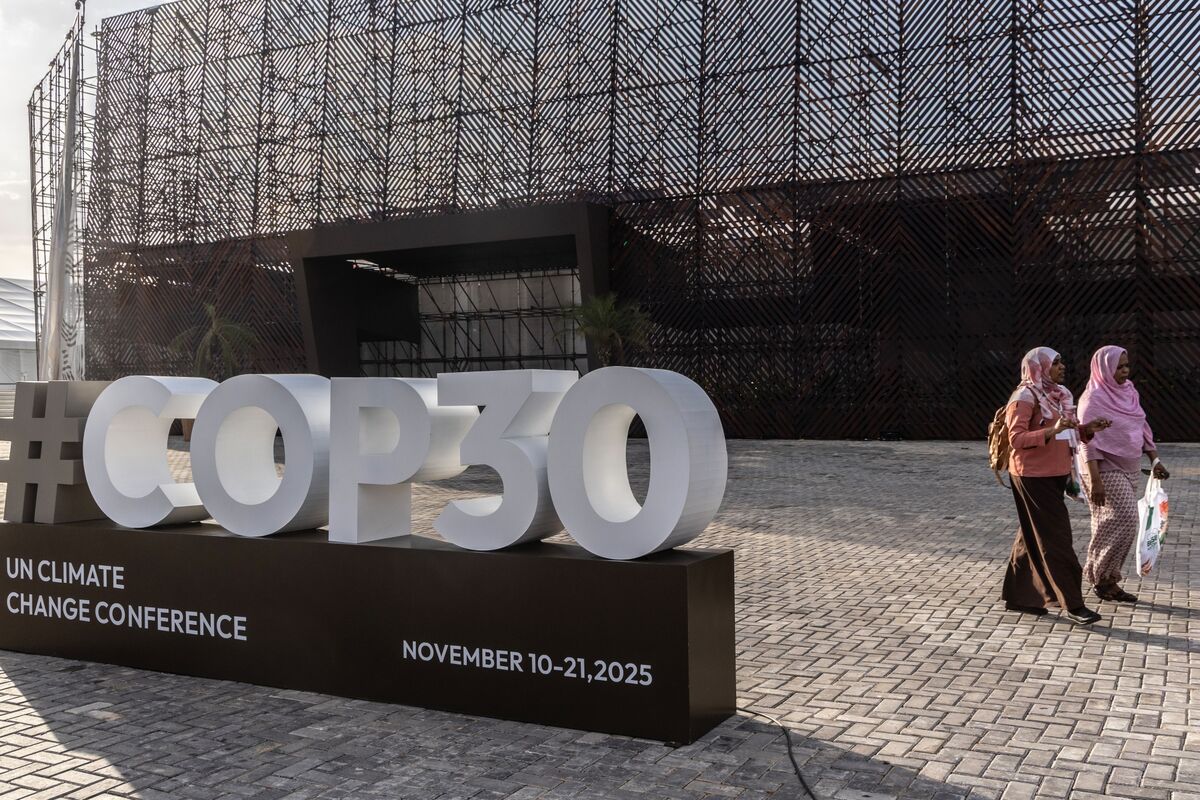
World leaders at COP30 in Belém, Brazil, concluded the summit by emphasizing the insufficient pace of climate change mitigation, signaling a renewed focus on accelerating global efforts. This outcome, alongside the implied political considerations of 'Trump-Prepping,' suggests heightened policy uncertainty and potential shifts in investment priorities across energy and climate-sensitive sectors.
World leaders at COP30 concluded the summit by underscoring the insufficient pace of global climate change mitigation efforts, signaling a renewed imperative for accelerated action. This consensus highlights a persistent regulatory push towards decarbonization, despite the acknowledged challenges in implementation.
The explicit mention of "Trump-Prepping" introduces significant political uncertainty into the climate policy landscape. This suggests potential shifts in regulatory frameworks and international cooperation, impacting long-term investment strategies in climate-sensitive sectors. The mildly negative sentiment and cautious tone reflect this heightened policy risk.
Consequently, investors should anticipate increased volatility and potential re-evaluation of capital allocation within the renewable energy transition and broader ESG-aligned industries. The interplay between evolving climate policy and domestic political cycles will be a critical determinant of market performance.
AI-powered research, real-time alerts, and portfolio analytics for institutional investors.
Request DemoOverall Sentiment
mildly negative
Sentiment Score
-0.30
