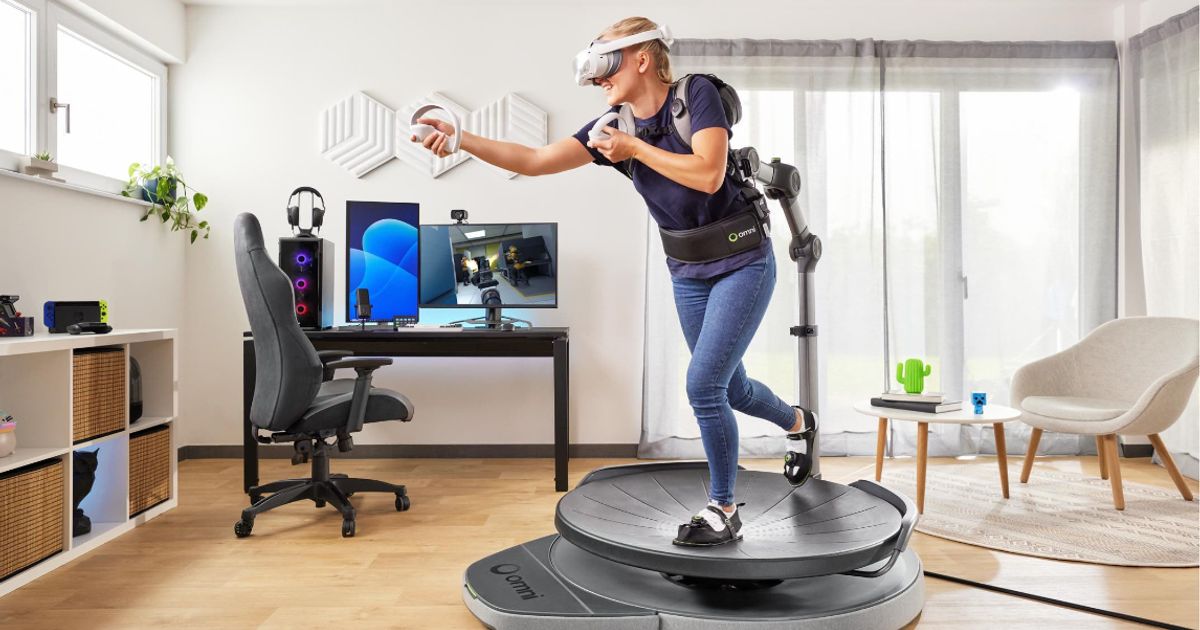
Virtuix Holdings (NASDAQ: VTIX) has launched EU and UK sales for its Omni One Core PC-connected VR platform, opening orders via dedicated storefronts and partnering with Unbound XR for EU/UK fulfillment; pricing is set at €2,995 (EU) and £2,795 (UK) including VAT, with initial shipments slated for April 13–24. The Austin-based firm reported 138% year-over-year revenue growth for the six months ended Sept. 2025, cites production capacity of up to 3,000 units per month (roughly $100m annual revenue potential), an average 4.8 customer rating and an industry award, and began trading on the Nasdaq Global Market in January 2026 following an $11m investment.
Market structure: Virtuix (VTIX) expanding Omni One into EU/UK is a niche hardware expansion with modular upside — 3,000 units/month capacity implies ~$100M revenue run-rate if demand materializes, but break-even requires sustained conversion at ~25–50% of capacity. Winners are small-cap VR hardware/fulfillment partners and PC-GPU spend (NVDA/AMD aftermarket demand); losers are small treadmill competitors and some location‑based VR arcades if home adoption accelerates. Pricing at €2,995/£2,795 targets premium PC gamers, not mass market, so near-term pricing power is intact but elasticity is high if Meta/Apple continue cutting standalone prices.
Risk assessment: Tail risks include product safety recalls, EU consumer regulation/CE compliance or class-action injuries, a failed manufacturing ramp (miss >30% of April shipments), or forced dilution after the $11M cash burn — any of which could halve equity value in 3–6 months. Immediate risks (days–weeks) are execution and review quality; short-term (1–3 months) hinge on April shipments and early EU reviews; long-term (6–24 months) require recurring content/SDK adoption and headset penetration. Hidden dependency: growth is levered to SteamVR active user base and Unbound XR fulfillment; either supply-chain or platform-share shocks are second-order threats.
Trade implications: Direct tactical play is small-cap exposure to VTIX ahead of April shipment window with strict size and protective hedges; thematic longs into NVDA/AMD (1–2% weights) capture GPU upside if PC VR grows. Use options where available: calendar or vertical call spreads around the April–July window to buy upside while limiting capital at risk; avoid large outright longs in consumer retail/arcade REITs. Monitor shipment confirmations and customer review volume in the first 30 days post‑delivery as primary triggers.
Contrarian angle: Consensus optimism may overstate TAM — €3k price tags and required PC GPUs keep adoption niche; historical parallels (VR peripherals/treadmills in 2016–2020) show high return rates and inventory write-downs. If early EU reviews reveal high return or safety rates, downside could be >50% quickly; conversely, exclusive game partnerships or OEM bundling would be an underpriced catalyst. The market may underprice regulatory/legal tail risk and overprice near-term scaling ability.
AI-powered research, real-time alerts, and portfolio analytics for institutional investors.
Request DemoOverall Sentiment
moderately positive
Sentiment Score
0.55
