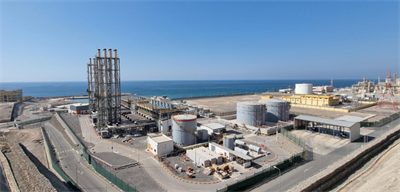
Wärtsilä has signed a seven-year extension to its operation and maintenance agreement with Musandam Power Company (an Omani IPP), building on eight years of prior support; the Q2 2025 order covers a 120 MW plant powered by 15 Wärtsilä 34DF dual‑fuel engines and the plant has delivered >99% reliability. The deal reinforces recurring service revenues and lifecycle contract exposure for Wärtsilä and supports Oman’s energy strategy as the Musandam plant remains the governorate’s primary gas-fired power source amid a 2050 net‑zero ambition. The announcement signals steady aftermarket demand rather than a material near-term earnings shock; the company reported 2025 net sales of EUR 6.9bn.
Market structure: The Musandam extension reinforces a durable annuity stream for Wärtsilä (WRT1V) and other engine-centric O&M providers — Wärtsilä cites ~30% of installed base under service and EUR6.9bn 2025 sales, implying high-margin recurring revenue that is less cyclical than new-build OEM sales. Winners: service-heavy OEMs, regional IPPs that rely on flexible gas engines; losers: pure capex OEMs and EPCs whose margins depend on new orders and spot gas-price volatility. This deal signals stable regional gas-fired generation demand for at least the next 7–10 years in niche markets (tourism-driven Musandam demand), limiting downside to short-term merchant price swings.
Risk assessment: Tail risks include rapid policy-driven decommissioning (accelerated by carbon pricing or a UAE/Oman policy shift) and operational failure or fuel-supply shocks; probability moderate but impact high — a stranded-asset or multi-month outage could cut annuity >50% for a given plant. Time horizons: immediate (days) = negligible equity reaction; short-term (weeks–months) = re-rating on recurring revenue visibility; long-term (years) = technology transition risk to hydrogen/solar+storage. Hidden dependency: value hinges on contract renewal cadence and parts supply chains (single-vendor spare parts concentration) which can compress margins if logistics fail.
Trade implications: Direct plays favor accumulating WRT1V (service re-rating) and service-heavy peers (ABB: ABBN.SW, possibly Siemens Energy SIEGn.DE selectively long on service units) while underweighting pure-build turbine names. Use 6–12 month horizons: target a 10–20% upside re-rating for WRT1V if service revenue growth sustains; implement entry on <5–10% pullback. Options: sell 3–6 month covered calls to harvest premium or buy 9–12 month call spreads to cap cost while retaining upside.
Contrarian angles: Markets often underprice lifecycle service cashflows — consensus focuses on green transition capex, missing steady O&M demand in islanded/regional grids where storage is uneconomical today. Reaction likely underdone; service annuity multiples can re-rate 5–15% without new equipment orders. Historical parallel: aerospace MRO businesses (Rolls-Royce/MTU) re-rated as annuities grew. Unintended consequence: aggressive repositioning into renewables by OEMs could create short-term spare-parts scarcity and higher service pricing, further boosting service players.
AI-powered research, real-time alerts, and portfolio analytics for institutional investors.
Request DemoOverall Sentiment
mildly positive
Sentiment Score
0.25
