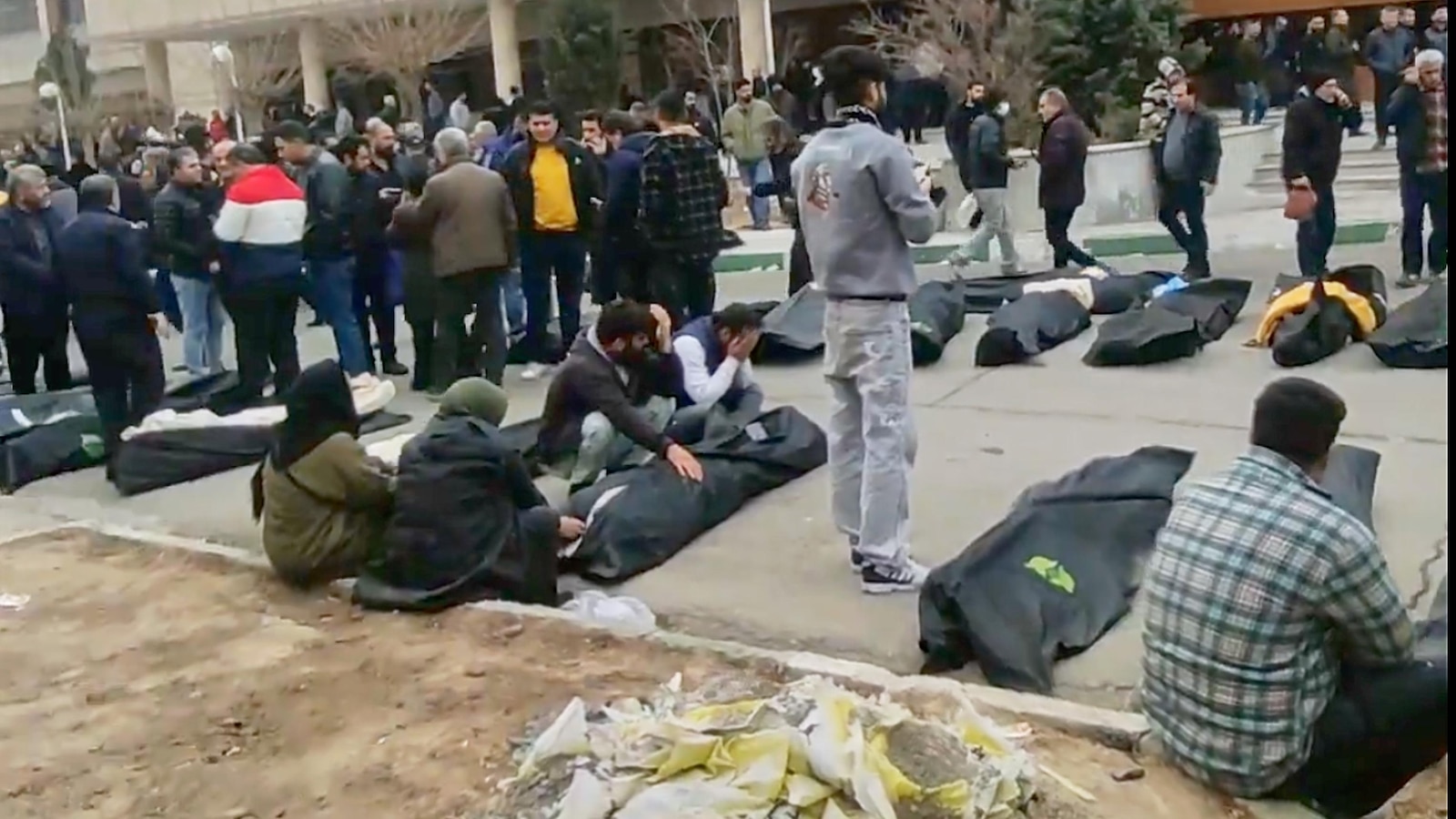
Iran experienced a heavy security crackdown on nationwide protests with activists saying at least 646 killed and more than 10,700 detained, while authorities severed international communications and restricted internet access, complicating independent verification. State forces, including Basij and plainclothes security personnel, have been visible in Tehran amid burned government buildings and banks, and authorities reportedly searched for Starlink terminals; concurrently, President Trump announced 25% tariffs on countries doing business with Iran and signaled potential military options, raising near-term geopolitical and sanctions risks that could affect regional stability and emerging-market and energy-sector exposures.
Market structure: Immediate winners are defensive/hard-power sectors — defense primes (LMT, RTX, NOC), hard commodities (oil producers XOM/CVX, XLE) and safe-havens (GLD, TLT); losers are EM equities (EEM), regional banks and travel/airlines exposed to MENA. Pricing power will tilt to oil exporters and defense suppliers; logistics and satellite comms providers (IRDM, VSAT) see higher demand for resilient links as blackouts rise.
Risk assessment: Tail risks include a limited US military strike (10–20% probability) that could spike Brent $15–30/bbl and cause a 7–12% S&P drawdown, and expanded sanctions (30% probability) that lift oil $5–10. Immediate (days): volatility and EM outflows; short-term (weeks–months): sanctions and oil-driven earnings revisions; long-term (quarters–years): supply-chain re-routing and higher defense capex. Hidden dependencies: China/Turkey covert trade with Iran and OPEC+ supply responses could mute price moves.
Trade implications: Tactical plays: short-duration longs in GLD (1–2% portfolio) and energy (XLE/OIH 1–3%) for an expected 4–10% move in 2–6 weeks; allocate 2–4% to defense names (LMT/RTX) over 3–9 months. Hedging: increase T-bill/TLT allocation 1–3% if oil rises >$5 in 48 hours or S&P drops >3%. Use options: 1–2 month call spreads on XLE/GLD and 3-month put spreads on EEM to express asymmetry.
Contrarian angles: Risk-premium may overshoot — past MENA flare-ups saw 3–8% oil spikes that mean-reverted within 6–10 weeks; defense stocks often rally early then underperform long-term. Consider buying select EM names with <10% Iran exposure after volatility cools (6–12 months) and use tight stops on defense/energy longs if they rally >15% without fundamental follow-through. Monitor OPEC+ statements, China crude imports, and US diplomatic signals as trade triggers.
AI-powered research, real-time alerts, and portfolio analytics for institutional investors.
Request DemoOverall Sentiment
strongly negative
Sentiment Score
-0.60
