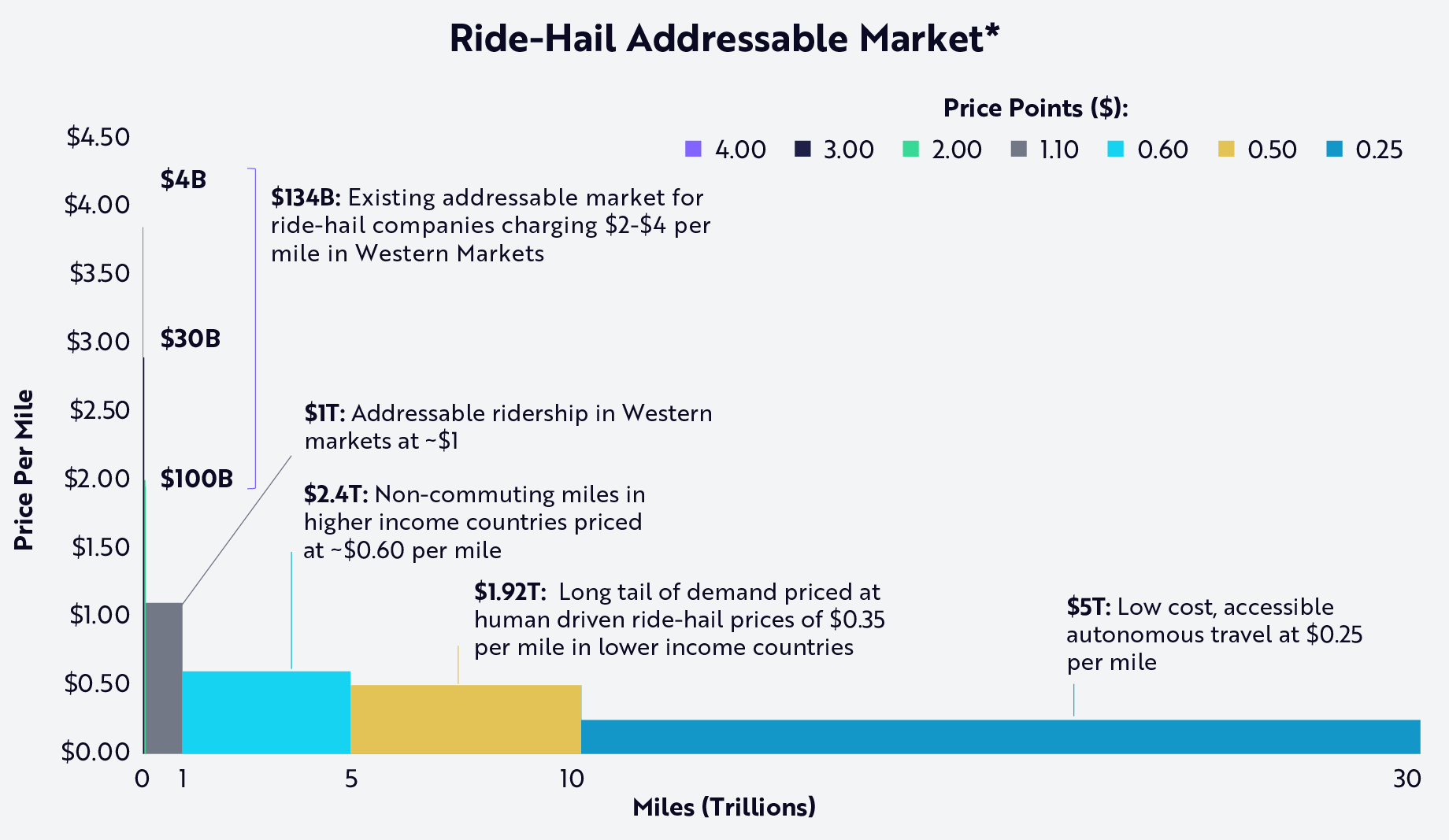
Tesla launched its robotaxi service in Austin, signaling a strategic pivot towards high-margin recurring revenue within the projected $10 trillion global robotaxi market. Despite Waymo's current lead in paid rides, the analysis highlights Tesla's significant competitive advantages, including its vertically integrated manufacturing capability (producing over 5,000 vehicles daily), a vast data advantage (collecting ~900x more miles than Waymo's global fleet), and a projected 30-50% lower cost per mile from its vision-only AI, positioning it for rapid scaling and potential dominance in the autonomous ride-hail sector.
Tesla's recent launch of its robotaxi service in Austin signifies a critical strategic pivot from low-margin vehicle sales to a high-margin, recurring revenue model targeting a potential $10 trillion global market. While Waymo currently leads in paid autonomous rides, with approximately 250,000 per week and safety metrics approaching human levels, the analysis frames its expansion as gradual and partnership-dependent. In contrast, Tesla is positioned for rapid, scalable deployment underpinned by three core competitive advantages. Firstly, its vertically integrated manufacturing allows for the production of over 5,000 vehicles daily, a capacity that dwarfs Waymo's planned fleet additions. Secondly, Tesla's data collection is vastly superior, gathering approximately 900 times more real-world driving data from its global fleet than Waymo, which should accelerate the refinement of its vision-only AI and enable scaling without restrictive geofencing. Finally, its model is projected to achieve a 30-50% lower cost per mile than Waymo, creating a powerful lever to undercut incumbent ride-hail operators like Uber and Lyft, whose market shares are already being eroded in key markets.
AI-powered research, real-time alerts, and portfolio analytics for institutional investors.
Overall Sentiment
extremely positive
Sentiment Score
0.85
Ticker Sentiment
