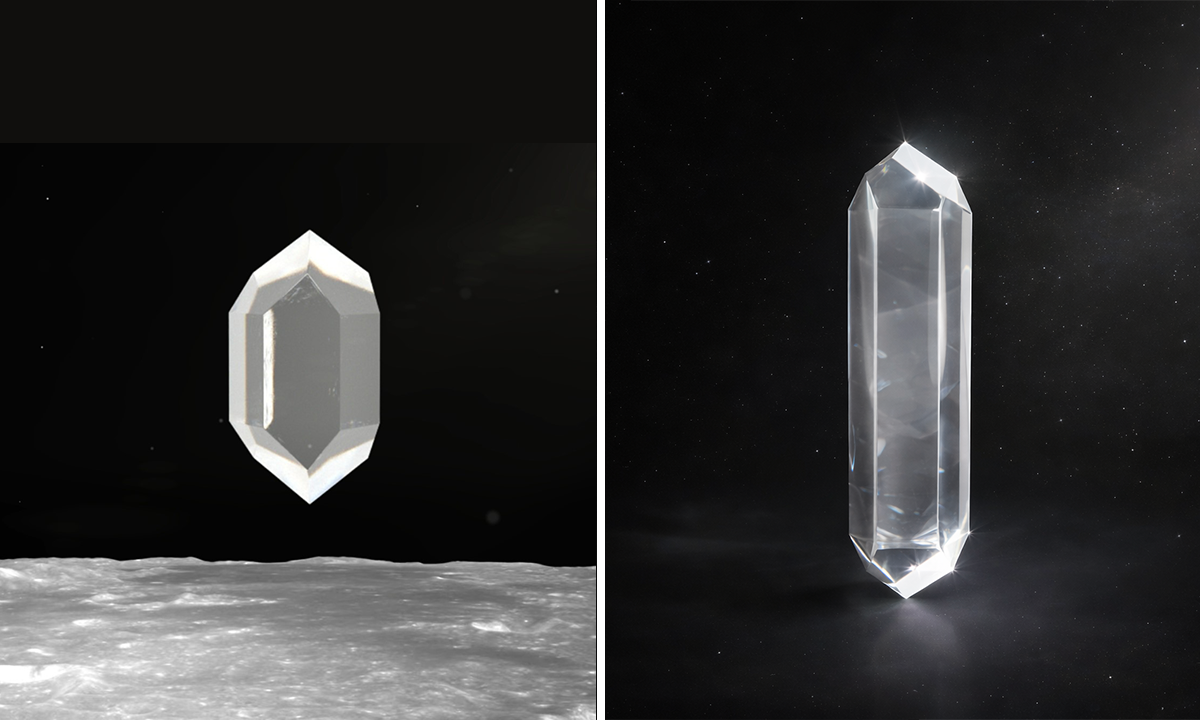
Chinese scientists identified two new lunar minerals, magnesiochangesite-(Y) and changesite-(Ce), from Chang'e-5 samples totaling 1,731 grams, with both officially approved by the International Mineralogical Association. The discoveries expand knowledge of lunar geology and rare-earth phosphate minerals, and may support future lunar resource assessment and in-situ utilization. The news is scientifically important but likely has minimal near-term direct market impact.
The near-term market impact is not on a moon-mining revenue stream, but on the capital-allocation logic of China’s strategic materials ecosystem. This discovery strengthens the narrative that Beijing is building a defensible knowledge advantage in rare-earth mineral identification, high-resolution analytics, and future lunar resource mapping — all of which are adjacent to state-backed instrumentation, vacuum/beam-line tools, advanced detectors, and specialty analytical software. The second-order winner is less “space” and more the upstream scientific tooling stack that gets funded when governments view lunar geology as a strategic asset rather than a curiosity.
The more interesting implication is competitive: these results increase the probability that China will frame rare-earth supply as a frontier-domain issue, reinforcing domestic investment into beneficiation, isotope separation, and ultra-trace characterization. That is mildly supportive for Chinese names exposed to lab instrumentation, semiconductor metrology, and materials R&D, but only if funding persists beyond the headline cycle. The loser set is global incumbents that rely on a static view of rare-earth scarcity; this kind of discovery does not create supply today, but it does incrementally lower the perceived geopolitical moat around rare-earth science over a multi-year horizon.
The market is likely overreading any direct monetization, which creates a contrarian setup: the headline is bullish for “space” optics, but the investable edge is in enabling technologies, not lunar extraction plays. The key risk is timing — commercialization is years away, and any rally in speculative lunar-resource names would be vulnerable to a reality check. The true catalyst path is policy: if this turns into a broader state-funded lunar resource program, the spend curve could show up in procurement orders within 6–18 months, which is where the tradable signal begins.
AI-powered research, real-time alerts, and portfolio analytics for institutional investors.
Request TrialOverall Sentiment
mildly positive
Sentiment Score
0.25
