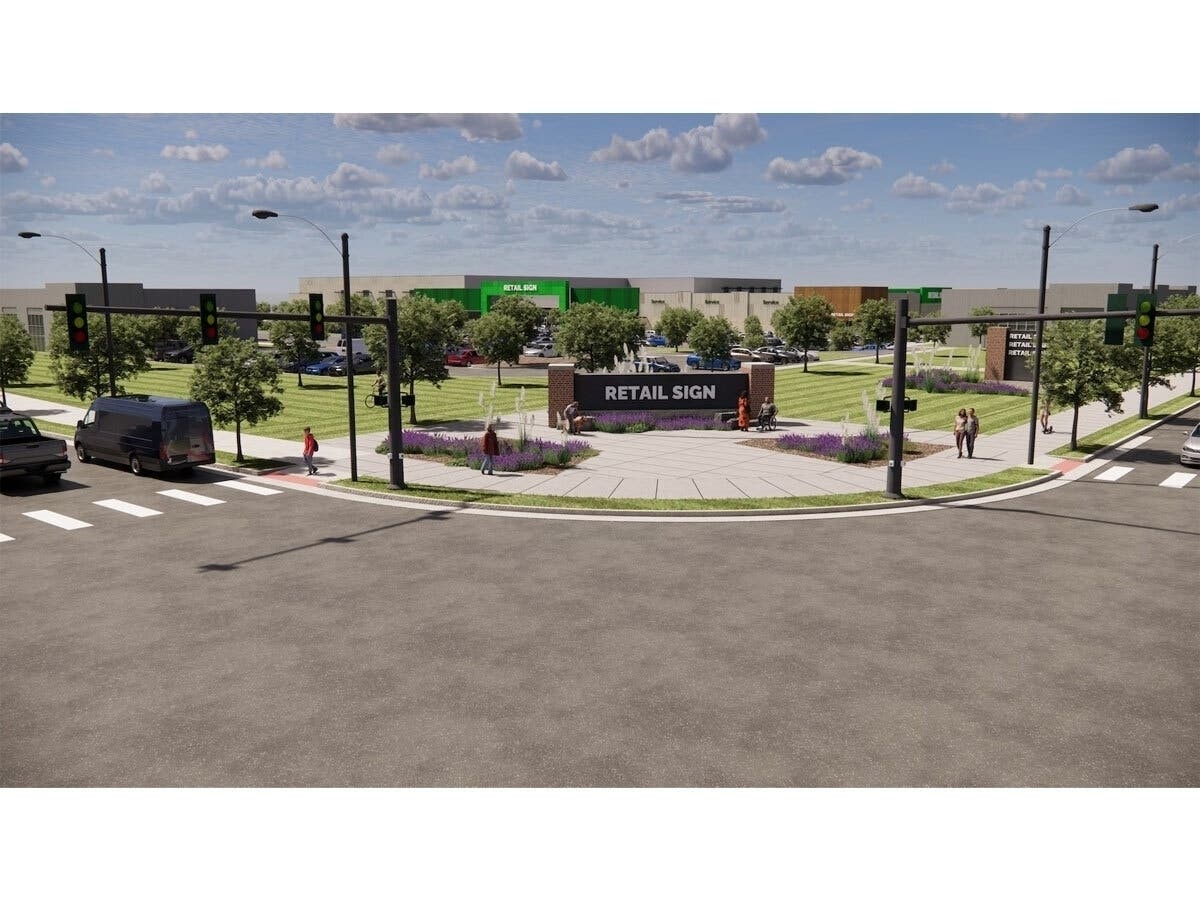
Orland Park's village board approved Amazon's plan for a one‑story, 229,000 sq ft large-format retail building with an on-site warehouse component on a 35‑acre parcel at 159th and LaGrange Road, passing final approval 5-2. The hybrid grocery/general‑merchandise concept (tied to Whole Foods/Fresh/online offerings) includes multiple commercial outlots and, according to officials, projected sales tax revenue that would more than cover a planned Ravinia Avenue extension and other traffic improvements; proponents cite jobs and tax benefits while residents raised traffic and small‑business competition concerns.
Market structure: Amazon’s approved 229k sqft large-format retail in Orland Park reinforces AMZN’s omnichannel expansion — winners are Amazon (AMZN), tech-enabled grocery logistics vendors, and last-mile pickup/van services; losers are nearby independent grocers and regional mall/strip-center owners that face traffic diversion. Expect a localized market-share shift of 3–6% in grocery spend within 12–24 months in that trade area; price pressure on regional grocers could compress margins by 50–150bp locally. Cross-asset: limited immediate bond/FX moves, but positive for muni revenues (local sales-tax receipts) and incremental demand for construction commodities (concrete, diesel) during build-out (next 6–18 months).
Risk assessment: Tail risks include zoning reversal, sustained community opposition, or an FTC/DOJ retail antitrust escalation — low probability (<10%) but high impact (project delay/brand hit). Operational risks: construction cost inflation or higher-than-expected traffic mitigation costs could delay breakeven beyond 24 months. Hidden dependencies: success hinges on integration with Amazon Fresh/Prime flows and local workforce availability; catalysts that can accelerate adoption include holiday season rollouts or local marketing partnerships within 3–6 months.
Trade implications: Favor asymmetric exposure to AMZN via equity and defined-risk options for 3–12 month horizons; consider short exposure to Kroger (KR) or small-cap regional mall REITs (e.g., CBL) which face direct footfall loss. Use pair trades to hedge macro (long AMZN / short KR) and municipal credit longs for towns that secure similar deals (buy selective high-yield munis on spread compression potential over 12–36 months).
Contrarian angles: Consensus underestimates regulatory/regional spillover — successful Amazon store could trigger aggressive competitive responses from WMT/TGT within 6–12 months, making early gains in AMZN limited and creating a two-step winner/loser dynamic. Historical parallels: Amazon’s Whole Foods buyout produced initial share gains but invited price competition and margin pressure on grocery peers over 12–24 months. Unintended consequence: increased local traffic + infrastructure costs could force municipal concessions later, reducing the net fiscal benefit and political goodwill.
AI-powered research, real-time alerts, and portfolio analytics for institutional investors.
Request DemoOverall Sentiment
mildly positive
Sentiment Score
0.32
Ticker Sentiment
