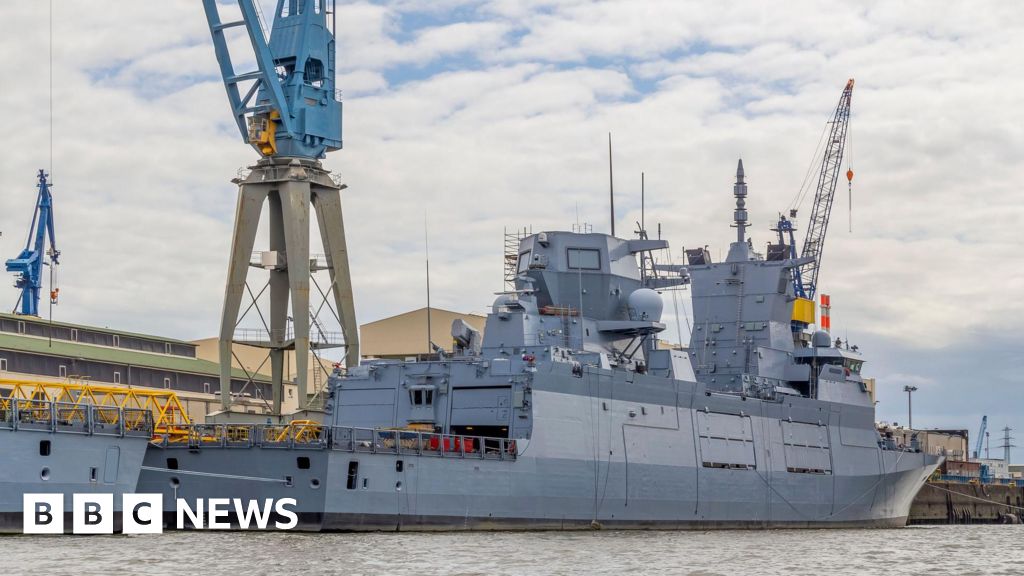
German, Greek and Romanian authorities arrested two port workers — a 37-year-old Romanian and a 54-year-old Greek — over an attempted sabotage of German naval vessels in Hamburg that included disabling electronic safety switches, removing fuel caps, puncturing water lines and dumping over 20kg of abrasive gravel into an engine. Eurojust said the acts, if undetected, would have caused major damage and delayed naval deployments; searches and evidence seizures were carried out in Germany, Greece and Romania and an investigation is ongoing amid broader European concerns about suspected Kremlin-linked sabotage since 2022, though no explicit Russian link has been established.
Market structure: Immediate winners are defense primes and cybersecurity vendors as investors reprice a higher probability of port/maritime hardening—expect a 5–15% re-rating over 3–12 months for liquid defense ETFs/names (ITA, LMT, NOC) if NATO/EU procurement accelerates. Losers in the near term include European port operators, regional logistics providers and operators with concentrated Hamburg exposure; expect 3–8% downside risk in those equity buckets if regulatory fines or insurance increases follow.
Risk assessment: Tail risks include state-attributed sabotage triggering sanctions/escalatory measures (low prob but high impact), or widespread supply-chain disruptions causing multi-week shipping delays; price shocks could push volatility +30–50% in affected equities/options over days. Immediate volatility window is days; material procurement or insurance-cost changes play out over 3–12 months; structural capex (port hardening) is a 12–36 month effect and could add 1–3% operating-cost headwinds to ports.
Trade implications: Favor long defense/cyber exposure and selective reinsurance/insurer names that benefit from higher premiums (MUV2.DE, ALV.DE) while underweight ports/logistics in Europe. Use options to express asymmetric risk: 2–3 month 25–delta calls on cyber names for volatility spikes, and 3-month call spreads on defense primes to cap premium. Pair trades: long ITA or LMT vs short broad transport (IYT) to capture relative repricing over 3–9 months; set 8–12% stop-losses and trim after 10–20% gains.
Contrarian angles: Consensus may understate persistent cybersecurity capex (annual budgets rising +5–10% YoY) and overstate immediate permanent hit to container throughput—ports can recover volumes but with higher unit costs, creating long multi-year winners (cyber, defense, reinsurers) and short-term losers. If investigations fail to link a state actor, defense/cyber rallies could reverse 10–25% quickly; size positions with that elasticity in mind.
AI-powered research, real-time alerts, and portfolio analytics for institutional investors.
Request DemoOverall Sentiment
moderately negative
Sentiment Score
-0.30
