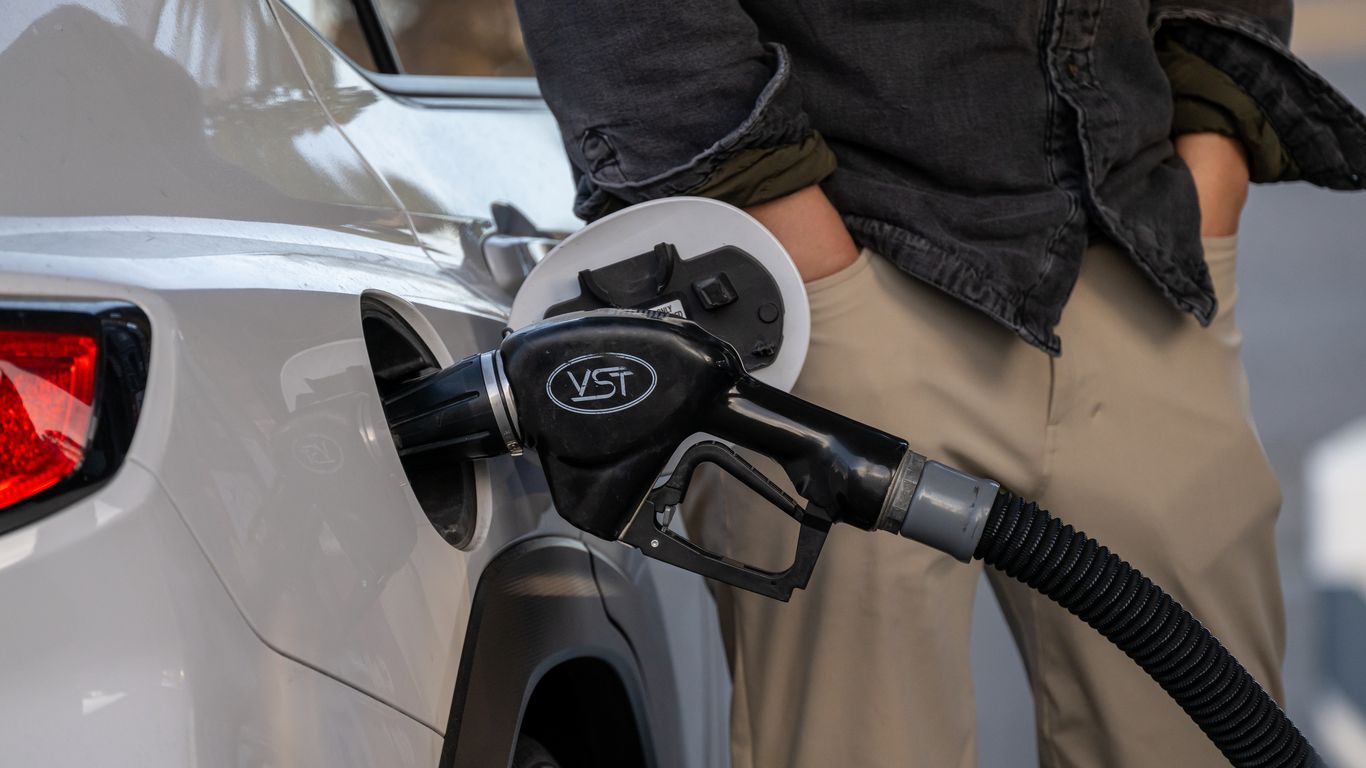
U.S. average regular gasoline reached $4.018/gal, a ~35% increase at the pump since the Iran war began last month, as oil has surged above $100/bbl amid closure of the Strait of Hormuz that threatens ~20% of global oil flows. National averages: mid-grade $4.541, premium $4.904, diesel $5.454; regional extremes include California regular at $5.887/gal and Oklahoma at $3.272/gal. Polling shows 48% of Americans blame former President Trump for the surge, 87% expect further price increases, and 55% say rising pump costs have somewhat impacted their household budget.
The immediate effect is an asymmetric profit transfer to upstream producers and any counterparty that benefits from a higher crude price realization; smaller, nimble US E&P names can convert a sustained $80–100/bbl environment into disproportionate free cash flow within 2–6 months because they have the shortest payback wells and highest cash margin capture. Regional fuel dislocations (e.g., West Coast refining bottlenecks) create outsized crack-spread opportunities that won’t track headline crude mechanically — refiners with coastal export capability can see margin divergence vs inland peers over weeks.
On the demand side, elevated pump prices function like a targeted tax on mobility that first suppresses non-essential driving and then, over 2–4 quarters, shifts consumption patterns: incremental downside to restaurant/retail foot traffic, and stickier headwinds to airlines and trucking via diesel cost pass-through to margins. Policymakers are a real near-term cap: a US SPR release, diplomatic reopening of the Strait, or a coordinated OPEC+ response can compress prices quickly (30–90 days), whereas protracted disruption would push structural inflation and accelerate substitution (EV adoption, modal shift) over years.
Tail risks skew to geopolitics — escalation that halts 20% of seaborne flows is a >5% annual GDP shock to import-dependent regions and would favor hard-energy bets and inflation-hedged assets; the mean reversion path is political/diplomatic not purely market-driven, so monitor SPR inventories, tanker traffic, and diplomatic leak flow as primary catalysts.
AI-powered research, real-time alerts, and portfolio analytics for institutional investors.
Overall Sentiment
strongly negative
Sentiment Score
-0.70
