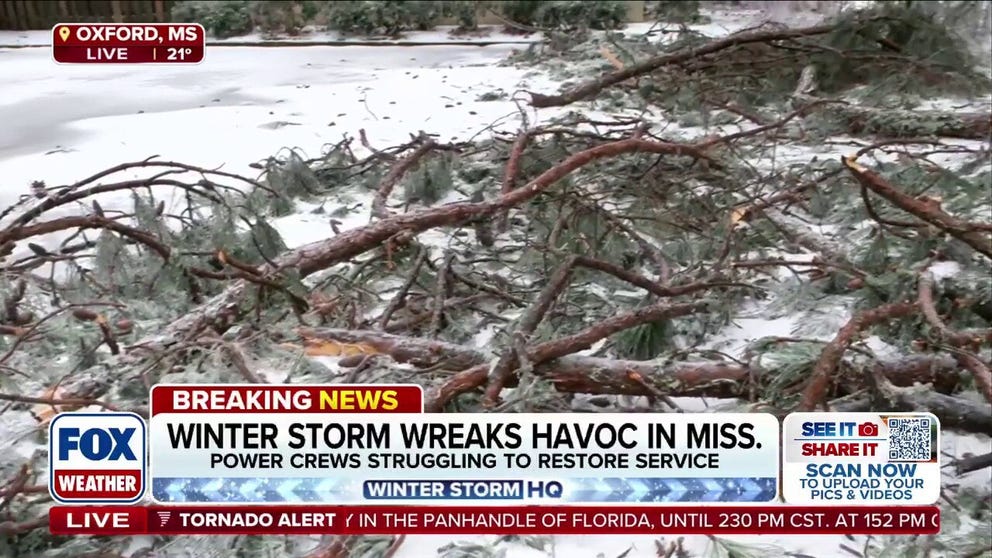
A winter storm producing over an inch of ice and heavy snow has left large parts of Oxford, Mississippi, and the state with widespread damage and outages, with Poweroutage.us reporting nearly 300,000 customers without power. Extensive ice accretion has downed trees, power lines and damaged roofs and vehicles, straining utility repair efforts and threatening further outages as temperatures remain below freezing; this implies near-term localized disruptions to transportation, commercial activity and utility operations and potential incremental costs for utilities and insurers.
Market structure: Immediate winners are emergency/infrastructure services and emergency retail—utility contractors (Quanta Services PWR, MasTec MTZ) and generator/backup makers (Generac GNRC) see order flow and pricing power for weeks; home improvement retailers (HD, LOW) get one-time demand spikes. Losers are regional utilities with concentrated outages (Mississippi exposure — Southern Company SO, Entergy ETR) and P&C insurers (ALL, TRV) facing claims; localized revenue loss for transportation/logistics routes will compress margins for 1–4 weeks.
Risk assessment: Tail risks include multi-week grid outages pushing political pressure for forced rate adjustments or capex mandates (material regulatory actions within 3–12 months) and insurer reserve shocks if insured losses exceed ~$1bn in the region. Short-term (days–weeks) cashflows and order books shift to contractors; medium-term (3–12 months) capex reallocation favors grid-hardening vendors; long-term (years) could accelerate distributed backup generation and storage adoption.
Trade implications: Expect nat-gas and power volatility to spike 10–30% in days; trade nat-gas exposure via UNG call spreads (30–90 days) and buy calls on PWR/PWR options (3–9 months) sized 1–3% portfolio. Use short-dated put spreads on concentrated regional utilities only if outage counts rise >500k for >7 days; insurers’ equity downside can be expressed via 2–3 month put spreads sizing 0.5–1%.
Contrarian angle: Consensus buys utilities for 'safe' cashflows—misses that severe weather increases contractor margins more than utility earnings (utilities often recover via rates over years). Historical parallels (2017–2018 storms) showed outsized multi-quarter gains for infrastructure services vs muted utility stock performance; downside is mean reversion once inventory/order book is filled and implied vol collapses, so time-managed options are preferred.
AI-powered research, real-time alerts, and portfolio analytics for institutional investors.
Request DemoOverall Sentiment
moderately negative
Sentiment Score
-0.35
