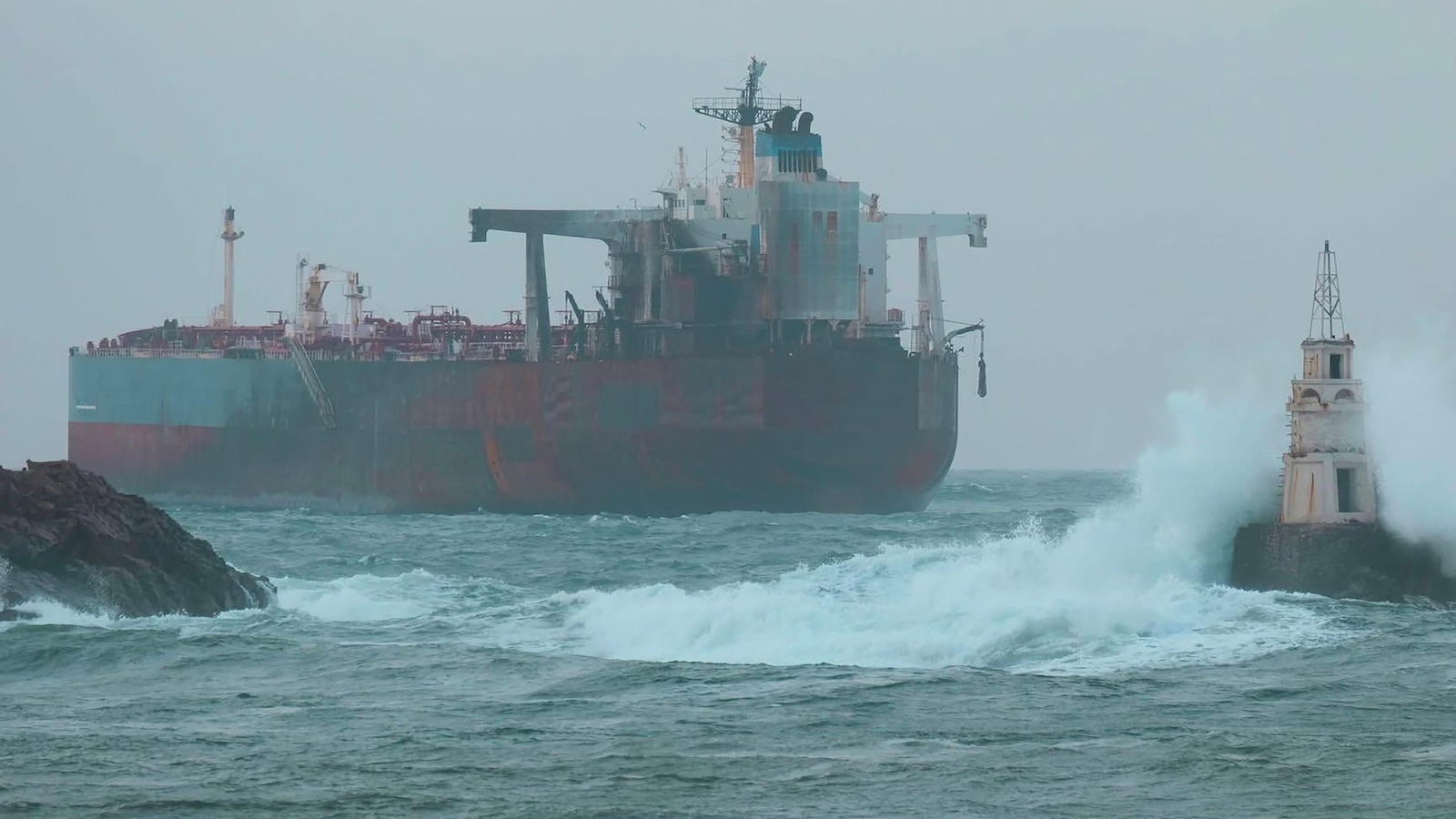
The 274‑metre, 149,000‑ton tanker Kairos — Gambian‑flagged and sanctioned by the EU, U.K. and Switzerland in July as part of a suspected Russian ‘shadow fleet’ — caught fire after an alleged Ukrainian naval drone attack while sailing empty from Egypt to Novorossiysk. The vessel entered Bulgarian waters under tow but was abandoned and is now stranded less than a nautical mile off Ahtopol; all 10 crew are reported safe with supplies for about three days and authorities are coordinating a monitored evacuation and diplomatic inquiries into why it was brought into Bulgarian waters. The incident underscores ongoing sanctions‑evasion risks, regional maritime security concerns and potential implications for shipping insurance and enforcement, though it currently poses limited immediate impact on oil flows.
Market structure: This incident tightens the marginal cost of shipping Russian crude without immediately removing barrels (Kairos was empty), but it raises route risk and insurance premia for Black Sea/Med tankers. Expect spot Suezmax/Aframax TC rates to episodically spike; a 20–50% lift in short-term time-charter rates is plausible over 1–3 months if incidents cluster, benefiting publicly listed tanker owners (FRO, STNG, EURN) while hurting traders/refiners facing higher freight adders and narrow product cracks in Europe.
Risk assessment: Tail risks include escalation to repeated drone strikes or naval interdictions that force large-scale rerouting around Africa, which could add $1–3/boe to delivered crude costs to Europe and push Brent +$10–$20 within months. Immediate risk (days) is reputational/insurance noise; short-term (weeks–months) is higher freight and insurance premiums (+20–100% localised); long-term (quarters) depends on sanctions enforcement cadence and diplomatic containment. Hidden dependencies: insurance/re-insurance cycles and port-denial policies could amplify shocks non-linearly.
Trade implications: Cross-asset: oil futures and tanker equities will react positively; maritime insurers/reinsurers will see widened credit spreads; RUB downside vs USD is likely on disrupted flows. Option vols on tanker names and Brent should jump; 1–3 month call spreads or directionals capture asymmetric upside while capping premium spend. Monitor vessel-tracking data (AIS) and EU sanction lists on a 7–30 day cadence as execution triggers.
Contrarian angle: The consensus fear of immediate lost Russian supply is likely overdone—this was an empty sanctioned vessel and not a mass interdiction. If incidents do not repeat in 2–6 weeks, freight spikes and insurer repricings will mean-revert, creating a short-lived window to sell into strength. Historical parallels (2019 tanker attacks in Gulf of Oman) show a 4–8 week volatility window before market normalization unless state actors escalate.
AI-powered research, real-time alerts, and portfolio analytics for institutional investors.
Request DemoOverall Sentiment
moderately negative
Sentiment Score
-0.30
