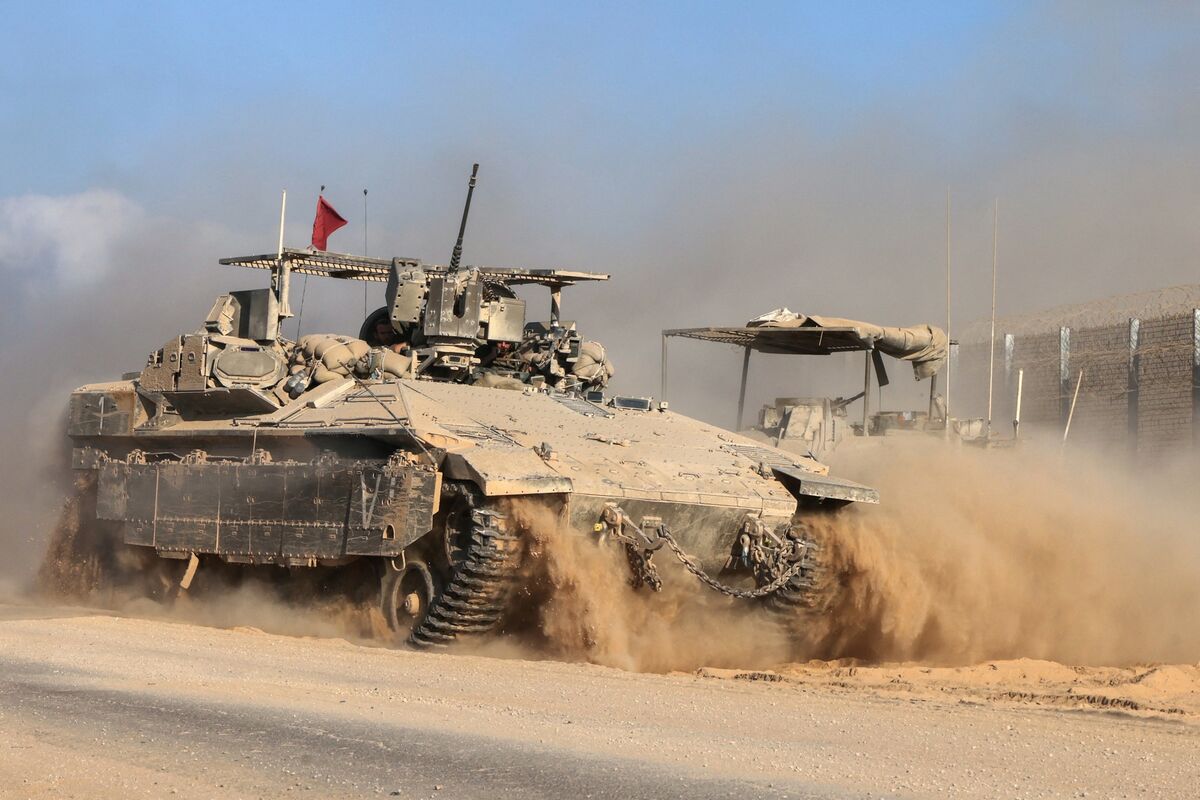
The Tel Aviv Stock Exchange 35 Index is experiencing a five-day losing streak, with Tuesday's session seeing a decline of up to 2.3% before paring losses to 0.2%. This selloff is attributed to intensified military operations in Gaza, which has unnerved investors hoping for an end to the conflict. The regional market's negative reaction stands in stark contrast to a broader global stock rally, underscoring the localized impact of geopolitical instability on investor sentiment despite positive international trends.
The Tel Aviv Stock Exchange 35 Index is experiencing significant downward pressure, extending its losing streak to five days amidst escalating military action in Gaza. Tuesday's session was marked by heightened volatility, with the index plunging as much as 2.3% to become the day's worst-performing global index before paring losses to 0.2%. This selloff is directly attributed to investor sentiment souring as hopes for a swift end to the conflict diminish. The negative performance starkly contrasts with a concurrent 10-day rally in global stocks, which are being propelled by expectations of Federal Reserve easing. This divergence underscores how localized geopolitical risk is currently the dominant pricing factor for Israeli equities, completely overshadowing positive international market tailwinds.
AI-powered research, real-time alerts, and portfolio analytics for institutional investors.
Request DemoOverall Sentiment
strongly negative
Sentiment Score
-0.75
