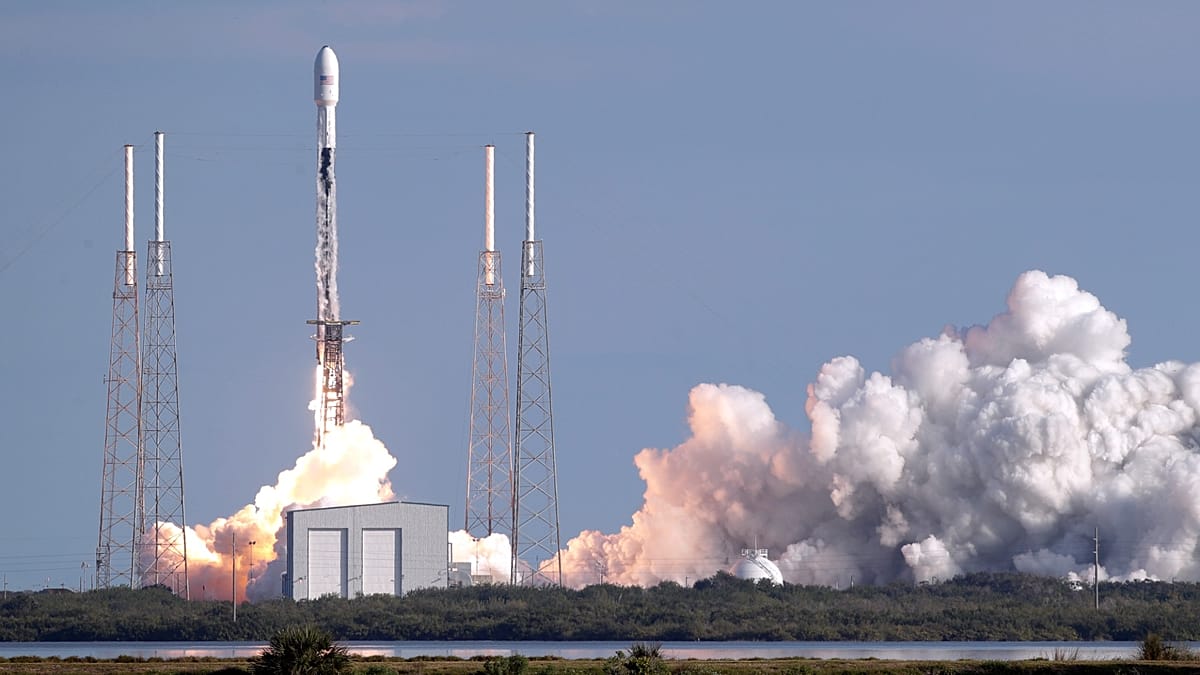
New evidence and public accusations claim Russian forces have increasingly used Starlink terminals to extend the range and resilience of strike drones in Ukraine, prompting Poland's foreign minister to accuse Elon Musk's company of profiting from war crimes. SpaceX and Ukraine are cooperating to restrict unauthorised terminals via a whitelist verification system, while analysts say there is no proof SpaceX directly supplied Russia and that terminals were likely captured or sourced on illicit markets. Starlink—covering roughly 150 countries and partly funded for Ukraine by the US Department of Defense since June 2023—receives around $50 million per year from the Polish Ministry of Digital Affairs as of March 2025; technical fixes like geofencing pose operational trade-offs because they risk cutting Ukrainian users amid a fluid front line.
Market structure: Clear winners are defence-grade SATCOM and ISR suppliers (L3Harris LHX, Raytheon RTX, Lockheed LMT, Maxar MAXR), cybersecurity analytics (Palantir PLTR) and terminal/antenna makers; losers are reputationally-exposed consumer/secondary-market satellite players and any supplier caught in sanction spillovers (private: SpaceX). Expect procurement-driven pricing power: governments reallocating 5–15% of comms budgets to hardened, anti-jam SATCOM over 12–24 months, and spot-terminal ASPs rising ~10–30% in constrained supply pockets.
Risk assessment: Tail risks include rapid US/EU export-control tightening or OFAC action against intermediaries, causing 10–30% revenue shocks to exposed suppliers, or frontline geofencing mistakes that create civilian outages and political backlash. Immediate (days): news-driven volatility; short-term (1–3 months): whitelist/geofence implementation and operational outages; long-term (12–36 months): restructured procurement cycles and supply-chain localization. Hidden dependency: many defence contractors rely on common RF/antenna chip suppliers — a single component sanction can throttle multiple winners.
Trade implications: Direct plays are long LHX/RTX/LMT and MAXR (ISR), and selective cyber names (PLTR, CRWD) with 6–12 month horizons; use LEAP calls or 1:2 call spreads to control capital. Pair trade: long LHX vs short commercial sat operator Eutelsat (ETL.PA) over 3–6 months to express secular military share gain. Position sizing: initial 2–4% per idea, stop-loss 10–15%, re-evaluate on any official export-control move within 30–90 days.
Contrarian angles: Consensus underestimates speed of government procurement in wartime — a 10–20% upside on select defence SATCOM names within 6–12 months is plausible. Reaction may be underdone for imagery/analytics vendors (MAXR, PLTR) that monetize attribution; unintended consequence: tighter US rules could accelerate non-US supplier opportunities, so capex supply-chain names can rally if sanctions force reshoring.
AI-powered research, real-time alerts, and portfolio analytics for institutional investors.
Request DemoOverall Sentiment
mildly negative
Sentiment Score
-0.25
