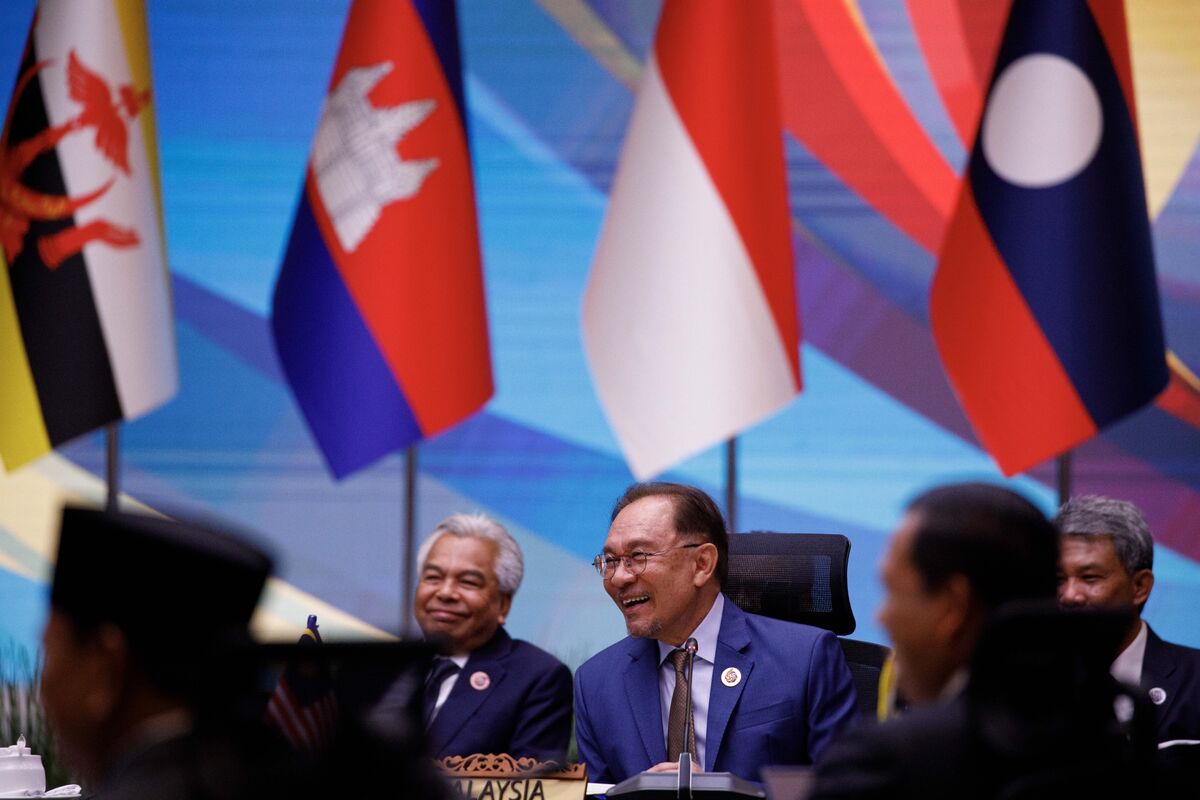
President Trump's renewed focus on tariffs is dominating discussions at the ASEAN summit in Malaysia, despite the absence of American representatives, signaling potential trade tensions and uncertainty in the region.
President Donald Trump's renewed discussion of tariffs is generating significant international concern, becoming the central topic at the summit of Southeast Asian leaders in Malaysia despite the absence of American representatives. This focus underscores the perceived global economic ramifications of potential US trade policy shifts. The associated signals, indicating a "strongly negative" sentiment (score of -0.7), a "volatile" tone, and a notable market impact score of 0.6, suggest that these tariff propositions are viewed unfavorably and are expected to introduce considerable market turbulence. The identified themes of "Tax & Tariffs," "Trade Policy & Supply Chain," "Geopolitics & War," and "Elections & Domestic Politics" highlight the multifaceted nature of this issue, pointing towards potential disruptions in global trade flows, supply chain configurations, and heightened geopolitical tensions, thereby creating an environment of increased uncertainty for international markets.
AI-powered research, real-time alerts, and portfolio analytics for institutional investors.
Request DemoOverall Sentiment
strongly negative
Sentiment Score
-0.70
