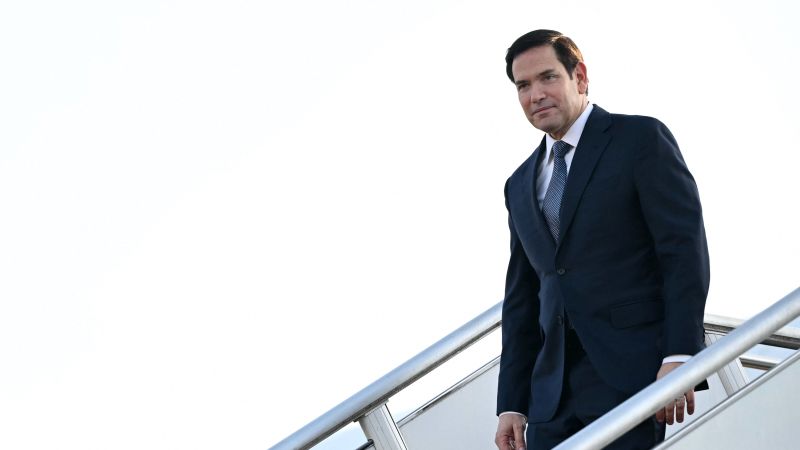
Secretary of State Marco Rubio will meet Russian Foreign Minister Sergey Lavrov in Malaysia amidst escalating US-Russia tensions over Ukraine, marked by President Trump's sharp criticism of Vladimir Putin and the resumption of US defensive weapon shipments. This critical diplomatic trip to Asia is simultaneously complicated by Trump's newly declared tariffs on several ASEAN nations, South Korea, and Japan, effective August 1, introducing significant regional trade uncertainty and challenging US efforts to solidify alliances.
A significant escalation in geopolitical risk is evident on two fronts, creating a highly uncertain environment for global markets. First, US-Russia relations have deteriorated sharply, marked by President Trump's shift from a conciliatory stance to harsh criticism of President Putin and the resumption of defensive weapon shipments to Ukraine. This policy change, which followed an uncoordinated pause in aid by the Pentagon, was met by Russia's largest drone assault on Ukraine to date, involving over 700 drones. The upcoming meeting between Secretary of State Rubio and Russian Foreign Minister Lavrov is therefore set against a backdrop of heightened tension and potential for further conflict. Second, US foreign policy in Asia is exhibiting significant internal contradiction. While Secretary Rubio's stated goal is to reaffirm US commitment to the Indo-Pacific and counter China, this is directly undermined by President Trump's announcement of impending tariffs on eight of ten ASEAN nations, as well as on key allies South Korea and Japan, with a stated implementation deadline of August 1. This dual approach of creating economic friction while seeking security alliances introduces substantial policy unpredictability and risks alienating regional partners, complicating supply chains and trade relationships.
AI-powered research, real-time alerts, and portfolio analytics for institutional investors.
Request DemoOverall Sentiment
strongly negative
Sentiment Score
-0.65
