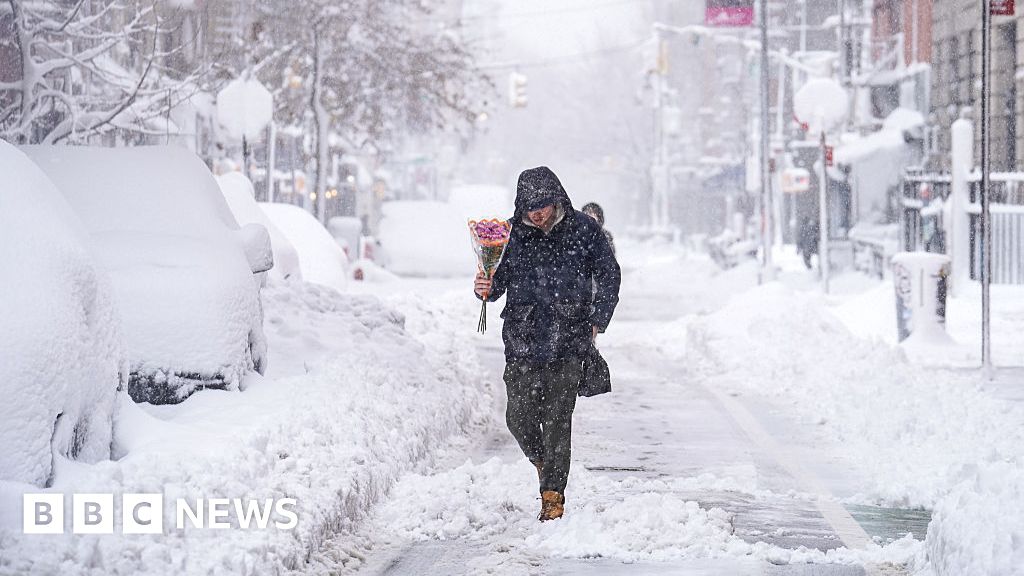
A record-breaking nor'easter dumped as much as 33 inches of snow in Providence and nearly 33in across parts of Rhode Island and Massachusetts, with 19in reported in New York's Central Park, producing whiteout conditions, widespread travel bans and more than 600,000 power outages across the US east coast. The storm forced the cancellation of over 5,675 US flights (LaGuardia 98% canceled, JFK 91%, Logan 92%, Newark 92%, Philadelphia 81%), halted regional commerce and transportation, and poses near-term operational and revenue risks for airlines, airports, utilities and local businesses while raising potential incremental costs for recovery and repairs.
Market structure: Winners in the near-term are utilities, regional energy suppliers (heating fuel and natural gas), and municipal contractors (snow removal, road salt) that see immediate revenue spikes; losers are passenger airlines, airport service operators, and travel/leisure (hotels, ground transport) facing lost fares and cancellations measured in low‑single to double‑digit percentage revenue hits over days. Competitive dynamics: airlines with weak balance sheets and high fixed costs (AAL, LUV, UAL) lose pricing power short-term as capacity is cut and rebooking costs rise; airport hubs with concentrated exposure (JFK/LGA/BOS) absorb more operational risk and may cede share to less-affected hubs. Cross-asset: expect a short-lived flight-to-quality in Treasuries (yields down), higher implied vols for travel/airline options (+30–80% IV spike intra‑week), and directional upside in Henry Hub/UNG if cold persists (target +8–15% move).
Risk assessment: Tail risks include prolonged multi-day outages causing larger insured losses (> $0.5–1bn regional) and municipal budget stress that could pressure muni credits in worst cases; regulatory/operational fines for airports/airlines are medium-probability over next 30–90 days. Time horizons: immediate (0–7 days) — cancellations, IV spikes; short (1–12 weeks) — claims, rescheduling costs, nascent price recovery in travel; long (>3 months) — normalization or persistent demand shift if repeated storms occur. Hidden dependencies: crew repositioning/crew-hour rules, fuel hedges, and contractor capacity (plow crews) amplify costs beyond headline cancellations. Catalysts: persistent cold, after‑storm thaw (affecting power restoration), and insurer loss reports will accelerate repricing.
Trade implications: Direct short on travel exposure via JETS ETF puts or airline 30–45 day put spreads while IV elevated; pair with long short‑dated natural gas exposure (UNG or 2–6 week NG futures) to capture heating demand. Size trades small (1–3% each) and use stops: cut if premium-normalization reduces downside by 50% or if IV falls >40% pre-expiry. Rotate into utilities (ES, NEE) 1–3 month tactical longs funded by travel shorts to capture outage-driven service demand and defensive yield.
Contrarian angles: Consensus prices the hit as transient; history (2015–2018 East Coast storms) shows 60–80% of travel-sector drawdown recovers within 4–8 weeks — so short positions should be sized and duration‑limited. Overdone reactions: if IV and airline selloff exceed 15–25% while forward bookings hold, put spreads will decay; underdone risks: insurers and municipal contractors may face multi-month operational costs. Unintended consequence: aggressive shorting of airlines could miss rapid fare repricing and pent‑up demand rebound, so prefer defined‑risk option structures and tight exit triggers.
AI-powered research, real-time alerts, and portfolio analytics for institutional investors.
Request DemoOverall Sentiment
moderately negative
Sentiment Score
-0.45
Ticker Sentiment
