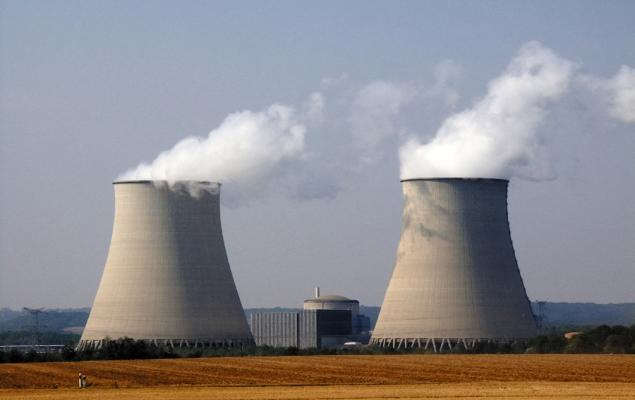
Amid surging demand for reliable, clean electricity, particularly from AI data centers, and bolstered by government support for nuclear expansion, nuclear-focused utilities like Constellation Energy (CEG) and Duke Energy (DUK) are emerging as attractive investment options. Constellation Energy appears to be the stronger pick, demonstrating superior financial metrics with rising 2025/2026 EPS estimates and a significantly higher Return on Equity of 21.93% compared to Duke Energy's 9.88%. While CEG strategically expands its nuclear fleet and secures long-term power agreements, DUK also leverages its nuclear assets, recently securing a 20-year extension for a key plant, as part of its broader clean energy transition.
The nuclear energy sector is benefiting from powerful tailwinds, including surging electricity demand from AI data centers and a supportive regulatory environment aiming to quadruple U.S. nuclear capacity to 400 GW by 2050. Within this context, a comparison of Constellation Energy (CEG) and Duke Energy (DUK) reveals distinct strategic and financial profiles. Constellation Energy presents as a more focused nuclear pure-play, operating the nation's largest nuclear fleet. Its financial metrics underscore superior operational efficiency and a stronger growth outlook; its Return on Equity (ROE) stands at a robust 21.93%, more than double Duke's 9.88%. Furthermore, consensus EPS estimates for CEG have risen 0.75% for 2025 and 3.78% for 2026 over the past 60 days, contrasting sharply with Duke Energy's flat to slightly declining estimates for the same period. CEG's capital expenditure plan, with $3.0-$3.5 billion slated for 2025-2026 and 35% allocated to nuclear fuel, reinforces its commitment to its core asset base. In contrast, Duke Energy pursues a broader 'all of the above' clean energy strategy, where nuclear is a critical but not singular focus. While DUK secured a key 20-year license extension for its Oconee plant, its massive $190-$200 billion decade-long capex plan is more diversified across grid modernization and other zero-carbon technologies. DUK's primary appeal from the data is its significant dividend yield of 3.61%, compared to CEG's 0.49%.
AI-powered research, real-time alerts, and portfolio analytics for institutional investors.
Overall Sentiment
moderately positive
Sentiment Score
0.50
Ticker Sentiment
