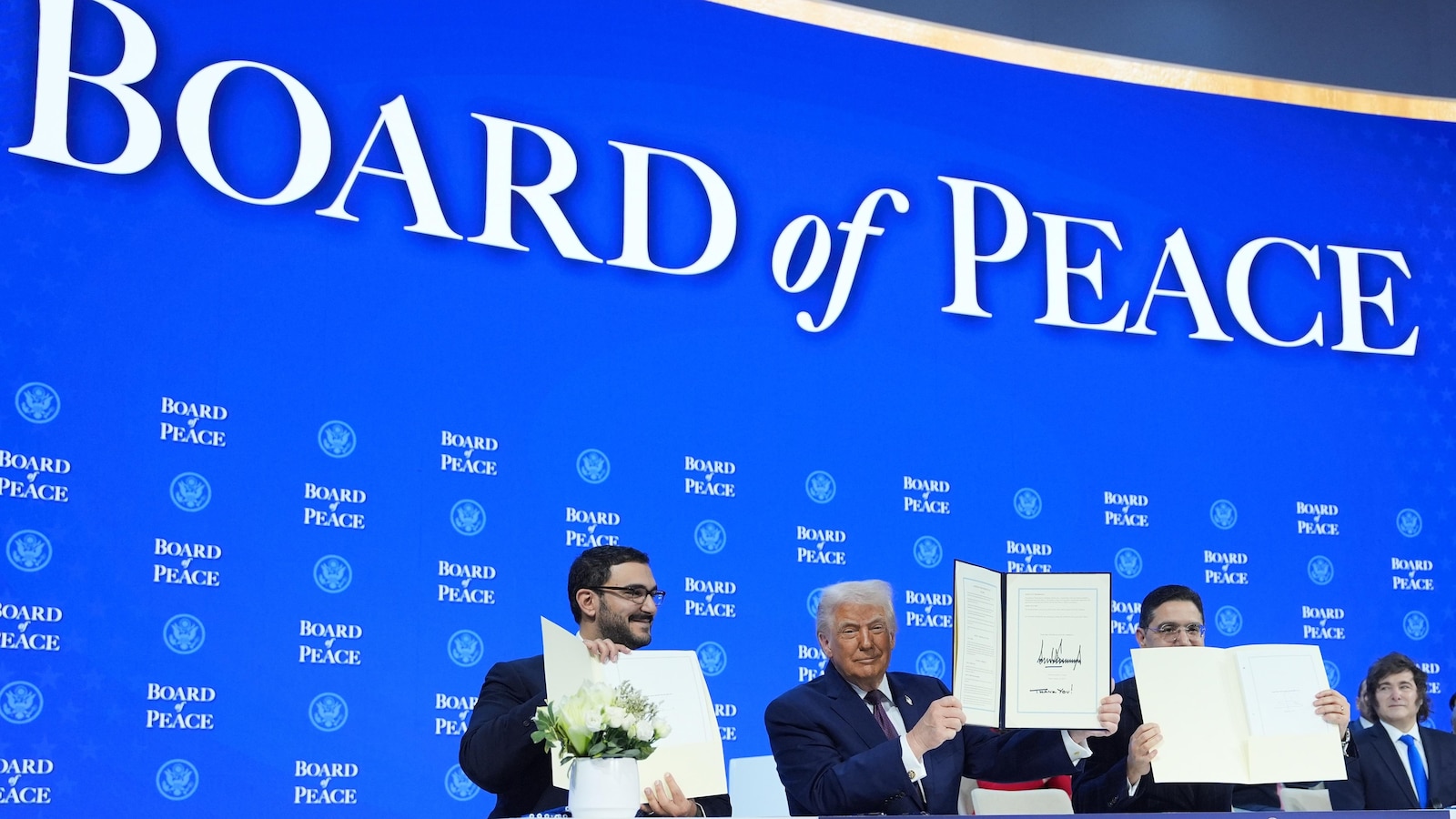
The Trump administration is considering housing a new international “Board of Peace” in the Washington building that formerly housed the U.S. Institute of Peace, a property it seized and renamed but which is subject to litigation after a federal judge found the takeover unlawful (enforcement stayed pending appeal). The board, unveiled at Davos, lists 27 founding members charged with overseeing a Gaza ceasefire and has broader ambitions to resolve global conflicts, but faces legal risk over the site and diplomatic headwinds as multiple U.S. allies have declined to join.
Market structure: This is primarily a political/legal event with limited direct market winners; the most likely beneficiaries are defense contractors (Lockheed LMT, Raytheon RTX, Northrop NOC) and private security/consulting firms who price in elevated geopolitical risk, potentially re-rating +3–8% on sustained escalation over 3–6 months. Real assets—oil and gold—would see asymmetric small moves (+2–5%) on regional spillovers; US equities likely experience short-lived volatility spikes rather than structural flow shifts. Washington real-estate/NGO sectors face legal uncertainty but negligible broad-market pricing power change.
Risk assessment: Tail risks include rapid regional escalation (low probability, high impact) that could push Brent >$90 and equities down 5–12% within days; a court ruling restoring USIP property would create precedent risk for federal asset seizures and political risk premia in municipal/federal contractors over 30–90 days. Hidden dependencies: the board’s credibility depends on allied participation and funding—if major partners stay away, the geopolitical risk premium will be muted. Key catalysts: federal appeals court timeline (30–120 days), Davos follow-ups, Senate appropriations or sanctions decisions.
Trade implications: Implement small, tactical hedges rather than large directional bets: 1–3% longs in LMT/RTX/NOC as geopolitical hedges; 2–3% exposure to GLD as insurance if Brent >$85 or gold rises >3% in 7 days; buy 30–60 day VIX call spreads (size 0.5–1% NAV) to protect against headline shocks. Pair trade: long RTX (1.5%) vs short BAE Systems (BAESY, 1%) to capture US-centric procurement upside; trim if relative outperformance exceeds 8% or within 90 days.
Contrarian angles: Consensus overstresses institutional symbolism; absent a legal defeat or major military escalation, markets will treat this as transitory—defense long exposures >3% risk being crowded and mean-reverting. Historical parallels (short-lived spikes post high-profile diplomatic moves) suggest tight stop discipline: close protective option positions if VIX trades <12 for 10 consecutive sessions or if appeals court issues stay in favor of the government. Monitor legal docket and allied sign-ups as high-information, short-lead indicators.
AI-powered research, real-time alerts, and portfolio analytics for institutional investors.
Request DemoOverall Sentiment
neutral
Sentiment Score
0.00
