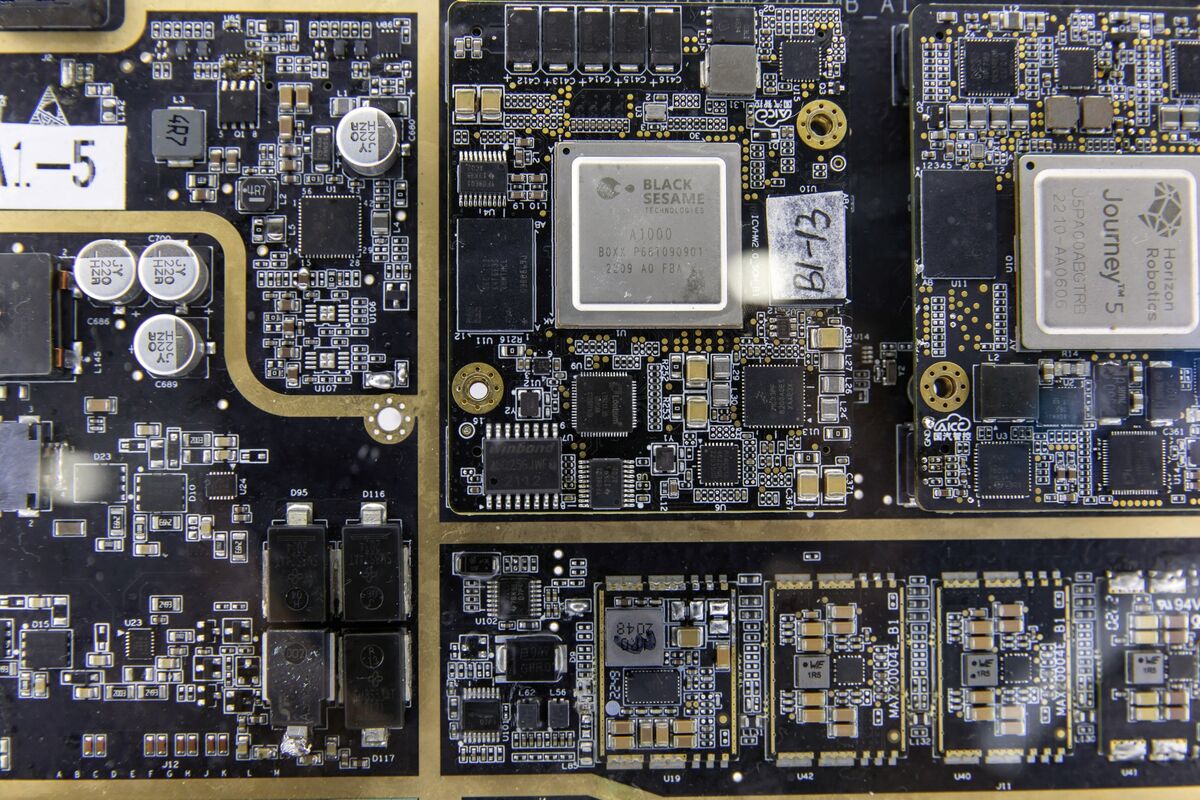
China’s AI hardware suppliers are struggling to meet surging demand as capacity constraints and shortages of critical components start to bite. The article suggests early-year growth could slow despite strong end-market demand, creating a near-term supply chain headwind for the sector. This is a negative read-through for AI hardware suppliers and related component vendors in China.
The immediate bottleneck is not demand, but mix and lead times: when AI hardware supply chains tighten at the component level, the first-order effect is margin pressure, while the second-order effect is a forced repricing of who has inventory control. Vendors with long-dated allocation agreements, in-house packaging/board design, or captive procurement should gain share because customers will prioritize delivery certainty over unit cost. That favors higher-quality platform names and penalizes assemblers with low bargaining power and high working-capital intensity.
This setup is usually bullish for upstream component makers only if they can actually capture the scarcity premium; otherwise, the gains accrue to distributors and firms sitting on stock, while final-system builders absorb the margin hit. The more interesting trade is that constrained domestic supply can accelerate substitution toward imported components, gray-market sourcing, and non-China procurement routes, which creates leakage away from local champions. Over 1-3 months, expect delayed revenue recognition and wider dispersion in gross margins across the AI hardware chain.
The risk to the thesis is policy-driven relief: any export easing, local subsidy, or capacity rerating could unwind the shortage premium quickly, but that likely takes quarters rather than days because tooling and qualification cycles are slow. The contrarian angle is that scarcity can be supportive for the strongest players by disciplining supply and preventing price competition; if end-demand remains intact, the market may be underestimating how much pricing power accrues to the few vendors with secure component access. In other words, this is less a demand warning than a supply-chain sorting event.
AI-powered research, real-time alerts, and portfolio analytics for institutional investors.
Overall Sentiment
moderately negative
Sentiment Score
-0.35
