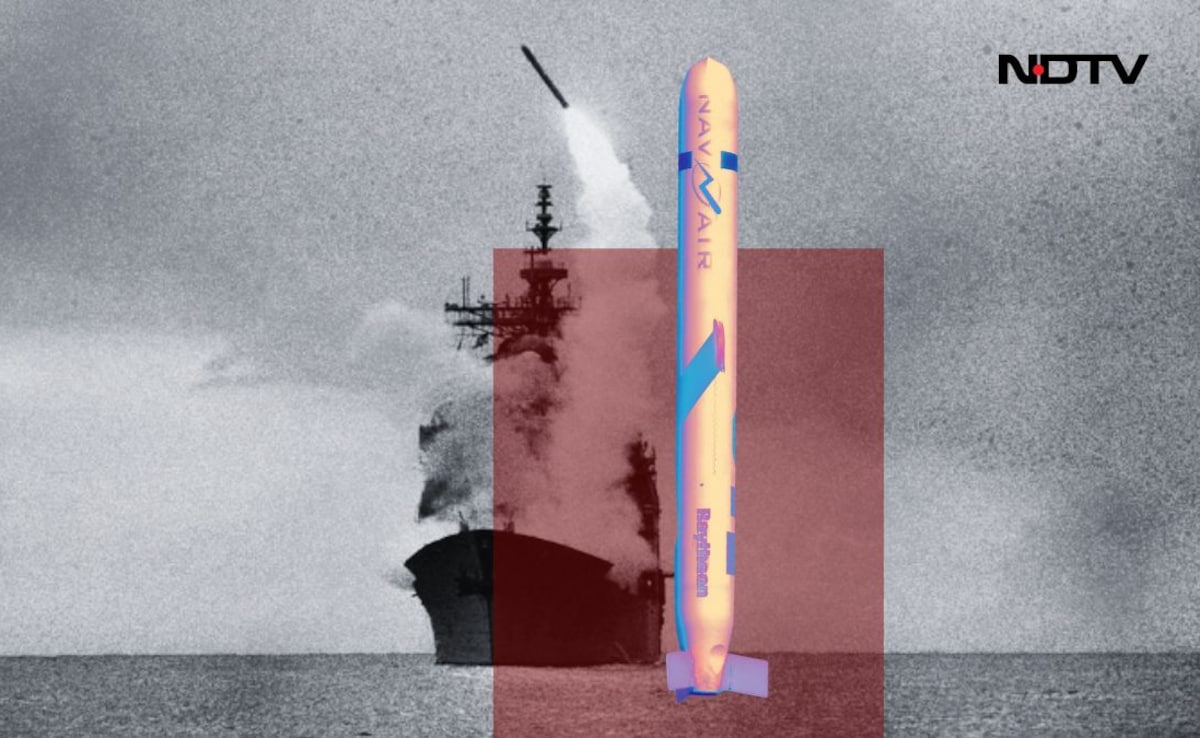
The US fired over 850 Tomahawk missiles in four weeks, straining inventories given production of only a few hundred per year and a build time up to 2 years; each missile costs about $3.6M. Last year’s budget included only 57 missiles and a CSIS estimate suggested ~3,100 were available at the war’s outset, with analysts warning it could take several years to replenish. Pentagon officials describe stocks in the Middle East as "alarmingly low," while administration spokespeople insist there is no current shortage; expect pressure on defense supply chains and accelerated procurement/timing risk for sustainment of operations.
A depleted precision-strike inventory in an active theater will force the Pentagon to re-optimize force allocation, creating a near-term capability taper in other regions that rely on the same ordnance class. That reallocation is a visible second-order lever for adversaries: probing and coercive diplomacy are most likely to increase in lower-readiness theaters (principally the Western Pacific) within a 1-6 month window as decision-makers calculate where U.S. deterrence is thinnest.
Supply-side friction is the dominant economic story — production capacity for long-lead missile systems is lumpy, constrained by specialized test facilities, limited propulsion and guidance sub-suppliers, and workforce skill concentration. Expect prime contractors to invoke accelerated awards and premium pricing for priority slots; this will lift near-term cash flow and backlog but also compress margins later as overtime, supplier premiums, and overtime testing costs hit input lines over the next 6-24 months.
Procurement behavior will drive market outcomes: emergency buys, re-routing of inventory between theaters, and strategic stock purchases by allies will favor firms with verticalized supply chains and onshore production footprint. That creates an asymmetric payoff for primes that both manufacture final assemblies and control key subsystems versus pure integrators — the former can monetize capacity; the latter will compete for scarce slots and face longer realization timelines.
Market and policy catalysts that would reverse the stress are clear and fast: an announced surge-capacity contract (30–90 days post-decision) or diplomatic de-escalation would relieve pressure quickly and likely compress premium valuations. Conversely, a prolonged campaign or formal export of stockpiles to allies would extend procurement timelines into a multi-year replenishment cycle, underpinning above-consensus revenue for select suppliers.
AI-powered research, real-time alerts, and portfolio analytics for institutional investors.
Request DemoOverall Sentiment
moderately negative
Sentiment Score
-0.55
