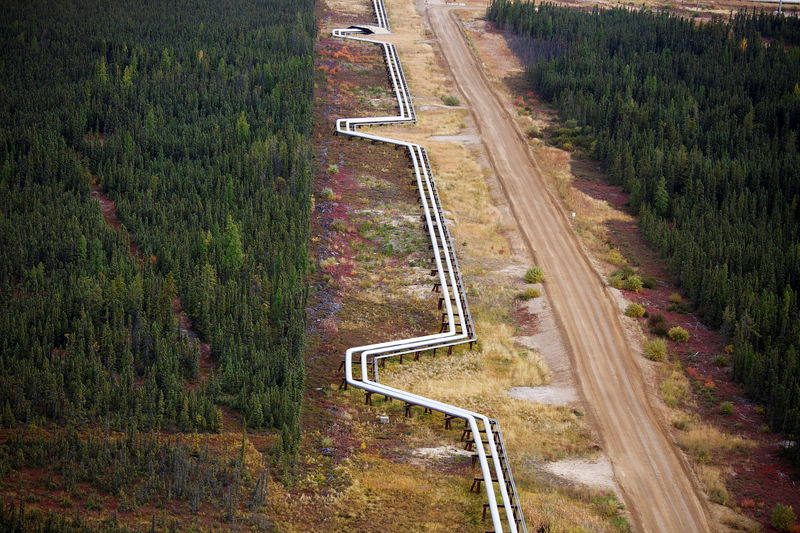
7 million barrels per day: Saudi Arabia's East-West crude pipeline is operating at full (~7m bpd) capacity, redirecting flows to Yanbu amid near-closure of the Strait of Hormuz. Exports via Yanbu have climbed to roughly 5m bpd, plus 700k–900k bpd of refined products, with ~2m bpd consumed domestically — partially offsetting the ~15m bpd previously transiting Hormuz and helping prevent extreme oil-price spikes. The ramp-up occurs as the regional conflict widens (including Houthi strikes and reports of 12 US soldiers injured), raising geopolitical risk and volatility for energy markets.
The headline risk is translating into persistent logistics friction rather than a one-off supply shock: longer voyages, higher war-risk premiums and additional storage demand create sustained margin opportunities for tanker owners, regional tank storage operators and maritime insurers while squeezing refiners and industries with high fuel intensity. That freight/insurance premium is a mechanical tax on delivered crude that raises local feedstock costs unevenly by trade lane and refinery complexity, creating short windows of outsized refining or storage arbitrage that active owners can capture.
A less obvious second-order is the impact on high-performance compute supply chains: shipping delays and insurance chokepoints amplify existing GPU allocation problems, shortening the near-term availability window for hyperscalers and enterprises buying racks. Integrators who can ship complete, diversified-accelerator systems or offer local deployment alternatives (edge/on-prem) gain negotiating power and order flow; firms dependent on performance-based ad spend face a more immediate hit from advertiser risk-off.
Key catalysts and reversals are measurable and timely: spikes in war-risk premiums, Baltic/TC1 charter rates and GPU shipment notices will accelerate positive outcomes for shipping and system integrators within weeks; conversely, a rapid diplomatic corridor or insurance pooling program would compress freight premia and reverse those winners within 30–90 days. Tail risks (wider naval engagement, formal blockades, or sanctions on critical suppliers) create asymmetric upside for defense and shipping equities but also raise the probability of abrupt demand destruction for cyclical domestic consumers.
The market consensus underestimates how trade-lane reconfiguration reshuffles tech hardware sourcing and advertiser budgets simultaneously — the former supports a multi-quarter runway for server integrators that can deliver alternative-accelerator solutions, while the latter makes mobile ad names more vulnerable to near-term revenue cyclicality. That divergence supports a directional pair trade: capture convexity in shipping/system-integration upside while hedging ad-tech cyclicality.
AI-powered research, real-time alerts, and portfolio analytics for institutional investors.
Request DemoOverall Sentiment
mildly negative
Sentiment Score
-0.30
Ticker Sentiment
